How to Get Into Google's AI Overview, Really
Nobody can flip a switch and make an AI Overview show up for their business. Not you, not your SEO vendor, not an ad budget. Google decides, query by query, whether to show one at all — and if it does, it writes the summary itself and picks which pages to cite. Your job isn't to activate the feature. It's to be the kind of page it reaches for.
That distinction matters because most people searching for this are solving the wrong problem. They picture AI Overviews as a listing you claim, like a map pin. They aren't. Here's what's actually happening, and what to do about it.
What is Google AI Overview?
An AI Overview is the summary Google generates above the normal blue links. It's built by reading several ranking pages and synthesizing an answer, rather than just returning a list. It shows up for some queries and not others, and the pages it draws from tend to be pages that already rank well and answer the question plainly — in the first few sentences, without burying the point under a story. Think of it as Google doing the skimming a reader would otherwise do, then showing its work with a few citations underneath.
It's a cousin of the old featured snippet, but it pulls from more than one source and writes new sentences instead of quoting a single block of text. That's why optimizing for it looks more like answer engine optimization than classic on-page SEO. The target isn't rank one. It's being quotable.
How can I activate AI Overview?
You can't, and neither can your competitor, whatever their SEO vendor claims. There's no toggle in Search Console, no paid placement, no meta tag that forces an overview to appear or names a specific domain. What you can influence is whether your page is a strong candidate to get pulled from, once Google decides to show one for a given search.
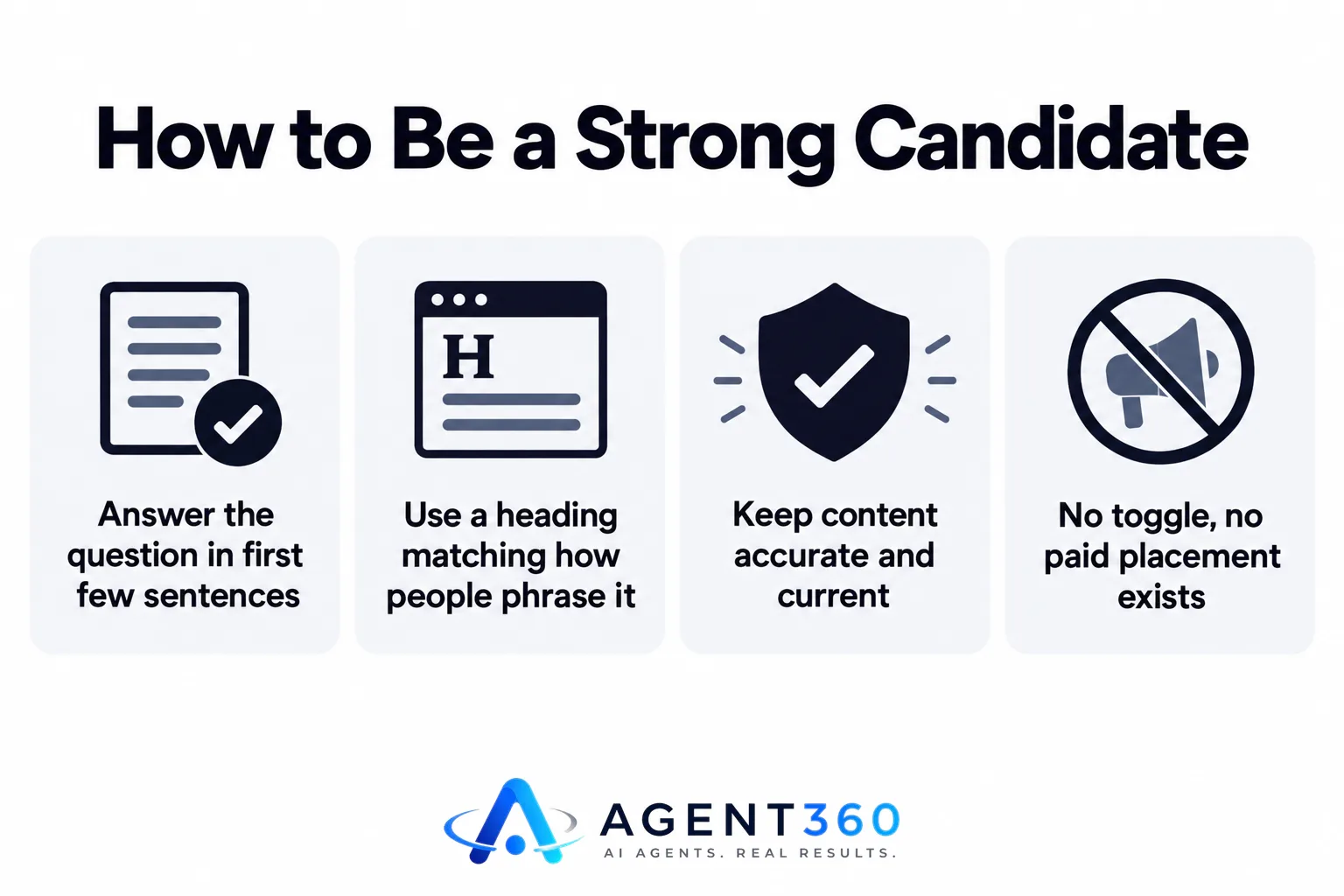
In practice: answer the question in the first two or three sentences of the page, use a heading that matches how people actually phrase the question, and keep everything around it accurate and current. Overviews favor pages that don't make the reader hunt. If your competitor's article opens with a direct answer and yours opens with a company history, theirs is the easier citation.
What is the 30% rule for AI?
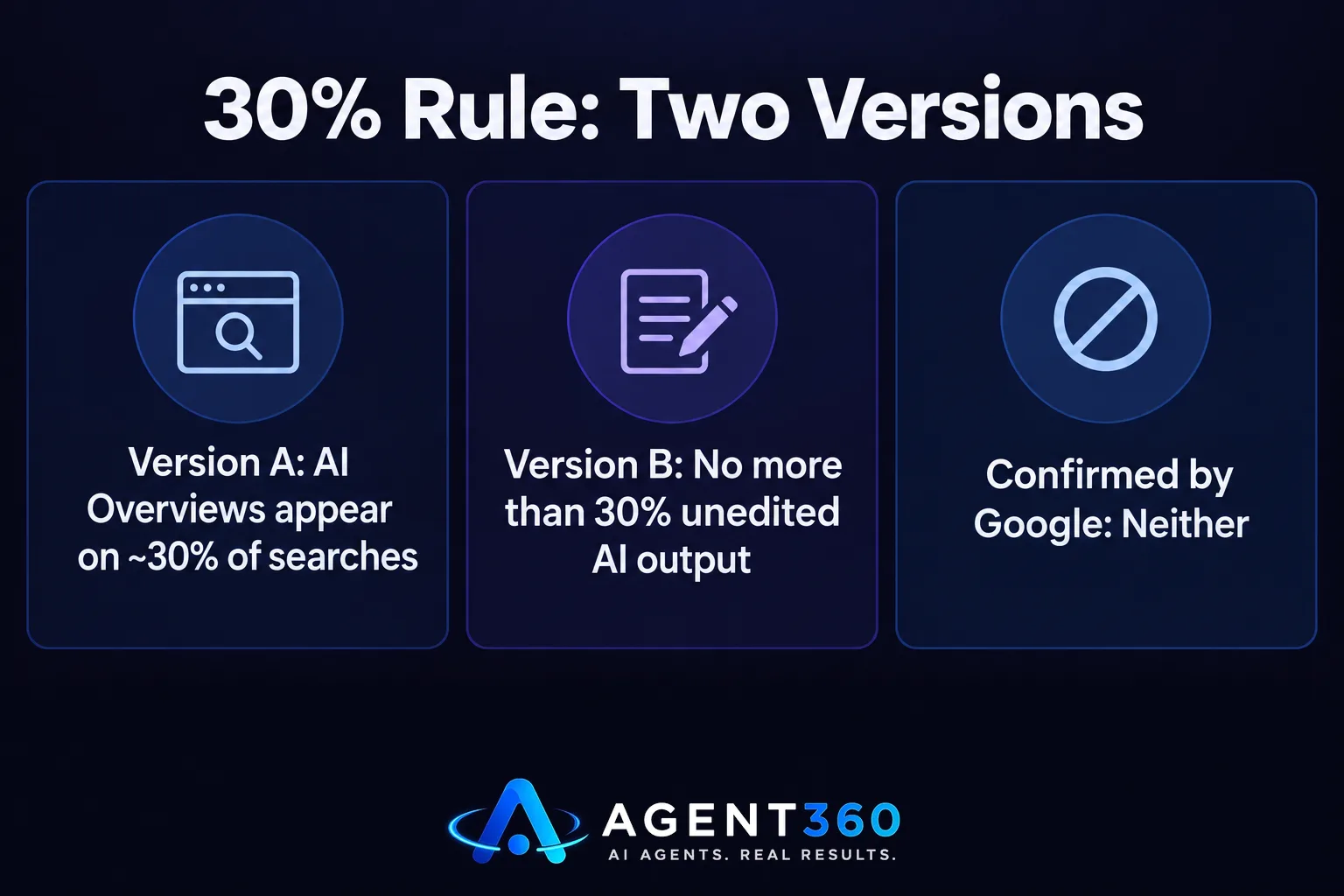
This phrase circulates without a single confirmed source, and people use it to mean different things — sometimes a claim that AI Overviews appear on roughly a third of searches, sometimes a rule of thumb that no more than about 30% of a page's content should be unedited AI output before quality drops. Neither version has been confirmed by Google as an actual threshold. Treat either as a hard rule and you're building on sand.
What's true regardless of the exact number: pages that read like they were generated and never touched by a person tend to underperform, in classic rankings and as overview candidates. The safer move isn't hitting a percentage — it's making sure every published page has a clear point, a direct answer near the top, and at least one human pass before it ships. That's a mechanism you can actually control. A made-up quota isn't.
How do I turn off AI search?
If you're asking this as a searcher rather than a business owner: Google has added a {Web} filter under the results on some queries that strips the AI summary and shows classic links only. It isn't available on every query or every account, and it resets each time you search rather than sticking as a permanent setting. Worth knowing for a different reason — if you've switched this on for yourself, you'll stop seeing AI Overviews when you check whether your own business gets cited, and you'll wrongly conclude there's nothing to optimize for. Check in a private window with no filter applied before you judge your own visibility.
Track the questions, not the feature
Forget checking whether Google has {turned on} an overview for your industry — that's not how it works, and it's the wrong thing to watch. Track the specific questions your buyers ask, on a schedule, and record whether the overview that appears names you or a competitor. Do that by hand for a dozen core questions once a week, in an incognito window, and you'll start to see which pages are winning citations and which aren't. The same discipline gets covered in more depth in this walkthrough on appearing in Google AI Overviews.

If you'd rather not run that check by hand every week, SearchAgent's AI Overview tracking asks your buyers' real questions on a schedule and records whether the overview names you, cites your site, or names someone else instead — then turns every miss into a page to write. It runs alongside Google ranking tracking, and plans start at $297 a month, month to month.
What is Google AI Overview?
A Google-generated summary shown above search results for some queries, built by synthesizing several top-ranking pages into new sentences with source citations beneath, rather than a single quoted snippet from one page.
Can I pay or apply to get my business into an AI Overview?
No. There's no application, bidding system or paid placement for AI Overviews. The only lever is publishing pages that answer the query clearly enough to be a strong candidate once Google decides to generate one.
Does turning off AI search in my own browser affect what Google shows other people?
No. Any filter or setting that removes AI summaries from your own results is local to your session or account. It doesn't change whether Google generates an overview, or who it cites, for anyone else running the same search — only what you, personally, happen to see.
More articles
- Hur du rankar i ChatGPT (och vad det egentligen betyder)
- How Cannibalization Tools Pick Which Article to Merge
- How to See If You're in AI Overviews (and Who Beat You)
- What a Refresh Agent Actually Does (and When to Use One)
- Keyword Gap Meaning: What It Is and How to Find Yours
- How to Appear in AI Search Results, Step by Step
- How to Show Up in AI Search Results, Not Just Google
- Whitelabel GEO: What to Check Before You Sign a Vendor
