How to See If You're in AI Overviews (and Who Beat You)
Open an incognito window. Type the actual question your buyer would ask — not your brand name — and read the box Google writes above the links. That's the only reliable way to see if you're in AI Overviews. If your site isn't one of the three to five sources cited under that summary, you're not in it, no matter how well you rank below it.
Search Console won't tell you. It bundles AI Overview impressions into regular search data, with no flag that says “this click came from the AI box.” So the check stays manual — unless something built for it automates it.
How do you see Google's profile of you?
People asking this usually mean one of two things: their Knowledge Panel, or how Google describes their business when someone asks a question about it. The Knowledge Panel — that card on the right for branded searches — comes from your Google Business Profile, your site's structured data, and whatever Google's index already associates with your name. Easy to check: search your own business name and see what shows up.
The harder, more useful version is watching what Google says about you when nobody searched your name at all. Search the questions your buyers ask before they know who you are — “best [service] in [city]”, “how to choose a [category]”, “[problem] vs [problem]” — and read the AI Overview on each one. That's your actual profile, the one that matters. Not the Knowledge Panel. The answer.
Is Google Search an AI?
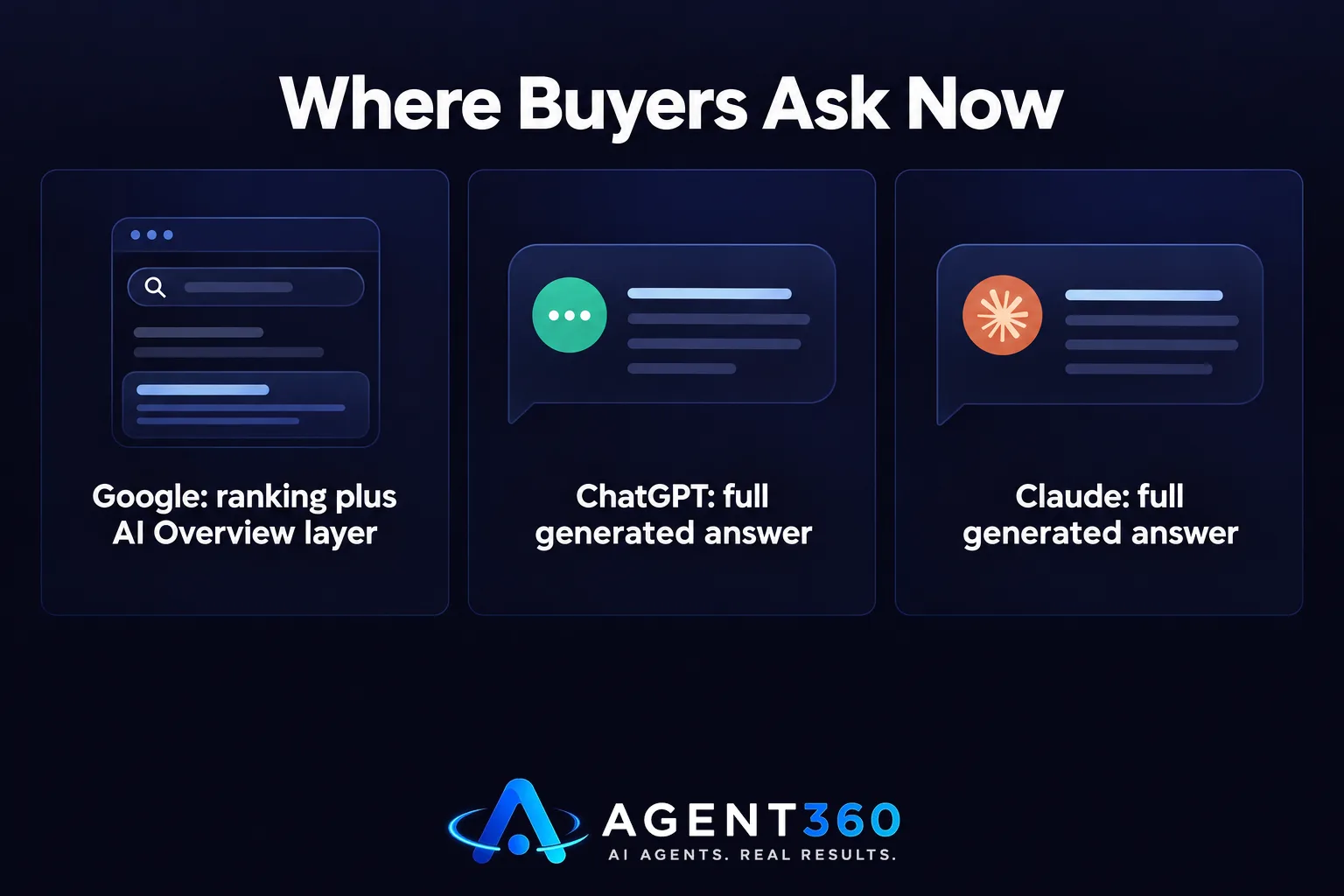
Partly — and the part matters. The core ranking system behind the ten blue links still runs on a mix of signals: links, relevance, usage data, refined over two decades, with machine learning threaded through it but nothing generative. AI Overviews sit on top as a separate layer. A language model reads the top results for a query, writes a summary, and cites a handful of sources underneath.
That split explains a common frustration: a page can rank first in the regular results and still get skipped by the AI Overview. The overview isn't picking the top-ranked page — it's picking whichever pages state the answer clearly enough to summarize. Understanding that gap is most of the work in answer engine optimization. Ranking and getting cited are related jobs, not the same job.
Which search engines do not use AI?
Almost none of them. Machine learning has been part of ranking since before anyone called it AI, and it's baked into every major engine's stack somewhere. But that's not really the question you're asking. The honest answer is that it doesn't matter which engines call themselves “AI-free,” because buyers aren't choosing engines that way anymore. They split their questions across Google, and increasingly across ChatGPT and Claude, which hand back a full answer instead of a list of links. Watch only Google and you're watching one of three places a recommendation gets made now.
How to appear in an AI Overview on your own site
This is the one worth answering properly, since it's the one you can actually fix. AI Overviews favor pages that state the answer in the first few sentences, plain language, before any explanation or caveats show up. A page that spends three paragraphs setting the scene before answering the question gets skipped easily — the model has to dig for the answer, and there's usually another page that doesn't make it dig.
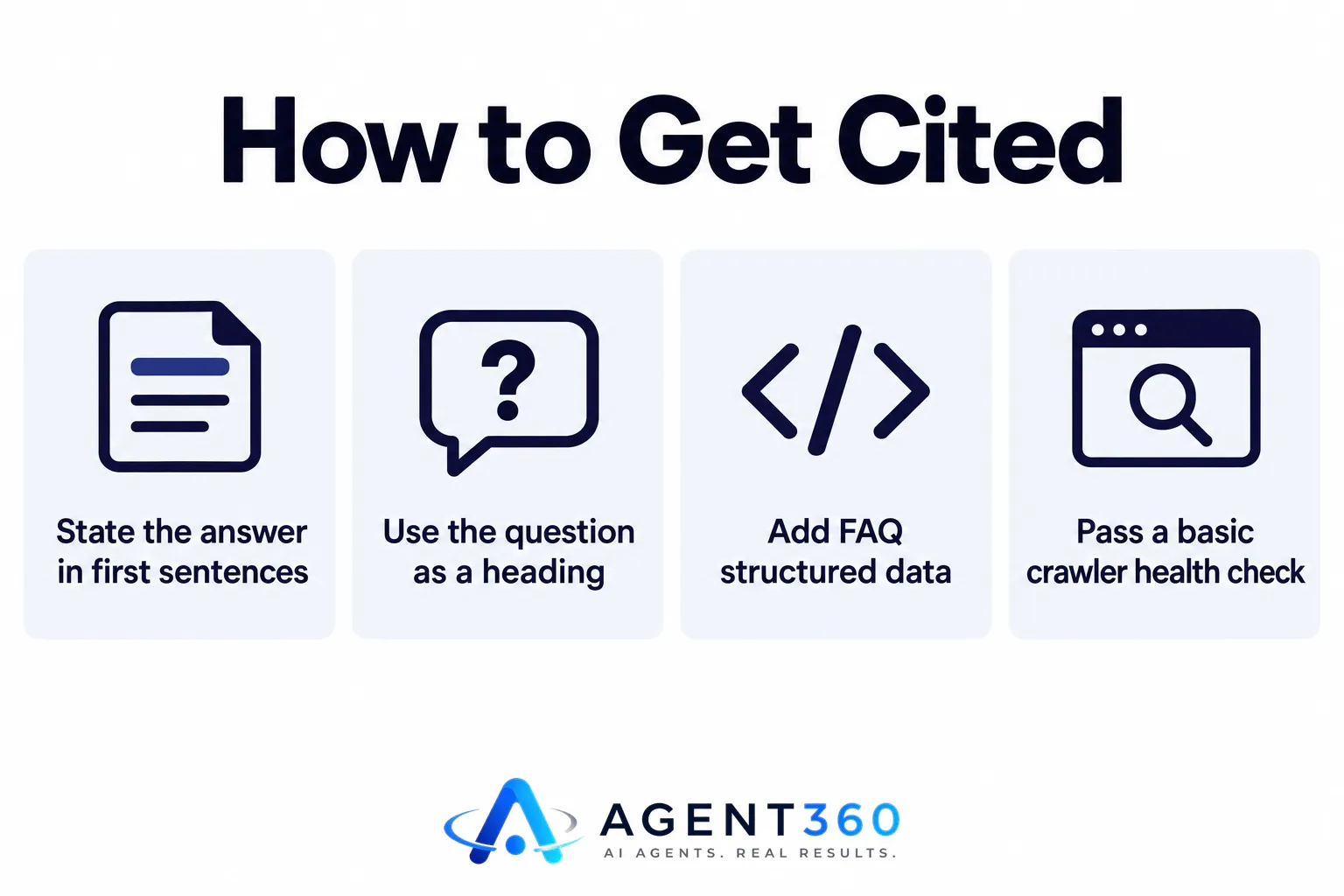
- Open the page with the direct answer to the exact question, not a teaser.
- Use the question itself, or something close to it, as a heading — it's a strong hint about what the section answers.
- Add FAQ structured data where you genuinely answer distinct questions; it won't force inclusion, but it makes the content easier to lift cleanly.
- Make sure your crawler access and page structure pass a basic health check — a site an AI crawler can't parse won't get cited no matter how well the answer is written. Our site health check flags that before it costs you anything.
None of this guarantees inclusion. Google decides query by query whether to show an overview at all, and it swaps which sources it cites week to week even when the underlying pages haven't changed. Which is exactly why checking once tells you less than checking on a schedule.
One search tells you nothing — track it over weeks, not once
The temptation now is to run five searches, see your site missing, and decide you're invisible. Don't. AI Overviews rotate sources, so one snapshot catches a bad day just as easily as a good one. The useful version of this check runs the same buyer questions on a schedule — weekly at minimum — and records who got named each time, not just whether you showed up once.

That's the real difference between checking and tracking. Checking tells you about today; tracking tells you the trend, and whether that page you published last month actually moved anything. SearchAgent's AI Visibility Agent runs this check against ChatGPT, Claude and Google AI Overviews on a schedule, logs who got cited instead of you, and turns each miss into a page brief — starting at $297 a month, weekly checks on the entry plan, daily on the top one.
Frequently asked questions
Is Google Search an AI?
Google's core ranking system blends machine learning with older signals like links and relevance. AI Overviews are a separate, newer layer — a language model that summarizes and cites sources above those rankings.
Which search engines do not use AI?
Nearly every major engine runs on machine learning somewhere today. The better question is which engines your buyers actually ask — for most businesses that's Google, ChatGPT and Claude now, not just one.
How do I check if my site is cited in an AI Overview?
Search the real questions your buyers ask — not your brand name — in an incognito window, and read the sources listed beneath the summary. Repeat weekly: Google rotates which sources it cites even for the same query. See how to track mentions over time for the same method applied to ChatGPT.
More articles
- How to Get Into Google's AI Overview, Really
- Hur du rankar i ChatGPT (och vad det egentligen betyder)
- How Cannibalization Tools Pick Which Article to Merge
- What a Refresh Agent Actually Does (and When to Use One)
- Keyword Gap Meaning: What It Is and How to Find Yours
- How to Appear in AI Search Results, Step by Step
- How to Show Up in AI Search Results, Not Just Google
- Whitelabel GEO: What to Check Before You Sign a Vendor
