YouTube Shorts for Business: The Rules That Get Views
Most business Shorts fail for the same boring reason: they’re a regular video, just shorter. A trimmed-down ad or a talking head reading a mission statement will sit at a few dozen views forever. A Short cut from something that already had a moment in it — a sharp answer, a before-and-after, a reaction — will move. That’s the whole gap.
Here is what separates the two, and what to fix first if your Shorts aren’t moving.
Shorts are a distribution channel, not a video format
The YouTube algorithm treats Shorts as a feed of their own, shown to people who have never watched your long-form videos and have no reason to click your channel name. No subscriber relationship. No series memory. Nothing carried over from last week. A Short that assumes the viewer knows who you are will lose them before the logo even registers.
So design around that instead of fighting it. Open with the claim or the moment, not the brand. Save the identity for the end — a caption, a closing frame — after you’ve earned the watch.
Cut from existing footage, don’t film for the format
Businesses that treat Shorts as their own production — script it, light it, shoot it — run out of ideas in a month and quietly stop posting. The ones that keep a steady output are pulling Shorts from something that already exists: a sales call, a webinar, a product demo, a Q&A with the founder. A single 45-minute recording holds enough sharp moments for weeks of Shorts. Finding them is a cutting problem, not a filming problem. Worth reading before you plan another shoot: one video holds more posts than most teams publish in a month.

The first second decides everything, not the first three
Advice that gives you three seconds to hook a viewer is already too generous for Shorts. The swipe-away decision happens closer to one second, before a full sentence has landed. So the opening frame has to show something, not set something up: a number on screen, a reaction mid-expression, a result already visible. A logo, a slow zoom, someone saying “so today I wanted to talk about” — any of those and you’ve already lost the viewers who would have stayed for the point.
Aim for 15 to 34 seconds, not 60
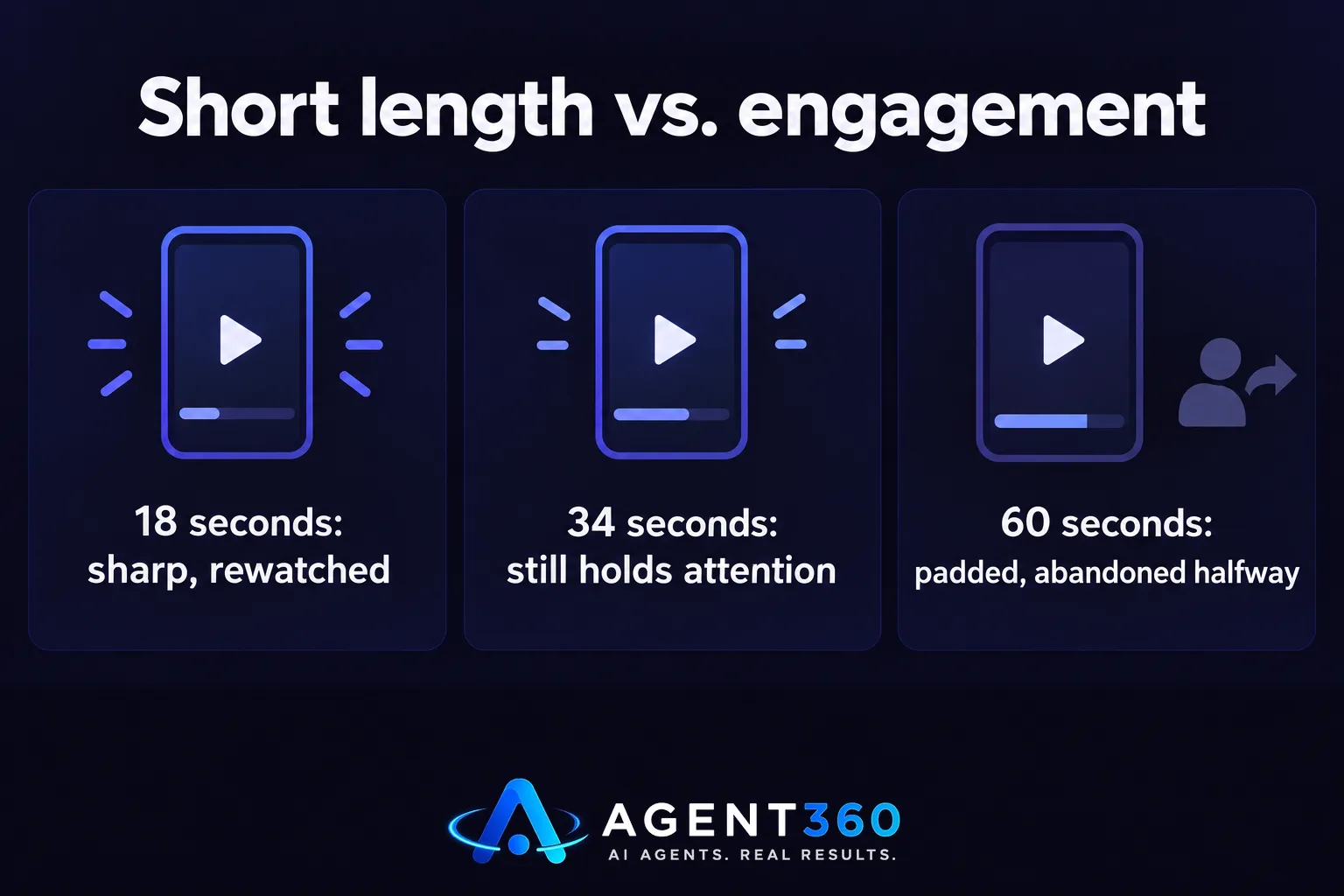
YouTube allows Shorts up to three minutes now. Length limits and what the format rewards are two different things, though. A Short that makes one point and ends gets rewatched; a Short that stretches one point to fill sixty seconds gets abandoned halfway. If you’re not sure where to cut, cut earlier than feels comfortable. The sharpest line at eighteen seconds will usually beat the same idea padded to fifty.
Captions are mandatory, not a nice-to-have
Most Shorts get watched with the sound off, in a feed, on a phone someone is half paying attention to. A Short with no on-screen text is invisible to that viewer no matter how good the audio is. Burned-in captions aren’t a style choice here. They’re the difference between a Short that gets watched and one that gets scrolled past in silence.

Post consistently, not in bursts
A business that uploads six Shorts in one week and then nothing for a month looks, to the algorithm and to viewers, like an account that already quit. Shorts reward a channel that shows up on a rhythm — even a modest one. Three a week sustained for months beats a heavy week followed by silence. The constraint for most teams isn’t willingness, it’s supply: once the footage runs out, so does the posting. That’s a cutting and scheduling problem more than a creative one.
Where this gets slow to do by hand
The part that actually eats a week isn’t deciding the rules above — it’s applying them to hours of raw footage, every month, without missing the good moments. BrandAgent’s Clip Agent takes a webinar, podcast or recorded call and cuts captioned vertical clips from it automatically, with a post drafted for each one, so the supply problem that kills most Shorts strategies doesn’t show up in the first place. Plans start at $97 a month with no contract — the pricing page breaks down what each tier includes.
FAQ
How long should YouTube Shorts be for business?
Keep most Shorts between 15 and 34 seconds. The format allows up to three minutes, but a Short that makes one point and ends gets rewatched more than one stretched to fill time.
Do YouTube Shorts need captions?
Yes. Most Shorts are watched with the sound off, and a Short with no on-screen text loses viewers who would otherwise have stayed for the point.
How often should a business post Shorts?
Pick a frequency you can sustain for months, even a modest one like three a week, rather than posting heavily for one week and then stopping. Consistency matters more than volume in any single week.
More articles
- How Often to Post on LinkedIn: The Rules That Actually Matter
- Social Media Content for Small Business: The Rules That Work
- Brand Voice AI: What It Means and What It Can’t Fake
- What an AI Short Video Maker Needs to Actually Work
- The Honest Guide to AI Video Generators for Social Media
- LinkedIn Ghostwriting: What It Really Costs and How It Works
- An AI Content Calendar Only Works With Rules Behind It
- Social Media Scheduling Tools Won't Fix Your Empty Calendar
