How Often to Post on LinkedIn: The Rules That Actually Matter
Three to five times a week. That's the range that works for most individual profiles — enough to stay in front of your network, not so much that you flood it. Daily posting can work, but only if you can sustain it for months without repeating yourself, and most people can't. Posting once a month does nothing at all: the algorithm forgets you exist between posts, and so does everyone who follows you.
The harder question isn't the number. It's why the number keeps changing depending on who you ask. So here's what the named “rules” actually mean, and where each one falls apart.
Post three to five times a week, not once a day and not once a month
LinkedIn's feed rewards accounts that show up consistently. But nothing gets penalized faster than a post competing with your own previous post for the same audience's attention. Publish twice in one day and the second post launches into a feed where your network has already seen your name once — it splits your own reach instead of adding to it. Three to five times a week gives each post room to find its audience before the next one lands.
The floor matters more than the ceiling here. A profile that posts once every three weeks never builds the pattern recognition that makes people stop and read instead of scroll past. If you can only commit to one thing, commit to a day you post every single week — even if it's just one post.
What is the 3-2-1 rule on LinkedIn?
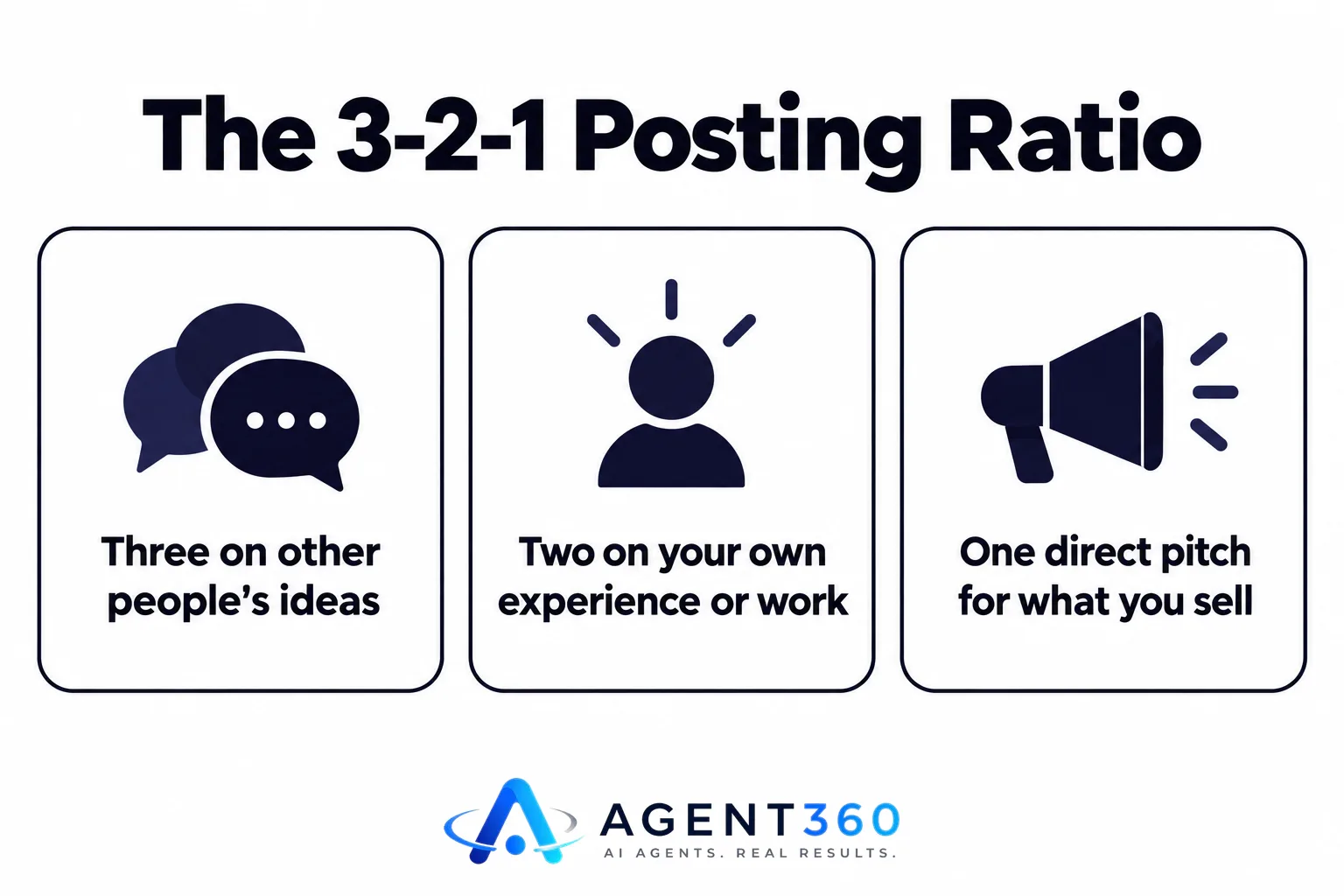
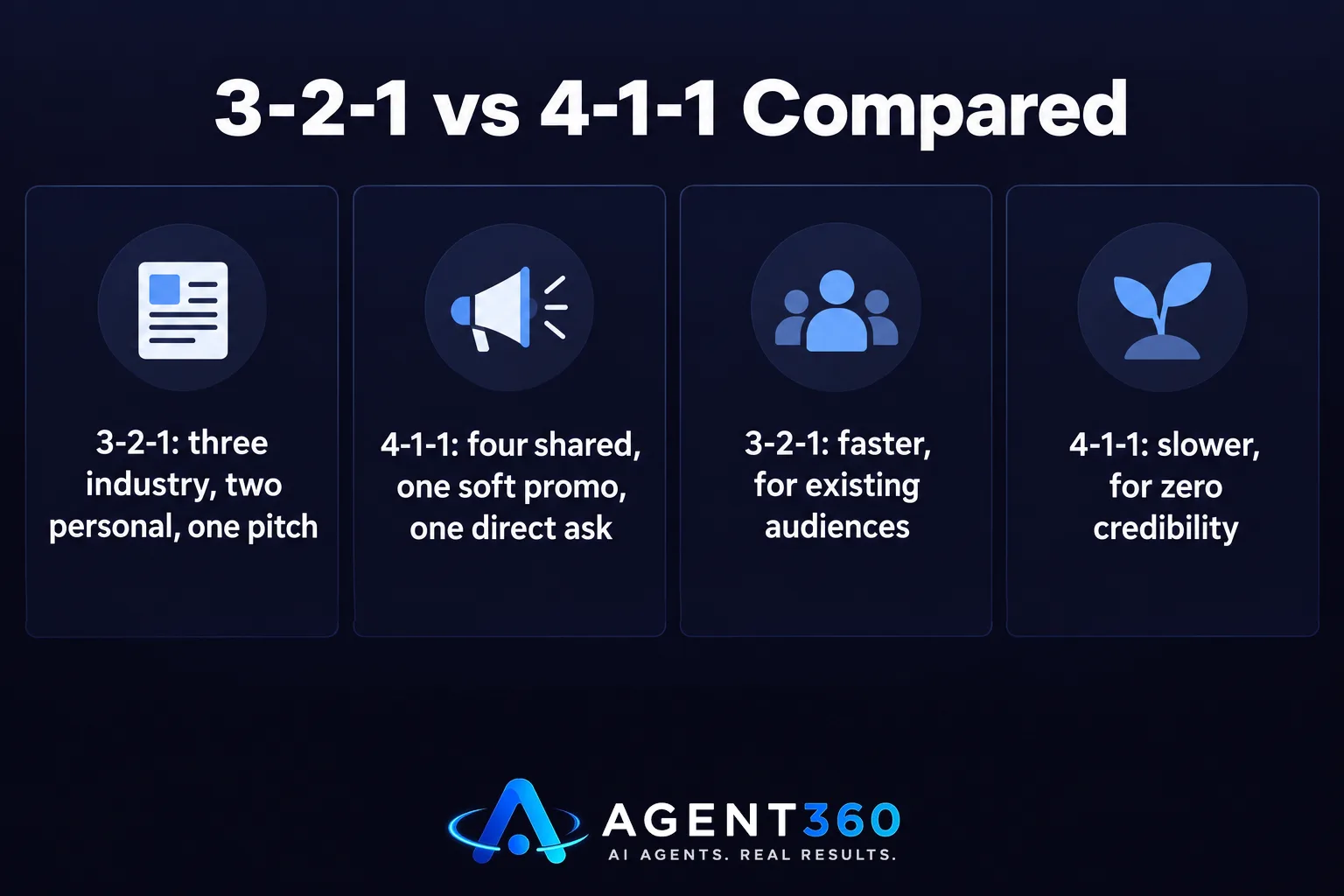
The 3-2-1 rule splits every six posts into three about other people's ideas or industry news with your take added, two about your own experience or work, and one direct pitch for what you sell. The ratio exists so your feed doesn't turn into a brochure. Sell in every post and people stop opening your name; never mention what you do and nobody remembers you sell anything. The mix matters less than the discipline of tracking it — most accounts that feel “too salesy” aren't wrong about frequency. They're wrong about ratio.
What is the 4-1-1 rule on LinkedIn?
The 4-1-1 rule is stricter: for every six posts, four share someone else's content or an industry observation, one promotes your own work softly, and one is a direct ask. It came out of content marketing circles built on build-trust-first thinking, and it works best for accounts starting from zero credibility — a founder nobody knows yet, a company page with no history. The tradeoff is speed. It's slow. If you already have an audience that knows what you do, 4-1-1 wastes posts stating the obvious instead of making a case.
What is the golden hour for LinkedIn posts?
The golden hour is the 60 to 90 minutes right after you publish, when the platform shows your post to a small slice of your network and watches what happens next. Comments, shares, and dwell time in that window decide whether the post gets pushed to a wider audience or quietly stops circulating. Post at 11pm and go to sleep, and you kill reach that the same post published at 8am — when you're around to reply to early comments within minutes — would have kept building. The content doesn't change. The hour you're available to engage with it does.

What is the 95-5 rule on LinkedIn?
The 95-5 rule says that at any given moment, roughly 95% of your audience isn't in the market for what you sell. Not ready, not looking, not thinking about it. Only a small slice is actively deciding. The implication for frequency: post only when you have something to sell, and you're only ever talking to the 5% — invisible to everyone else until the one week they happen to need you. Regular posting keeps you visible to the 95%, so that when they cross into the 5%, your name is already familiar. That's the real argument for consistency over volume. It isn't about reach today. It's about recall six months from now.
Posting twice a day only works in one specific situation
It works for accounts with a following large enough that two posts genuinely reach different segments at different times of day — morning scrollers and evening scrollers who rarely overlap. For everyone else, including most founders and B2B teams, two posts a day means the second one fights the first for a smaller pool of attention, and both perform worse than either would alone. Got enough material for two posts? Post one today. Hold the second for two days from now.
The question underneath “how often” is usually “what do I actually post that often,” and that's the part that stalls most calendars — not the schedule, the supply. BrandAgent's Scheduler Agent handles the timing once you've set it, but the harder problem it solves sits upstream: the ten post formulas the Writer Agent draws from exist so that three to five posts a week doesn't mean three to five blank pages. Plans start at $97 a month on the pricing page, with no contract.
Questions worth asking before you set a schedule
Is it wise to post twice a day on LinkedIn?
Only if your audience is large enough to split into distinct morning and evening segments that rarely overlap. For most accounts, two posts a day cannibalize each other's reach, and both perform worse than a single well-timed post.
How often do people who grow steadily on LinkedIn actually post?
Most consistent accounts settle on three to five posts a week on a fixed day or two, not daily. The pattern matters more than the volume — a predictable rhythm trains both the algorithm and your network to expect you.
What ratio of posts should be pitches versus value?
Somewhere between the 3-2-1 and 4-1-1 splits: roughly four or five posts that teach, share an opinion, or tell a story for every one that directly asks for business. Worth reading the full case for it in value vs pitch before you lock in a ratio you'll regret.
More articles
- Social Media Content for Small Business: The Rules That Work
- Brand Voice AI: What It Means and What It Can’t Fake
- What an AI Short Video Maker Needs to Actually Work
- The Honest Guide to AI Video Generators for Social Media
- LinkedIn Ghostwriting: What It Really Costs and How It Works
- An AI Content Calendar Only Works With Rules Behind It
- Social Media Scheduling Tools Won't Fix Your Empty Calendar
- The AI LinkedIn Post Generator That Doesn't Sound Like AI
