LinkedIn Ghostwriting: What It Really Costs and How It Works
Pay someone — a freelancer, a boutique agency, or a tool running on AI agents — to draft posts that go out under your name, in your voice, and you approve or kill each one before it publishes. That's LinkedIn ghostwriting. Nobody writes as you without your sign-off; that part isn't optional in any setup worth paying for. The cost, the process, and the legality all have sharper answers than most people assume.
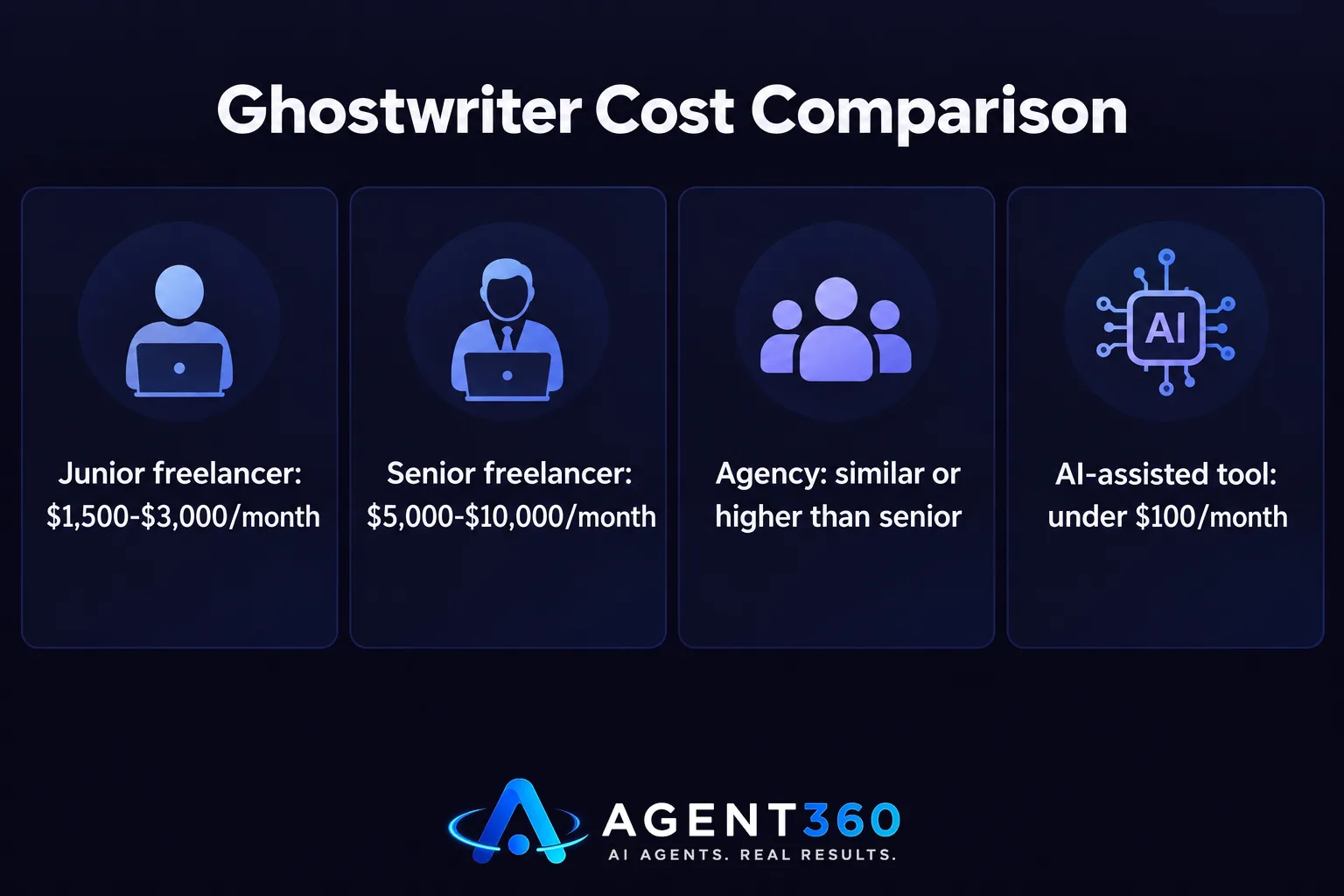
A ghostwriter costs $1,500 to $10,000 a month, not a per-post fee
Freelance ghostwriters price by retainer, not by post. The real work happens before any typing — thinking, interviewing, shaping an opinion into a sentence. A junior writer doing 2-3 posts a week for a founder with a clear point of view might charge $1,500-$3,000 a month. Add strategy, idea-mining from your calls and DMs, and comment management, and a senior writer runs $5,000-$10,000. Agencies bundling ghostwriting with design and scheduling land in similar territory, sometimes higher — you're paying for a team, not one person's hours.
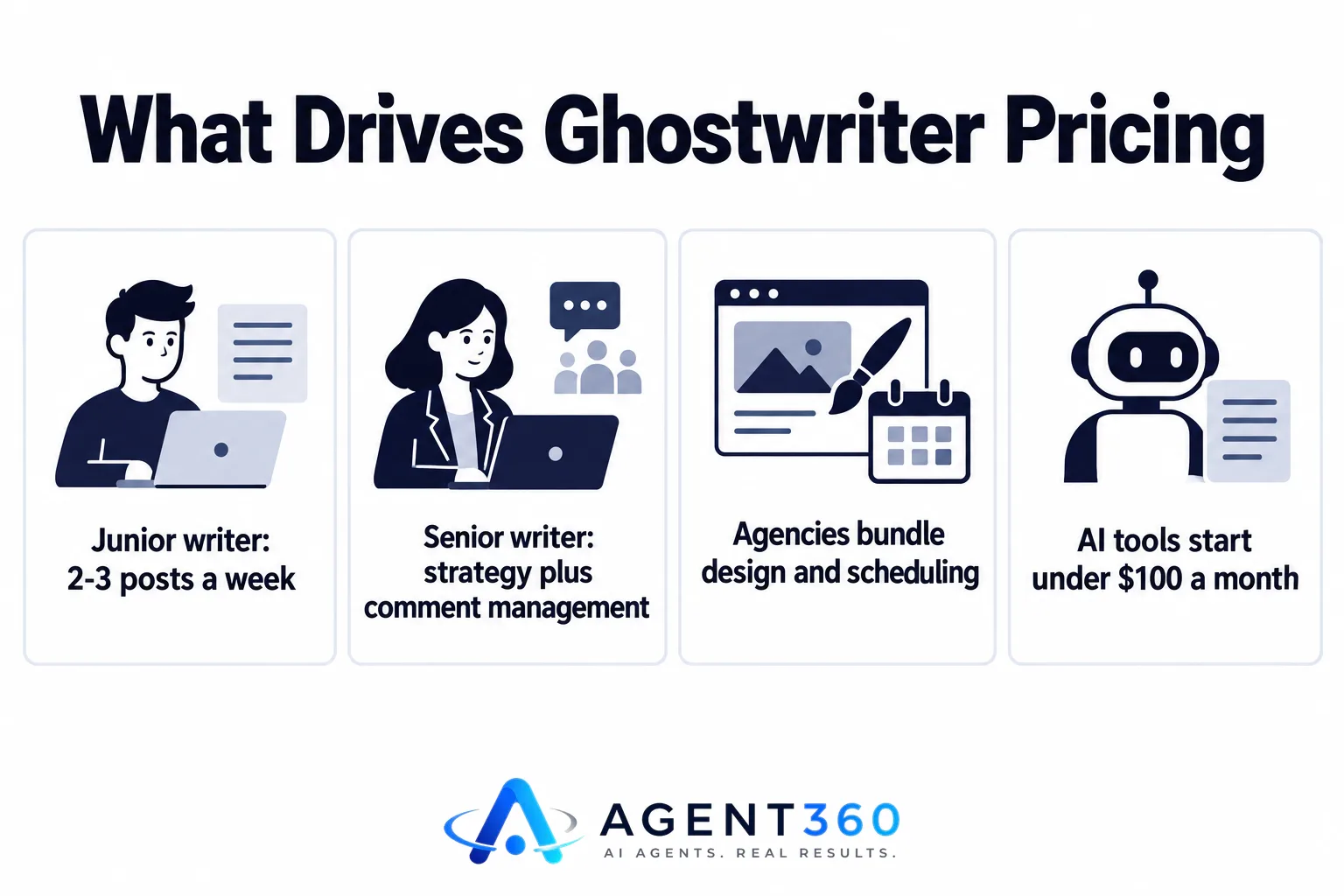
Three things move the number: how much raw material you hand over (a 45-minute monthly call versus three hours of interviews), how technical your industry is, and whether they're also handling engagement — replying to comments as you, which eats real time. AI-drafted tools that still wait for your approval on every post sit well under the freelance range, often starting under $100 a month, because the thinking lives in structured prompts and formulas instead of billable hours. You trade some of that thinking back to yourself.
Good ghostwriting starts with a recorded conversation, not a brief
The ghostwriters worth paying skip the content brief entirely. They get you talking — about a decision you made last quarter, a mistake a client almost made, an opinion you'd defend in a room full of people who disagree — and turn the transcript into posts. Briefs produce generic advice with your name stapled to it. Conversations produce your actual opinions in readable sentences. That's the entire point of having a presence on LinkedIn instead of just a logo.

This is where a small set of proven post formulas earns its keep: the same raw opinion can become a contrarian take, a lessons-learned post, or a short story. A ghostwriter who knows the shapes gets more mileage out of one conversation than someone improvising from scratch each time. Whoever you hire, the loop stays the same — short extraction session, draft, your approval or edit, publish. Skip a step, especially the approval one, and you've handed over more than a writing job.
The best ghostwriters specialize in your industry, not in LinkedIn tricks
Engagement-bait formatting — the one-sentence hooks, the forced vulnerability, the “agree?” at the end — is easy to copy and instantly recognizable. Most B2B audiences are sick of it. The ghostwriters worth hiring know your industry well enough to ask a sharper question than you'd have thought to answer yourself, and they write sentences that someone doing your actual job would recognize as correct. Ask for samples in your field before you ask for a portfolio of viral hooks. A writer who's covered ten industries in six months is optimizing for volume, not for sounding like any one of them.
If you don't have time to vet writers, and definitely not patience for a six-week onboarding process, there's a more honest alternative — see how founders turn a short conversation into a month of posts without taking on a freelancer relationship as another thing to manage.
Ghostwriting itself is legal — undisclosed claims are the actual risk
Paying someone to write words that go out under your name isn't illegal. Speechwriters, memoirists, and basically every executive who's ever signed a shareholder letter rely on exactly this arrangement, and LinkedIn's terms don't require you to personally type a single word on your own profile. The real legal risk sits somewhere else. Public-company executives still carry disclosure obligations for stock-moving statements, no matter who typed them. And if a ghostwritten post makes a false claim about your product, your results, or your credentials, that's a false-statement problem — not a ghostwriting problem. The same words written by you personally would carry the same risk. A ghostwriter is a messenger. You're still the one who signed off.
Where AI changes the math
There's a newer option, and it isn't a person at all — a system that learns your voice from your existing writing and website, drafts in that voice, and still waits for your click before anything publishes. That's the model behind BrandAgent: it reads your site to build a brand kit, scores every draft against each platform's own rules before it reaches you, and nothing goes live without your approval. Plans start at $97 a month — below even the low end of a freelance retainer, since the drafting runs through agents instead of billed hours. See how that stacks up against hiring a person on the agency comparison page, or check current plans if cost is the question you actually came here to answer.
How much does a LinkedIn ghostwriter cost?
Freelance ghostwriters typically charge $1,500 to $10,000 a month, depending on volume, seniority, and whether they also manage comments and strategy. AI-assisted tools that still require your approval on every post generally start well under $100 a month.
How to do ghostwriting on LinkedIn?
Start from a recorded conversation or interview, not a written brief. Turn the raw opinions into posts using a small set of proven formulas, and always route every draft back to the named person for approval before it publishes.
Who are the best ghostwriters on LinkedIn?
The best ones specialize in your industry rather than in LinkedIn engagement tactics — ask for writing samples in your specific field before looking at follower counts or viral post examples.
Is having a ghostwriter illegal?
No. Ghostwriting itself isn't illegal — the risk sits in what gets published, not in who typed it. A false factual claim or an undisclosed material statement from a public-company executive carries the same consequences whether it came from the person or from someone they paid to write it.
More articles
- How Often to Post on LinkedIn: The Rules That Actually Matter
- Social Media Content for Small Business: The Rules That Work
- Brand Voice AI: What It Means and What It Can’t Fake
- What an AI Short Video Maker Needs to Actually Work
- The Honest Guide to AI Video Generators for Social Media
- An AI Content Calendar Only Works With Rules Behind It
- Social Media Scheduling Tools Won't Fix Your Empty Calendar
- The AI LinkedIn Post Generator That Doesn't Sound Like AI
