A Social Media Approval Workflow That Doesn't Stall

Most approval workflows stall for one dumb reason: too many people can say no, and nobody has to say yes by a deadline. Fix that single thing and the rest is just logistics.
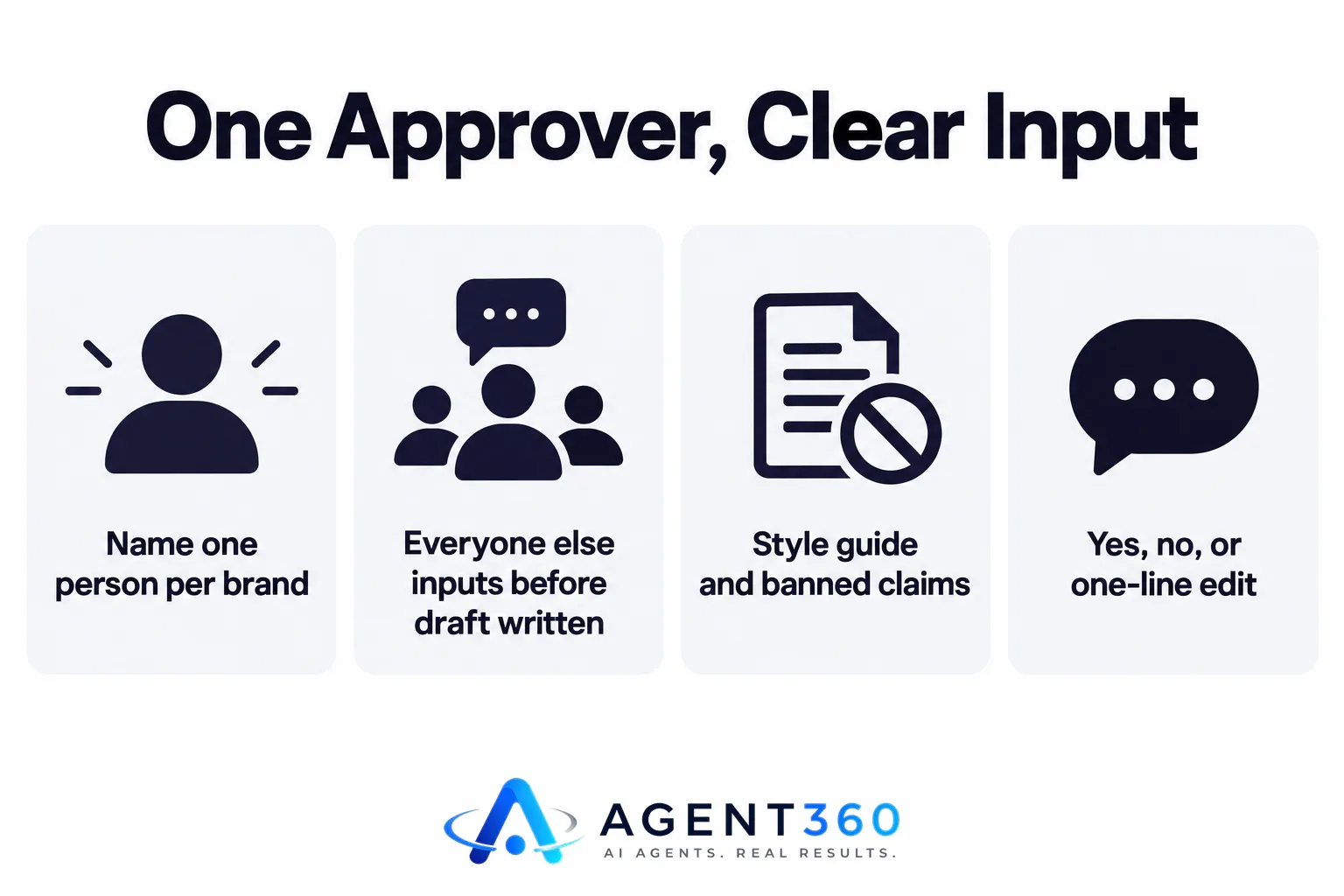
One approver settles every draft, not a committee
If a post needs sign-off from marketing, legal, the founder and whoever's in the Slack channel that day, it sits in a queue until someone forgets about it. Name one person per brand who has final say on tone and risk. Everyone else gives their input before the draft is written, not after — through a style guide, a list of banned claims, a clear sense of what the brand does and doesn't say. By the time a post reaches the approver, the only decision left is yes, no, or a one-line edit. A committee reviewing finished drafts isn't an approval process. It's a queue with no exit.
Approve in batches of ten, not one post a day
Daily approval turns a two-minute task into a standing meeting with yourself. It also means every post gets judged in isolation, so nobody notices when the last six all opened with a question or made the same point twice. Pull a week or two of drafts, read them together, and approve the whole batch in one sitting. You catch the repetition faster, you waste less time switching contexts, and the calendar fills up in one pass instead of limping along a day at a time. A calendar that shows the whole batch next to your actual schedule, like the one built into BrandAgent's scheduling agent, makes this easier — you see three weeks of posts at once instead of hunting through a shared drive.
Give every draft a 48-hour clock, or it dies in the inbox
Drafts without a deadline don't get rejected. They get forgotten. Set a standing rule: anything still unapproved after 48 hours gets escalated straight to the approver, not re-sent to the same inbox. This does two things. It stops one slow week from emptying the calendar three weeks later, and it forces the approver to actually act like the approver. If they're consistently the bottleneck, that's a staffing problem to fix, not a workflow problem to route around.
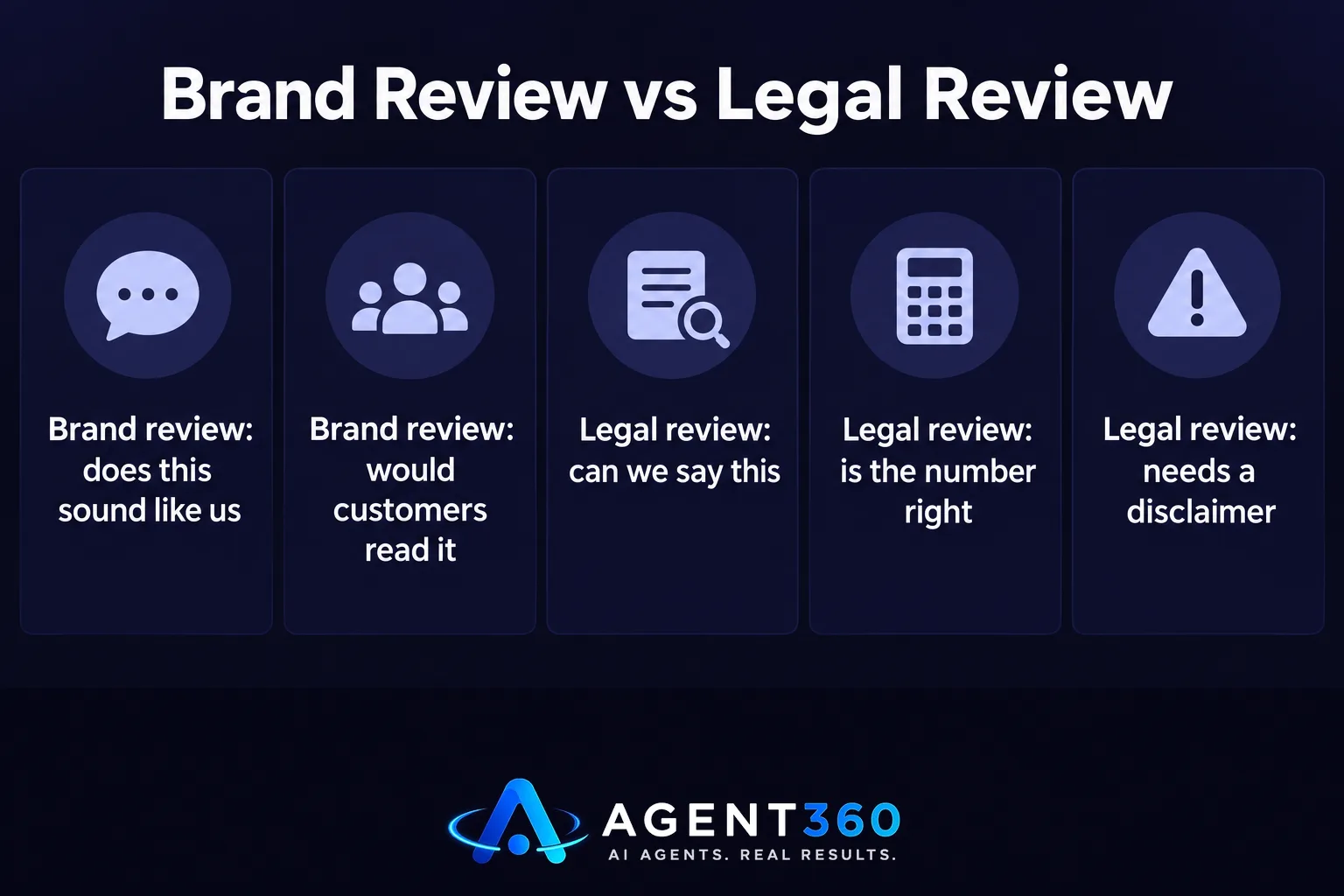
Separate brand review from legal review
These are different questions, and they take different people different amounts of time. Brand review asks: does this sound like us, is it interesting, would our customers actually read it. Legal review asks: can we say this, is the number right, does this claim need a disclaimer. Run both through the same person or the same step and legal caution ends up slowing down brand decisions that have nothing to do with risk, and vice versa. Most posts only need brand review. Route only the posts that touch pricing, guarantees, regulated claims or competitor comparisons through legal, and let everything else move on the faster track.
Decide what "approved" means before you need the answer
Teams get stuck not because approval is hard, but because nobody agreed in advance what a passable post looks like. Is a post that's a little promotional fine, or does every third post need to teach something first? Settle that ratio once, in writing — the value-versus-pitch split is a reasonable place to start — so the approver isn't making a judgment call from scratch on every draft. Same goes for length, hashtag use, and whether a weak opening line is a dealbreaker or a quick fix. Write the rules down once and most approvals become a five-second scan against a checklist instead of a re-read from zero.
Where this breaks down at volume
A workflow built for five posts a month doesn't survive at twenty-five. The approver who could eyeball each one in a spare ten minutes now has two hours of reading, and the batch-and-deadline rules above stop being optional. This is usually the point where teams either hire a second approver, cut volume back to what one person can actually review, or move the first draft off a person's desk entirely. An AI content calendar still needs rules behind it, but it removes the step where someone has to write the draft before anyone can approve it. Services that write and schedule but cut you out of the loop entirely, the way a traditional agency often does, solve the volume problem by removing your approval altogether — worth weighing against what you'd actually lose; the agency comparison lays out that trade-off directly.

Where BrandAgent fits in this
Every draft BrandAgent writes — the post, the picture, the video — waits for your approval before anything publishes. Nothing goes out on its own unless you've already approved and scheduled it. That's the one place automation should sit in this workflow: before the human review, not instead of it. The approver still reads every draft and still owns the final call; the agents just make sure there's always a full batch ready to review instead of a blank page.
Questions worth settling before you build this
Who should be the final approver for social media posts? Whoever owns the brand's risk and tone — usually a marketing lead, founder, or communications head — not a group. One name, one inbox, one deadline. Input from others belongs in the style guide, not in a review step after the draft is written.
How often should approval happen — daily or in batches? Batches, on a one- or two-week cadence, reviewed in a single sitting. Daily approval costs more time in context-switching than it saves in responsiveness, and it hides repetition that only shows up when you read a week of posts together.
What should trigger legal or compliance review instead of just brand review? Specific claims, numbers, guarantees, pricing, and anything comparing you to a named competitor. Everything else — opinion posts, behind-the-scenes content, general commentary — only needs the brand check. Routing it through legal anyway is exactly what slows the whole process down.
More articles
- How to Batch Social Media Content Creation Without Losing a Day
- How to Measure Social Media ROI Without Guessing
- The Social Media Scheduling Tool Checklist Small Businesses Skip
- An AI Social Media Content Creator Needs Five Things to Work
- The LinkedIn Content Strategy Founders Actually Have Time For
- An AI Instagram Post Generator Is Not a Content Strategy
- Content Pillars for Social Media: Pick 4, Not 12
- Is a LinkedIn Ghostwriter Worth It? The Honest Math
