How to Batch Social Media Content Creation Without Losing a Day

Open a blank caption box once a month, write one post, design one picture, repeat that sixteen times — and batching feels like a myth. Done right, batching social media content creation means doing one job at a time across a whole month of posts, instead of handling idea, caption, picture and schedule for one post before moving to the next. In a single sitting of two to three hours, the total time spent on content can drop by more than half. The saving isn't from typing faster. It comes from never paying the real tax on scattered content work: the cost of remembering where you left off.
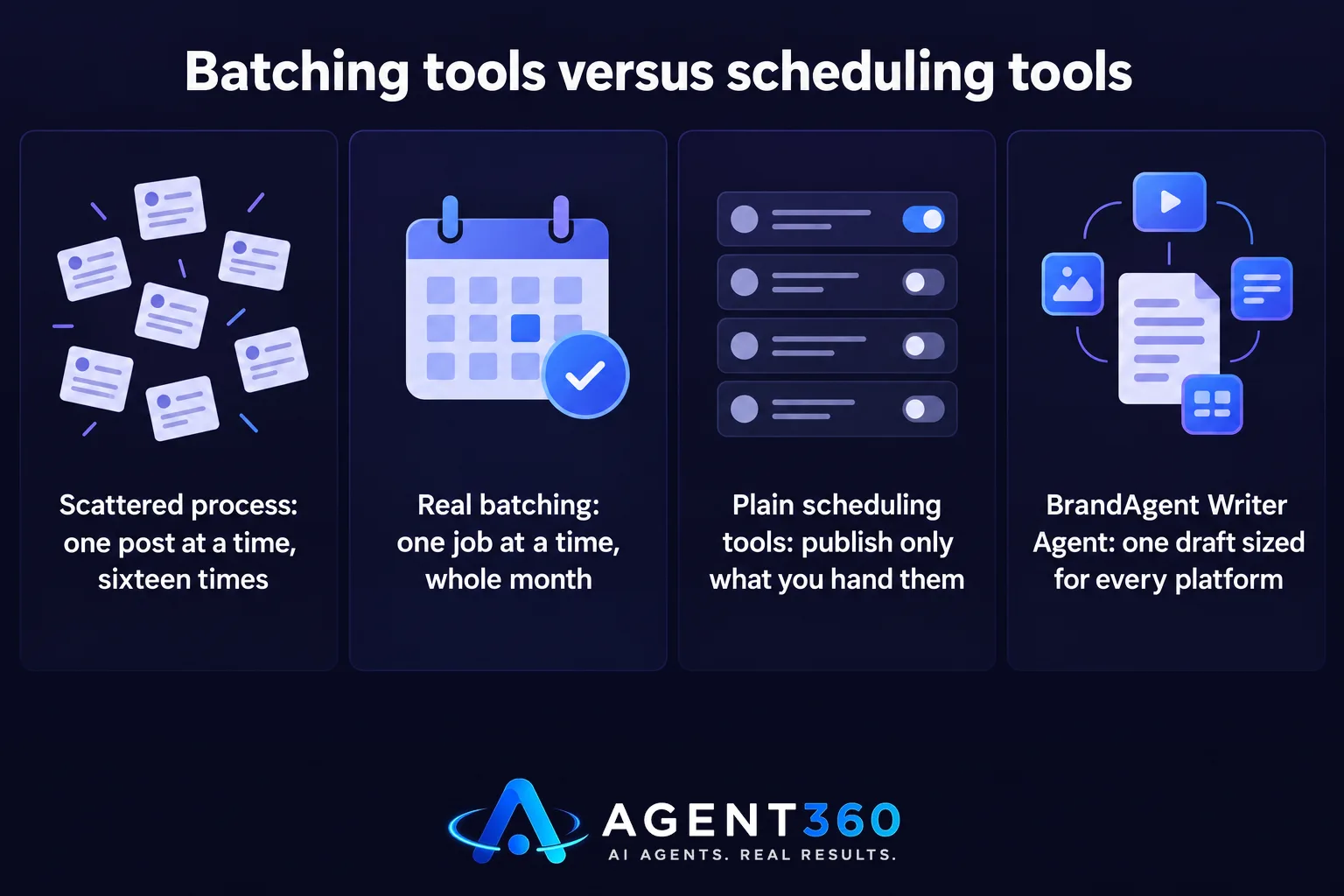
Most people who try batching quit after one go because they batch the wrong way. They stare at a blank box, write one post, design one picture, then do that whole loop sixteen times. That's not batching — that's running the same slow process sixteen times in a row. Real batching separates the jobs so each one runs at full speed, with no mode-switching.
Record the raw material before you write a single caption
Writing from nothing is the slowest part of the whole process. Talking isn't. Before opening any writing tool, spend twenty to thirty minutes recording yourself answering the five or six questions your audience actually asks on sales calls or in DMs. A phone voice memo works. A webinar or customer call works even better — one recording holds more usable material than most people generate in a month of sitting down to write. Every post you draft afterward becomes editing a real quote into shape, not inventing an opinion from scratch. Editing beats inventing, by a wide margin.

Decide your themes before the sitting starts, not during it
The biggest time sink in a batching session is deciding what to post about while the clock runs. Walk in with four recurring themes already picked — a lesson, a myth you correct, a result you describe without naming names, a plain opinion — and you spend the session filling those buckets instead of inventing topics cold. Four themes is enough. More than that, and you spend the session sorting ideas instead of writing them.
Separate ideas, drafts, pictures and scheduling into four blocks
Run the session in this order, and don't let the blocks bleed into each other:
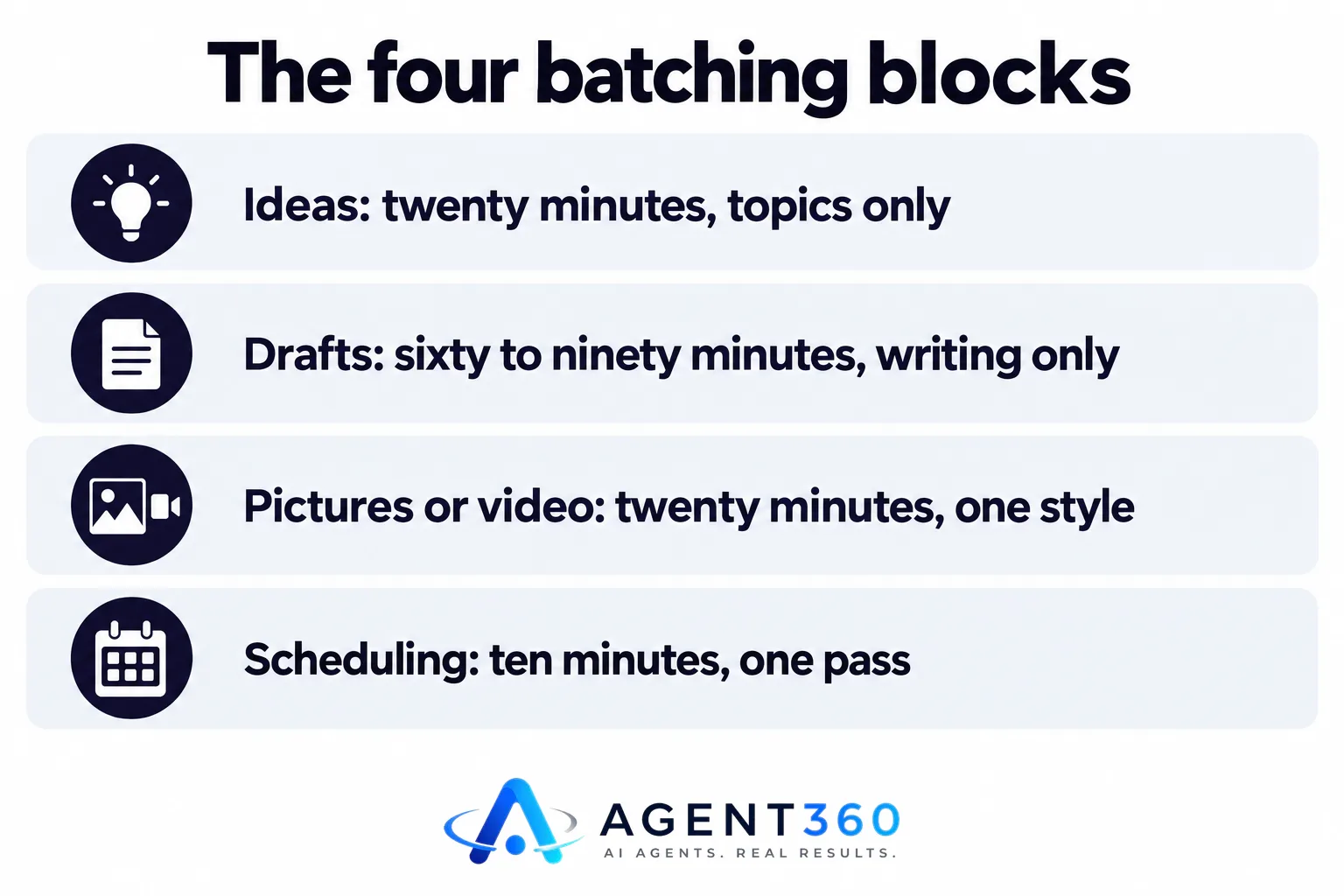
- Twenty minutes, ideas only. List twelve to sixteen post topics as single lines. No writing, no editing.
- Sixty to ninety minutes, drafts only. Write every post in full, back to back, with no pictures and no scheduling. Your brain stays in writing mode the whole time, which is where the speed comes from.
- Twenty minutes, pictures or video. Batch the visual side the same way: pick one style and run it across every post instead of choosing a new look each time.
- Ten minutes, scheduling. Drop every approved post onto the calendar in one pass at the end, not one at a time as you finish each draft.
Switching between writing and designing mid-post is what turns a two-hour job into a four-hour job. Keeping the blocks separate is the whole trick.
Stop the session at ninety to one hundred twenty minutes
Drafts written past the two-hour mark read noticeably more generic than the first ten. Attention for this kind of work has a ceiling, and pushing past it doesn't produce more usable posts — it produces posts you'll rewrite later anyway. If sixteen drafts aren't done by the two-hour mark, stop. Bank what you have and finish the rest the next morning in a shorter second session, rather than forcing a four-hour slog that gets worse in its back half.
Where this breaks down without help
Batching solves the time problem, not the platform problem. A LinkedIn post, an Instagram caption and an X post aren't the same length or the same tone, and rewriting each draft three ways by hand is exactly the kind of mid-session task-switching that ruins the flow above. This is the gap tools like BrandAgent are built for — the Writer Agent takes one drafted idea and produces a version sized for each platform in the same pass, so the batching block stays a batching block instead of turning into three separate rewrites. Plans run from $97 a month with no contract, detailed on the pricing page, and the comparison against plain scheduling tools is worth a read if you're already paying for something that only publishes what you hand it.
Common questions
How often should a batching session happen? Once a month is enough for most people posting three to five times a week. The drafts from a single ninety-minute session, if the ideas were planned in advance, comfortably cover sixteen to twenty posts.
Should pictures be designed at the same time as the caption? No. Design them in a separate block after every caption is written. Switching between writing and designing for each individual post is the main reason batching sessions run long.
What if a topic runs dry mid-session? That almost always means the themes weren't picked before the session started. Stop, write down the four buckets you post about, and restart the ideas block. Five minutes, and the stall won't happen again.
More articles
- How to Measure Social Media ROI Without Guessing
- The Social Media Scheduling Tool Checklist Small Businesses Skip
- An AI Social Media Content Creator Needs Five Things to Work
- The LinkedIn Content Strategy Founders Actually Have Time For
- An AI Instagram Post Generator Is Not a Content Strategy
- Content Pillars for Social Media: Pick 4, Not 12
- Is a LinkedIn Ghostwriter Worth It? The Honest Math
- How Much Does a LinkedIn Ghostwriter Really Cost?
