An AI Social Media Content Creator Needs Five Things to Work

Generic AI slop is not a model problem. It is a missing-input problem. Every tool in this category runs on a large language model that can already write a competent sentence; the gap between a tool that sounds like your company and one that sounds like every other company comes down to what you feed it, and what it does with the draft after that. Run any AI social media content creator through these five checks before you connect an account.
Generic output comes from missing inputs, not bad AI
Ask a chatbot to write a LinkedIn post about your product and you'll get a draft that could belong to any SaaS company selling roughly the same thing. That's not the model failing. It's the model doing exactly what you gave it: one sentence of context. A tool built for this job should pull your voice, tone, colours and logo from your own website before it writes a word, so the draft starts from your brand kit instead of a blank prompt. Skip that step and every post needs a rewrite, which erases most of the time the tool was supposed to save.
A content creator that doesn't version by platform wastes half the work
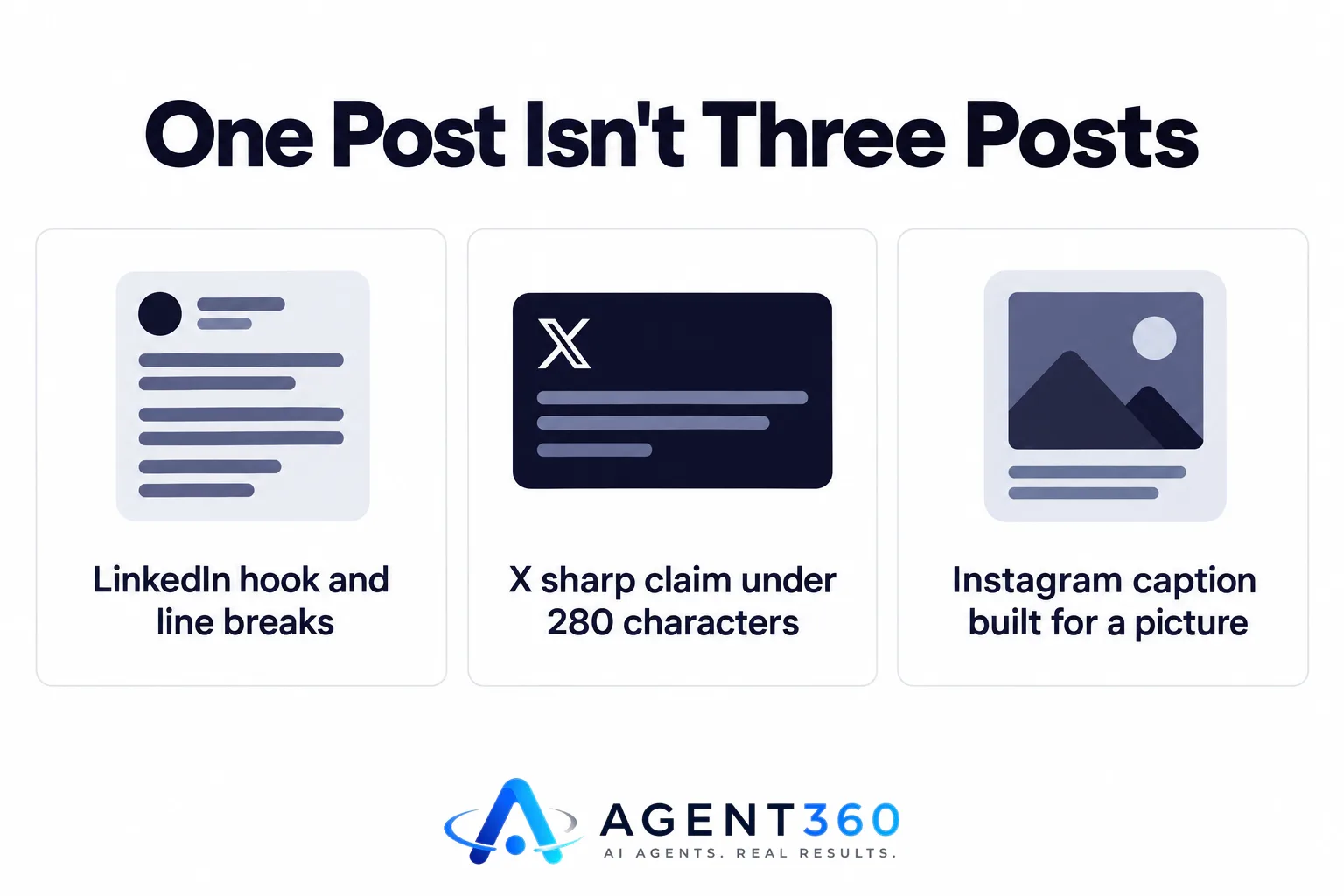
A LinkedIn post and an X post are not the same post at a different length. LinkedIn rewards a hook, a line break, and a point made in the open. X punishes anything over 280 characters and rewards one sharp claim. Instagram needs a caption written for a picture, not instead of one. A tool that writes a single block of text and drops it everywhere is doing the easy 20% of the job. The harder, more valuable 80% is a version built for LinkedIn's format, a separate one sized for X, and a caption for Instagram that assumes a picture sits beside it — not three copies of the same paragraph.
If nothing reviews its own draft, you become the editor
Ask what happens to a weak draft. In most tools, it ships to you exactly as generated, and you fix it, rewrite it, or post something mediocre. A tool worth paying for scores its own drafts against each platform's own rules — hook strength, length, format — and sends a weak one back for a rewrite before you ever see it. That one step separates a tool that produces a feed from a tool that produces a feed you have to apologise for.
Pictures and video are not optional add-ons anymore
Text-only posts on LinkedIn and X still work, but Instagram and YouTube are visual by default, and even LinkedIn's feed favours a post with an image or a short clip over a wall of text. A content creator limited to text is solving half the problem. Check whether it draws an on-brand picture — your colours, your logo, sized right for each feed — and whether it can turn a post into a short video, rather than leaving that to you or a separate tool. They're listed separately for a reason: pictures and video each need their own generation step, not a single afterthought.

The data loop is what turns content into strategy
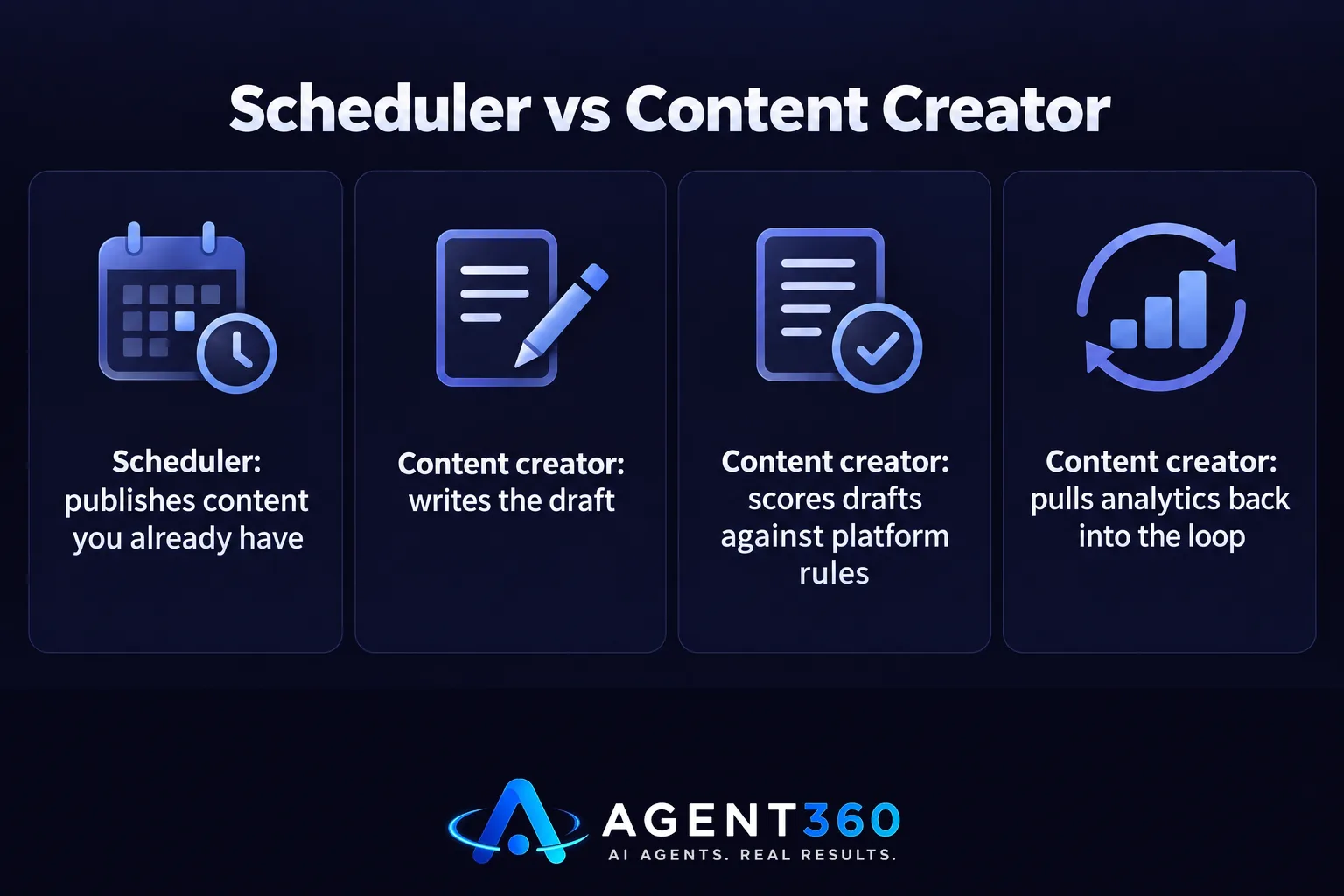
A tool that only publishes is a scheduler with a writing feature bolted on. The useful version pulls views, reach, likes, comments, shares and saves back into the same place you write the next post, so you can see which formula, which topic, which hook actually moved numbers — and do more of that instead of guessing. Without that loop, you're producing volume with no feedback, which is a calendar, not a strategy. If you're still weighing how much to put out before you even get there, the mix between posts that teach and posts that sell matters more than the AI underneath either one — see value vs pitch for the ratio that keeps a feed from going stale in either direction.
Where BrandAgent fits
BrandAgent is built around those five checks rather than around a single chat window: a brand kit learned from your website, posts drafted and scored per platform through the Writer Agent, on-brand pictures and short videos generated alongside the copy, and analytics pulled back into the same workspace. Every post still waits for your approval before anything publishes. Plans start at $97 a month with no contract — see pricing for what each tier includes, or read where a single chat assistant stops and a content pipeline starts at BrandAgent vs AI chat tools.
FAQ
Is an AI social media content creator the same as a scheduling tool? No. A scheduler publishes content you already have; a content creator writes the draft, and the better ones also design the picture or cut the video before anything reaches the calendar.
Can one of these tools actually sound like my company, not like generic AI? Only if it learns your voice, tone and visual identity from your own material first — a brand kit built from your website and past posts — rather than writing from a generic prompt every time.
Do I still need to review anything before it posts? Yes, and you should want to. A tool that scores and rewrites weak drafts cuts your editing time, but final approval before anything goes live should stay with a person, every time.
More articles
- The LinkedIn Content Strategy Founders Actually Have Time For
- An AI Instagram Post Generator Is Not a Content Strategy
- Content Pillars for Social Media: Pick 4, Not 12
- Is a LinkedIn Ghostwriter Worth It? The Honest Math
- How Much Does a LinkedIn Ghostwriter Really Cost?
- Content Repurposing: How One Recording Becomes a Month of Posts
- How to Write a LinkedIn Post That Actually Gets Engagement
- How AI Talking Head Videos Actually Get Made
