How to Measure Social Media ROI Without Guessing
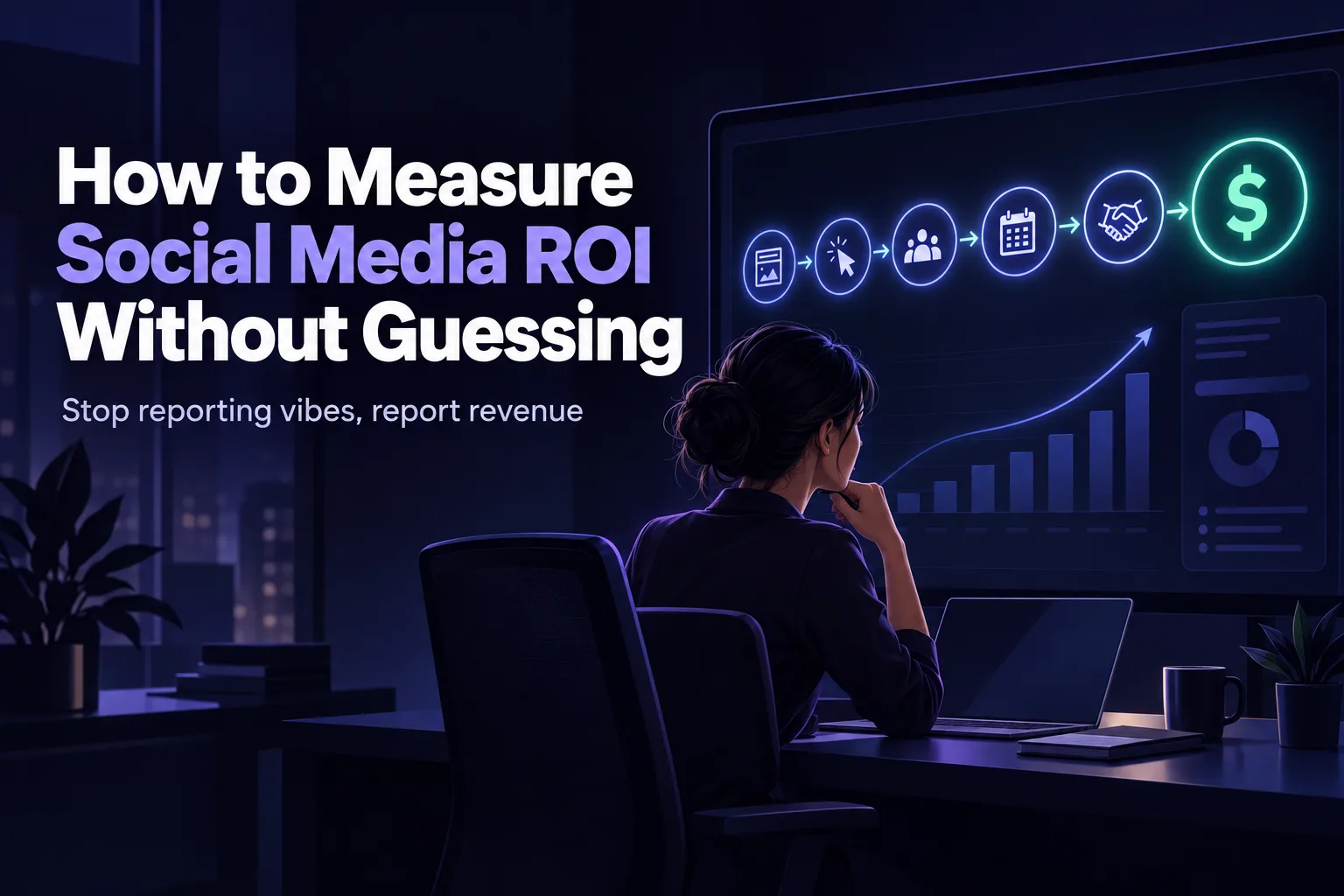
Cost per booked meeting. That's the number, and you get it by tracing a chain: post, click, lead, meeting, deal. If you can't walk that chain for a given channel, you don't have an ROI number. You have a vibe.
Most teams never build the chain. They report follower growth to a CMO who wants pipeline, the numbers get softer every quarter, and eventually someone asks why the budget exists at all. Fixing this takes about an hour of setup and a willingness to stop reporting metrics that feel good but prove nothing.
Vanity metrics and revenue metrics are not the same report
Likes, reach and impressions measure whether content got seen. They don't measure whether anyone acted on it. Treat them as a diagnostic layer, not a results layer: if reach is healthy but nothing downstream moves, the problem is the offer in the post, not the distribution.
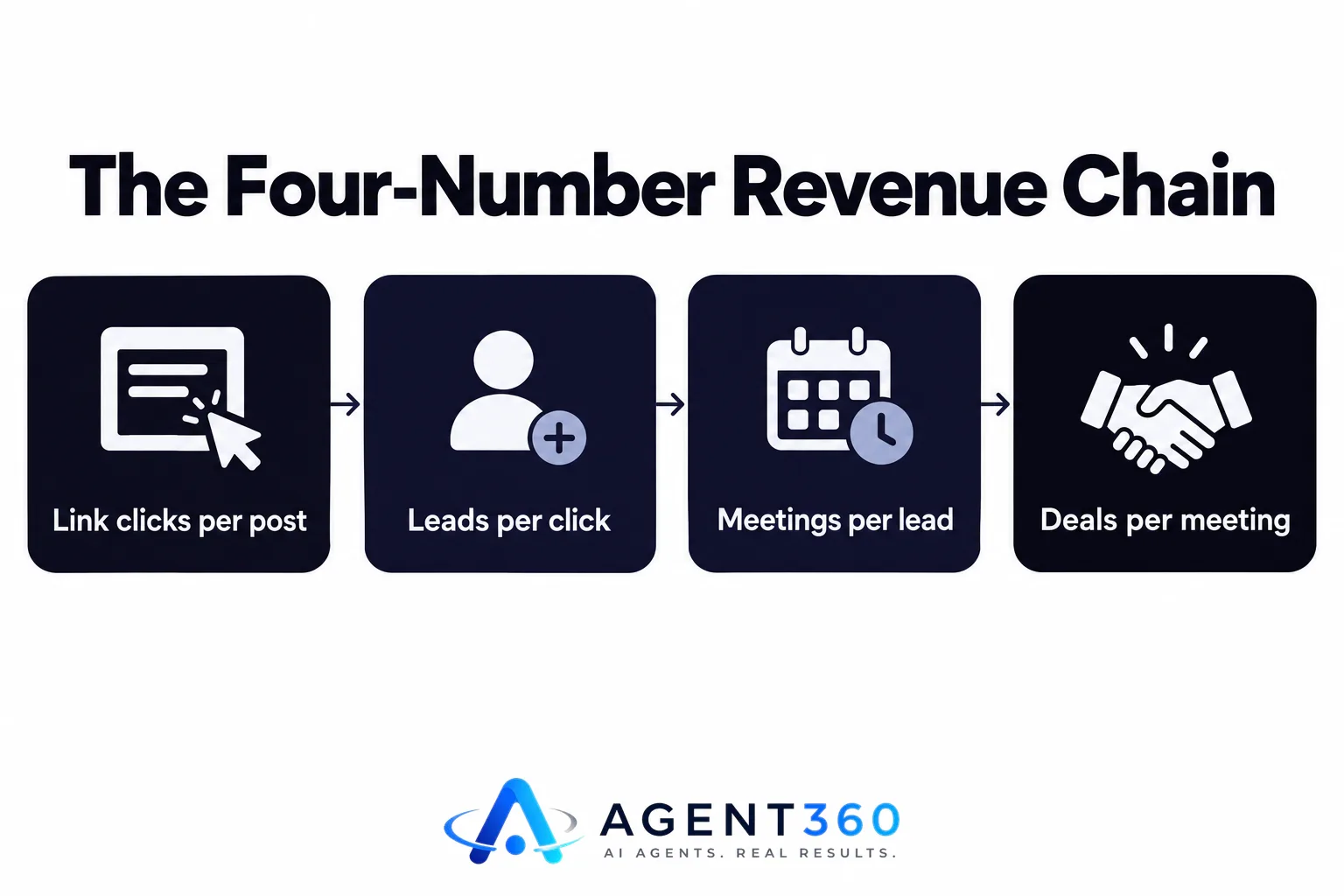
The revenue layer has four numbers, and you need all four or the chain breaks:
- Link clicks per post, tagged with UTM parameters unique to the post, not the channel.
- Leads per click — form fills, DMs, or booked-call clicks that came from that UTM.
- Meetings per lead — the share of leads a rep actually got on a call with.
- Deals per meeting — same win rate your sales team already tracks for every other source.
Multiply the four conversion rates together and you get cost per deal for that channel. That's the only number worth putting in a board deck.
Give a post ninety days before you judge it
A LinkedIn post can keep generating comments and profile views for weeks after it publishes, especially if it ranks well in search or gets reshared. Judge it at 48 hours and you catch the spike, miss the tail — and the tail is often half the total result. Pull numbers at 30 days for a first read and 90 days for the real one. Compare posts against others from the same week, not against your best post ever.
Attribution windows matter more than people admit here. If your CRM only credits the last touch before a form fill, every piece of content that built awareness three weeks earlier gets zero credit. Use a multi-touch view, even a rough one, or you will systematically undercount everything except the last post someone saw.
Set a floor before you launch, not after
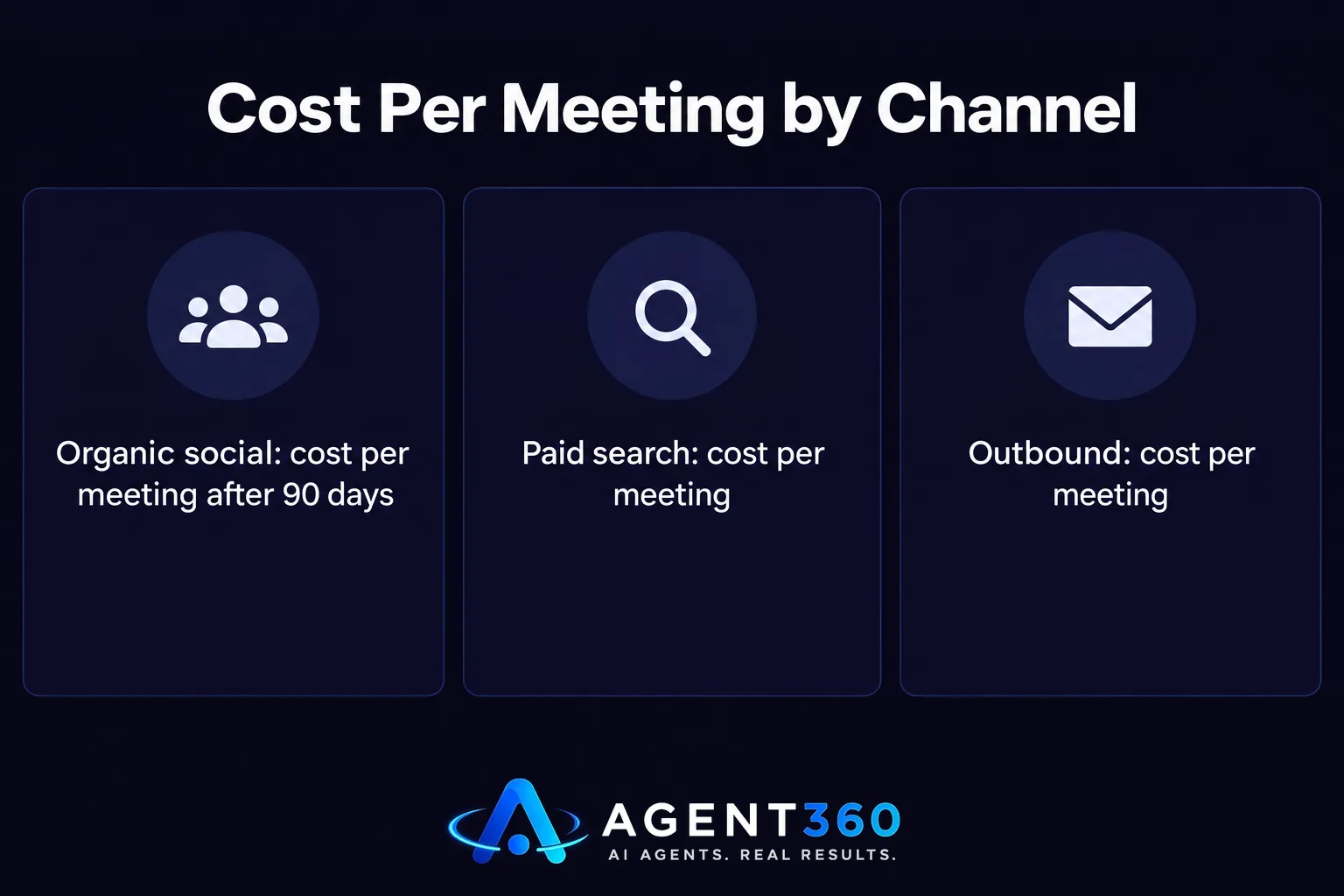
Decide your minimum acceptable cost per meeting before the first post goes out. Compare it honestly to what a meeting costs from paid search or outbound, because that's the real competition for budget. If organic social is still cheaper per meeting after three months, even with a modest volume of leads, it's working — regardless of what the engagement rate looks like next to a viral post from someone else's account.
Comment rate is a better early signal than like rate, because a comment takes more effort and correlates more closely with someone remembering you existed. A healthy comment rate on B2B LinkedIn content is a small fraction of a percent of impressions. If yours is near zero across ten consecutive posts, the problem is almost always the claim in the first line, not the topic.
Separate the pitch posts from the value posts in your reporting
Lumping every post into one ROI number hides what's actually happening. A post that teaches something will get more reach and more comments and almost no clicks. A post that pitches will get fewer comments and most of the clicks. Both are doing their job. Report them separately, or you'll conclude the teaching posts “don't work” and cut the very content that makes the pitch posts land when they finally show up. The mechanics of that mix are worth getting right before you worry about measurement at all — see value vs pitch for the ratio that keeps both halves honest.
Where the analytics actually need to live
Most teams give up on this because of friction: the numbers live in four different dashboards, none of which talk to the content calendar, so pulling a real report takes an afternoon nobody has. This is the one place worth naming a tool: BrandAgent pulls views, reach, likes, comments, shares, saves and followers for every post across LinkedIn, Instagram, X and YouTube over 30 or 90 days, shown right next to the calendar where the next post gets written — see how the analytics work. It won't do the CRM attribution for you, but it removes the excuse of not knowing which posts even deserve a closer look. Plans start at $97 a month on the pricing page if the reporting gap is the thing actually stopping you from measuring this properly.

Frequently asked questions
What is a good social media ROI benchmark?
There is no universal number, because cost per lead varies wildly by industry, deal size and whether the content is organic or paid. The useful benchmark is internal: compare cost per meeting from social against cost per meeting from your other channels, and only keep investing where social comes in lower or is trending down.
How long should I run a social strategy before measuring ROI?
Give it at least one full quarter. Organic content compounds — a post from month one can still be driving clicks in month three — so a one-month test almost always understates the result and leads to cutting something that was about to pay off.
Can I measure ROI without a CRM integration?
Yes, with UTM-tagged links and a spreadsheet, though it takes manual work every week. The part that breaks down fastest when it's done by hand is exactly the part a CRM integration automates: the lead and deal stages of the chain.
More articles
- The Social Media Scheduling Tool Checklist Small Businesses Skip
- An AI Social Media Content Creator Needs Five Things to Work
- The LinkedIn Content Strategy Founders Actually Have Time For
- An AI Instagram Post Generator Is Not a Content Strategy
- Content Pillars for Social Media: Pick 4, Not 12
- Is a LinkedIn Ghostwriter Worth It? The Honest Math
- How Much Does a LinkedIn Ghostwriter Really Cost?
- Content Repurposing: How One Recording Becomes a Month of Posts
