The LinkedIn Content Strategy Founders Actually Have Time For

Ask a founder why their LinkedIn went quiet and you'll hear some version of “I didn't have anything to say.” That's the real problem. Most content advice assumes you'll sit down and think of something — you won't, not consistently, because you're running a company. A strategy built on inspiration isn't a strategy. It's a bet against your own calendar, and the calendar wins every time.
The founders who actually post well aren't generating ideas. They're pulling them out of decisions they already made that week. The system matters more than the writing does.
Your content comes from your calendar, not your imagination
Every week, you already do the things that make good posts: a pricing call you reversed, a hire you almost made and didn't, a customer conversation that changed your roadmap, a number that surprised you. None of it feels like content at the time. It feels like Tuesday. That's exactly why it works — nobody else can write these posts, because nobody else was in the room.
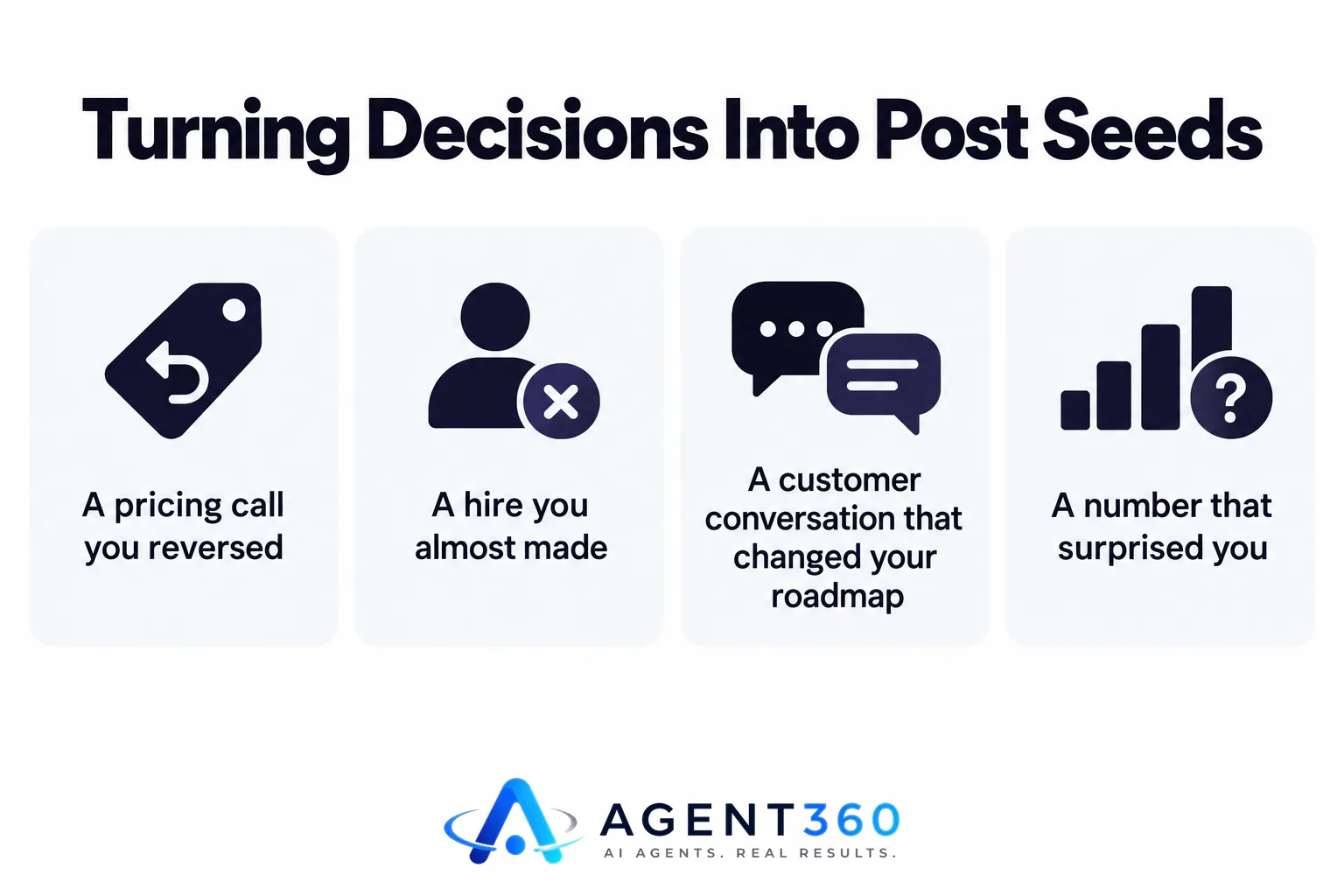
The fix is mechanical, not creative. At the end of each day, write one sentence about the sharpest decision or disagreement you had. Do that for five days and you've got five seeds. Most people toss these because they don't look like finished posts. They're not supposed to — they're raw material, built out using one of the ten proven post formulas that turn a flat observation into something worth reading.
Post from friction, not from a good mood
The failure mode that kills most founder accounts is waiting for a “good idea” before posting. Good ideas feel rare, so the posting rate drops to zero — and zero is worse than mediocre. The posts that actually get read usually came from friction. A customer pushed back on your price and you had to explain it twice before you believed your own answer. A competitor copied a feature and you had to decide whether to say anything. Moments like that produce opinions, and opinions are what the feed rewards. A recap of your week doesn't.
If you can't point to a specific disagreement, deal, or decision behind a post, it's probably filler — and filler is what gets three likes from people who already follow you.
Three short posts a week beats one long one a month — until it doesn't
Founders tend to overcorrect in one of two directions. Either they post once a month, polished within an inch of its life, or they try to post daily and burn out by week three. Neither holds up. Two to three posts a week, each under 200 words, is sustainable for a founder with no content team — and frequent enough that LinkedIn keeps showing your account to new people instead of filing you under dormant.
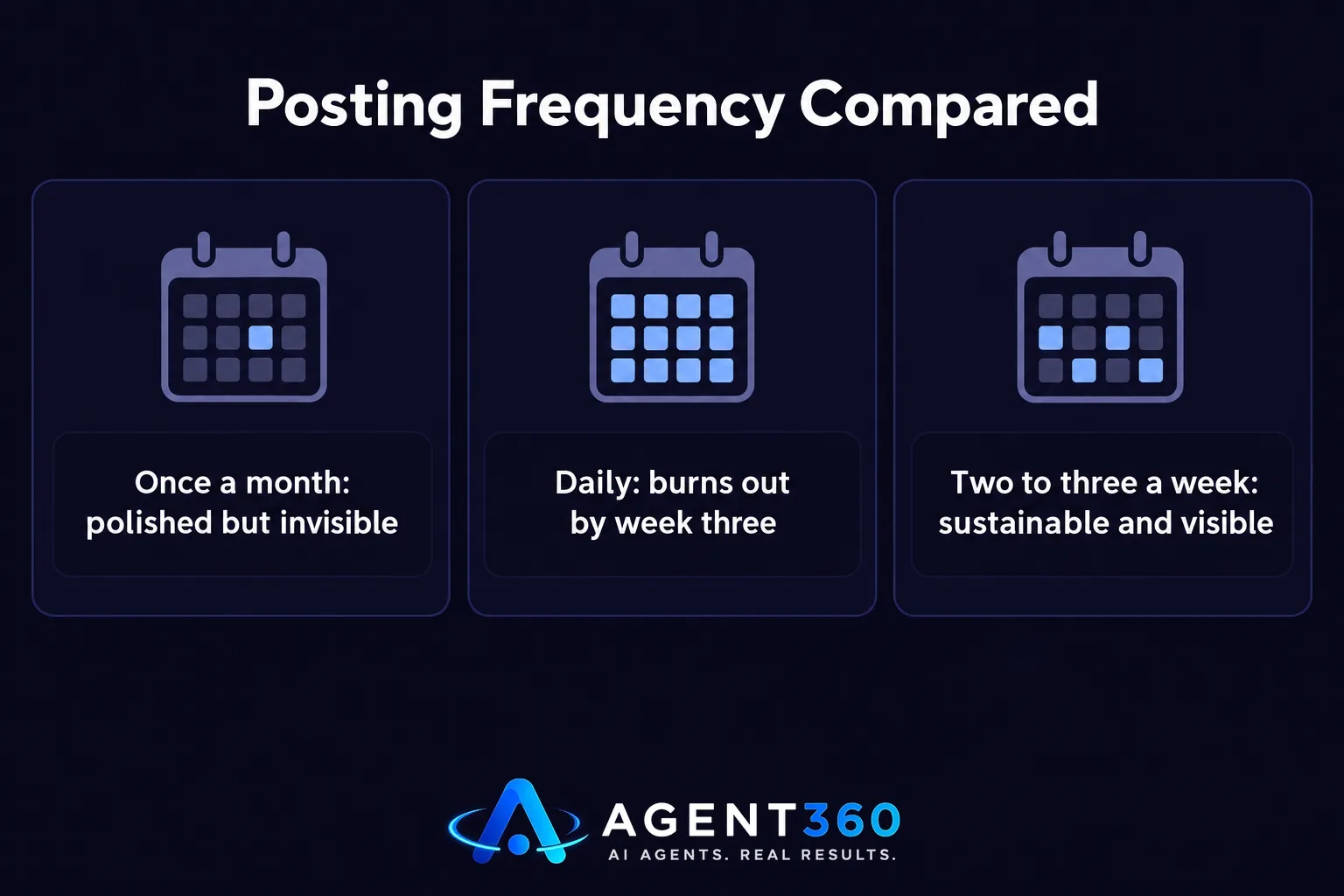
The cap matters as much as the floor. Push to daily and the quality of each post drops, because you've run out of real material and started repeating the same three opinions with different openers. Readers notice faster than you'd think. Three good posts a week, each with a real decision behind it, beats seven thin ones.
Mix what you believe with what you sell, in a ratio you can defend
A founder account that only pitches reads like an ad account, and the feed stops distributing ads from people with 4,000 followers. A founder account that never mentions the business leaves money sitting on the table — people are following you partly to find out what you actually do. Both need to coexist, and getting that mix right is the real skill, covered in more depth in value vs pitch. A rough starting ratio: four posts that teach or argue something for every one that mentions a product, a client result, or a hire. Adjust based on what gets saved versus what gets scrolled past, not on what feels comfortable to publish.
Decide early whether you are writing this yourself
There are three real options here, and most founders pick one without admitting it: write every post yourself, hire someone to write in your voice, or set up a system that drafts from your notes and voice memos while you approve the output. The first costs time you don't have. The second costs money and a feedback loop that can take weeks to tighten. The third is where tools like BrandAgent fit — it reads your website to build a Brand Kit, turns short notes or a recorded interview into drafts scored against LinkedIn's own rules, and queues them for your approval on the calendar, so the weekly cadence survives the weeks you have no time to write. It's not a replacement for having opinions. It's a replacement for staring at a blank compose box trying to remember what happened on Tuesday.

Whichever route you pick, weigh it against what the alternatives actually cost before you commit. If a chatbot is your current method, start with the honest math in BrandAgent vs AI chat tools — a draft from a generic assistant still needs your voice, your platform formatting, and your publishing time layered on top before it's anything close to a finished post.
FAQ
How often should a founder post on LinkedIn?
Two to three times a week is sustainable, and frequent enough to keep showing up in the feeds of people who don't already follow you. Daily posting works only if you have enough real material to avoid repeating yourself — and most founders don't.
Should a founder write every post personally?
The opinions have to be yours, but the writing doesn't have to start from a blank page. Plenty of founders dictate a few sentences or record a short voice note, then edit and approve a draft built from that — the voice stays theirs without costing the hour a from-scratch post takes.
What should a founder post about when nothing newsworthy happened this week?
Look at decisions, not announcements. A pricing call you debated, a hire you walked away from, a customer objection you had to answer twice — any of these beats a product update, because it carries an opinion instead of a fact everyone already knew.
More articles
- An AI Instagram Post Generator Is Not a Content Strategy
- Content Pillars for Social Media: Pick 4, Not 12
- Is a LinkedIn Ghostwriter Worth It? The Honest Math
- How Much Does a LinkedIn Ghostwriter Really Cost?
- Content Repurposing: How One Recording Becomes a Month of Posts
- How to Write a LinkedIn Post That Actually Gets Engagement
- How AI Talking Head Videos Actually Get Made
- Social Media Posts That Get Leads (Not Just Likes)
