LinkedIn Personal Profile vs Company Page: Post From the Person
Post opinions, stories and lessons from a person's profile, and keep the company page for announcements, hiring and credibility. People follow people. A buyer visits the company page afterward, once a person has already earned their attention.
That split is a position, not a law. Below: the reasoning, what goes where, and the situations where the company page should lead.
Buyers follow people, so the profile carries the reach
Nobody scrolls LinkedIn hoping to hear from a logo. A post from a named person with a face, a job title and a point of view reads like a colleague talking. Put the same words under a brand name and they read like a press release. LinkedIn does not publish a clean reach comparison between the two, so we are not going to hand you a multiplier. Still, the direction is not in much dispute: personal profiles get more attention per post, and the reason is mechanical. Comments and conversations happen between people, and a feed built around conversation favours what people reply to.
There is also a trust effect that has nothing to do with the algorithm. A buyer weighing a vendor is really weighing the people they would deal with. A founder who explains a mistake in plain language gives them something a page cannot: a read on judgment.
Short on effort? Spend it on the profile first. The groundwork is in how to build a personal brand on LinkedIn.
Give the company page three jobs, and do them well
A page that isn't the growth engine still isn't optional. It does jobs a profile can't:
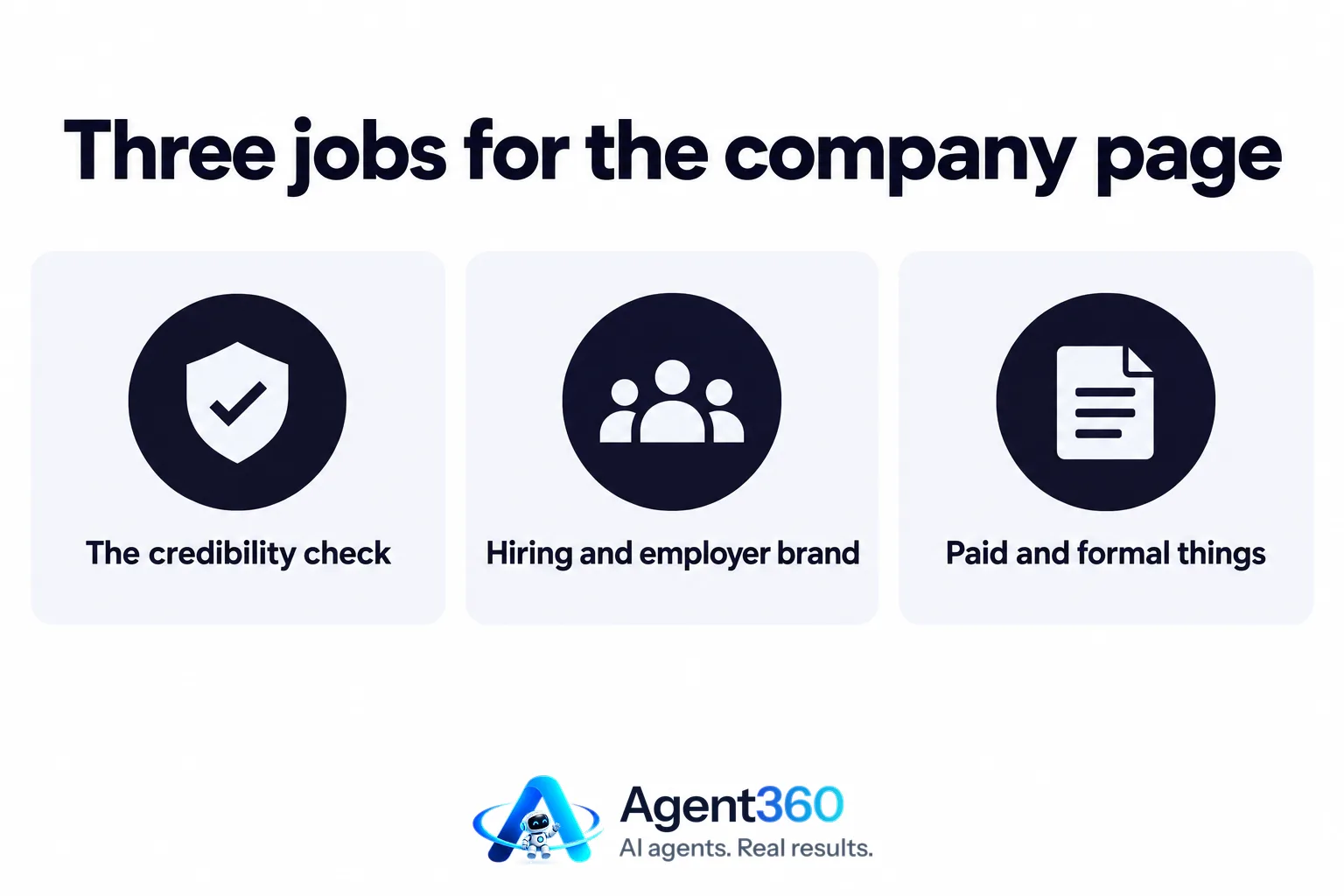
- The credibility check. Someone sees your founder's post and clicks the employer name. They land on the page. If it's empty, or was last updated eight months ago, you have planted the first doubt. It needs a clear description, a current logo and recent posts.
- Hiring and employer brand. Job posts and team news belong here. A candidate looks at the page, not at the CEO's feed.
- Paid and formal things. Running LinkedIn ads is tied to having a Page, and so are event listings and official product updates.
Keep it active, but don't expect it to build an audience by itself. Think of it as a shop front. It has to look open, and it will rarely be the reason anyone walks in.
Sort every post by one question: opinion or announcement?
The rule is short. If the post needs a point of view, it goes on a profile. If it's a fact about the company, it goes on the page.
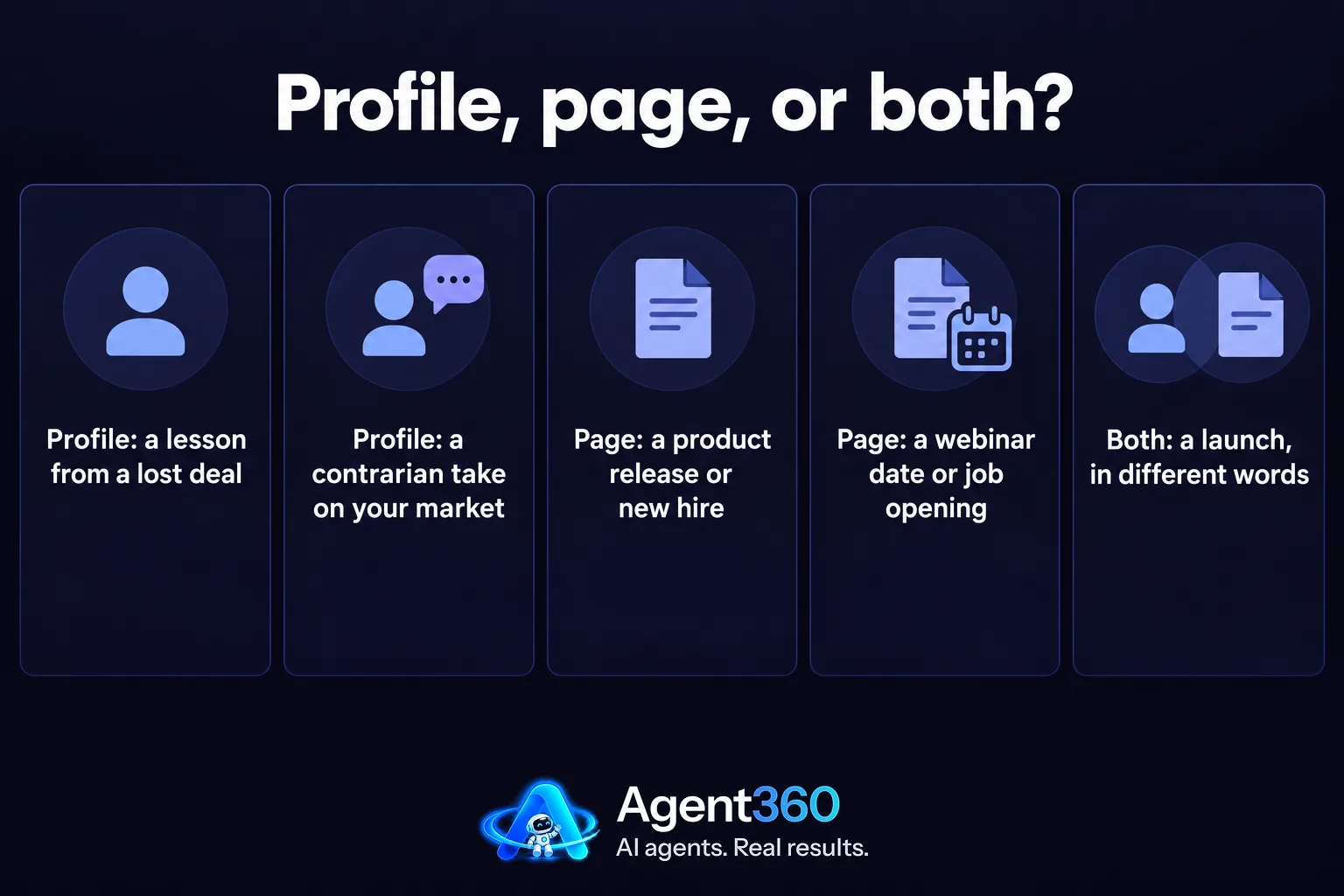
- Profile: a lesson from a lost deal, a contrarian take on your market, a customer conversation that changed your mind, a how-we-decided story, a teardown of a common mistake.
- Page: a product release, a new hire, a webinar date, a job opening, an award, a pricing change.
- Both, in different words: a launch. The page states what shipped. The founder says why they built it and what they got wrong along the way.
The classic mistake is writing one post and publishing it twice. Identical text reads as a broadcast on the profile and as a personality transplant on the page. Rewrite it for whoever is speaking.
Mind the balance between teaching and selling on both. Our guide on value vs pitch covers the ratio, and it bites harder on a page than on a person, because a page has no personality to excuse a pitch.
Do not build the plan on employees resharing the page
This is the advice we'd argue with. A common playbook says: post from the page, then ask the team to reshare. It sounds efficient. It fails because it's a distribution plan for content people didn't want to share in the first place. Staff will reshare a hiring post once, out of politeness, and then stop. If the content were good enough to spread, it wouldn't need a nudge in Slack.
Flip it. Let two or three people post things worth engaging with from their own profiles, and let the page reshare or point to the best of them. Distribution then follows content that has already proved itself.
The profile-first approach breaks in four situations
Know where this advice fails before you copy it.
- Nobody will be the face. If your founder won't post and no one else is willing, a profile strategy has no profile. Run the page properly and accept slower growth, or find someone who will speak.
- Regulated industries. If every public statement needs legal sign-off, personal opinions are risky. A page with approved copy may be the safer channel.
- Turnover risk. An audience built on one person leaves with that person. Spread it across two or three voices, and have the page keep the company story.
- Consumer or local brands. When people buy the brand and not the person, the page matters more.
A cadence that fits a small team
These are suggestions, not platform rules. Start with one person posting from their profile two to three times a week, mostly opinions and stories. Have the page post once a week: an announcement, or a reshare of the best profile post with a line of context. After a month, check which profile posts drew replies from real prospects, and write more like those. For the frequency question in full, see how often to post on LinkedIn.

Where BrandAgent fits
BrandAgent publishes to your LinkedIn profile today: text, pictures and video, on the schedule you set, with you approving every post. LinkedIn Company Pages switch on when LinkedIn approves them, so for now the page side stays manual. That suits the split above, since the opinion-led posts that do the heavy lifting are the ones going to a profile. The Writer Agent drafts them in your voice from your Brand Kit, and the founder setup turns a short interview into a month of drafts. Details are on the LinkedIn page, and plans start at $97 a month on the pricing page.
Questions people still ask
Should a B2B company post on LinkedIn from the company page or a personal profile?
Mostly from a personal profile. Opinions, stories and lessons earn attention when a named person delivers them. Use the company page for announcements, hiring and as the credible landing spot a buyer visits after seeing your people. Do both, but put the creative effort into the profile.
Do I still need a company page if I post from my profile?
Yes. Your employer name on your profile links to it, so buyers will look. It also handles job posts, ads and official updates. It doesn't need heavy volume. It just has to look current and clear.
Is it a problem if the audience follows one person and not the company?
It's a risk if that person leaves, which is why a few voices beat one. Have two or three people post, and let the page tell the company story and reshare the strongest profile posts. That way the audience belongs to the business, not just to one individual.
More articles
- Managing Social Media for Multiple Clients Without Chaos
- How Startups Should Pick an Instagram Scheduling Tool
- How to Schedule Posts for a Retail Sales Event
- Content Pillars for Instagram: Pick Four and Ratio Them
- The Social Media Scheduler Test Most Businesses Skip
- Generating Instagram Posts With AI: What Actually Works
- AI Social Media Posts: What Actually Works
- AI Social Media Content Generator for Instagram, Explained
