Who Actually Offers All-In-One Website and Marketing?
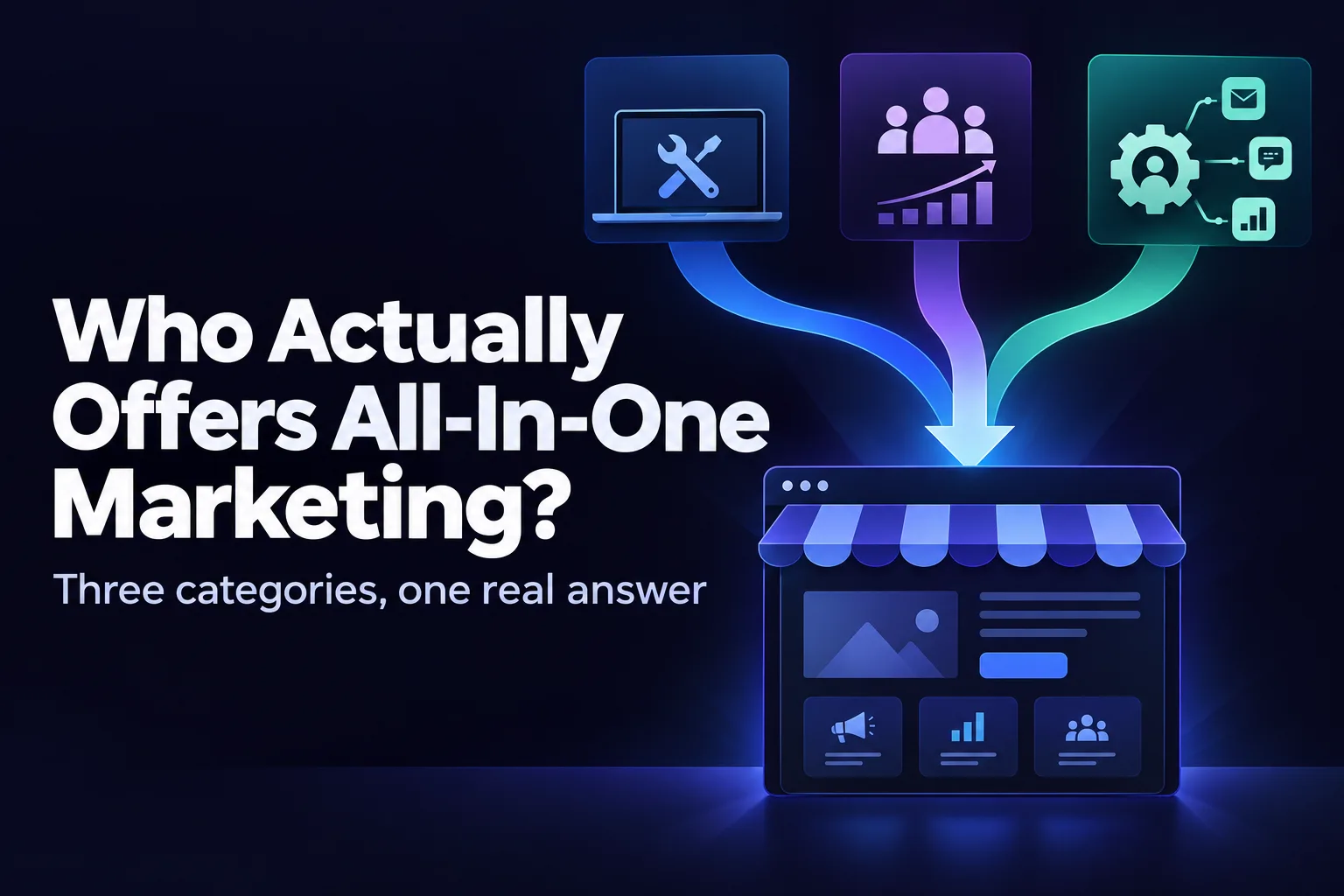
Three different kinds of companies show up when you search this, and they are not the same business wearing different logos. There are DIY website builders with marketing add-ons bolted on. There are large franchise marketing companies that sell you a package and hand you off to a rotating account rep. And there are smaller, done-for-you platforms that run the website, the ads, the SEO and the booking under one team and one invoice. Pick the wrong category and it costs more than picking the wrong vendor inside the right one.
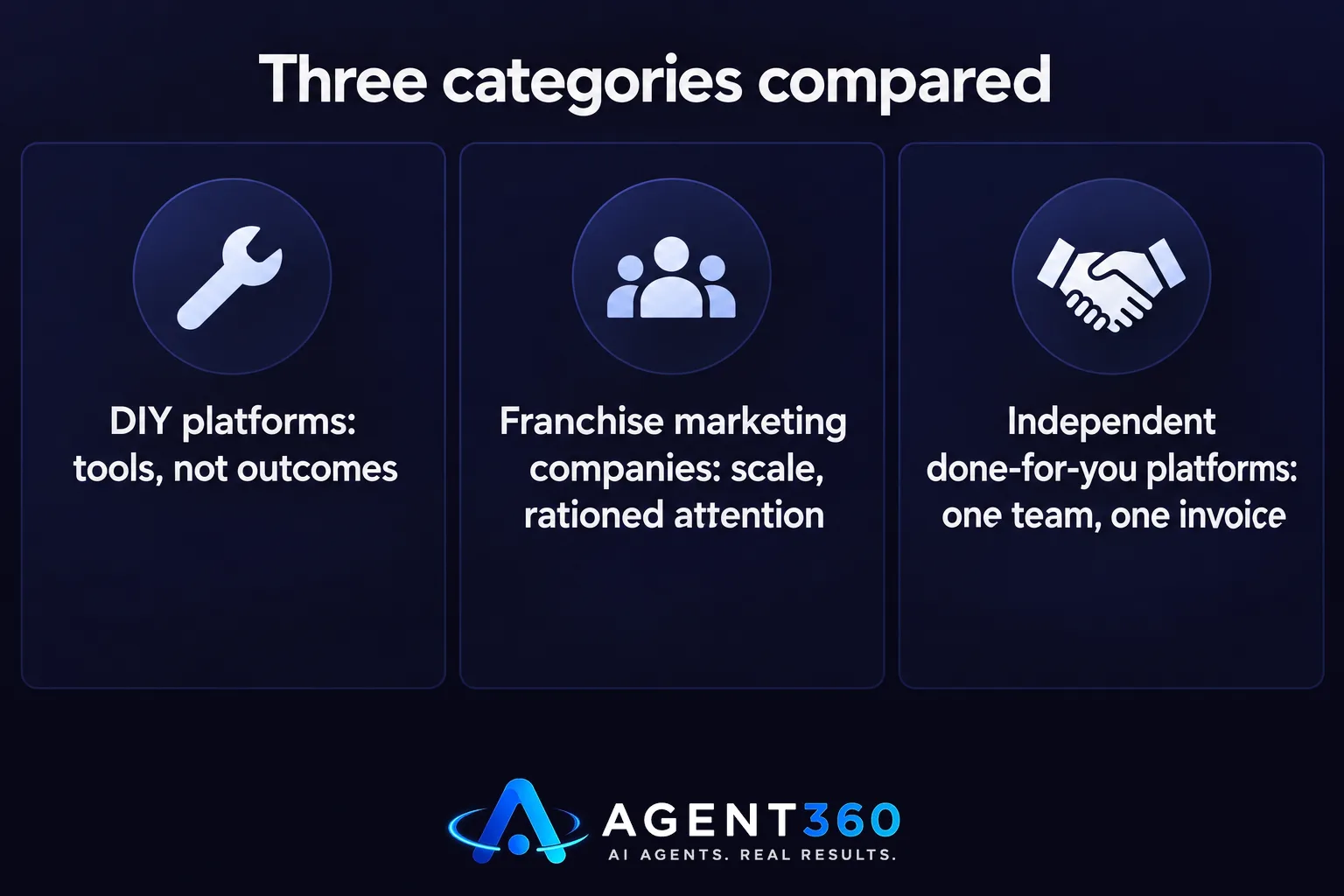
DIY platforms hand you the tools, not the outcome
Wix, Squarespace, GoDaddy and similar platforms will sell you a website plus an {SEO tool} and an {ads tool} for a low monthly fee. The price looks good because the labor is yours — you're still writing the landing page copy, picking keywords, setting the ad budget, and checking whether last month's campaign made money. Fine if you have the hours and the patience for it. That's the cheapest path. If you don't, the tools sit unused by month three. That's the most common failure in this category: not a bad platform, an empty one.
Franchise marketing companies sell scale, then ration attention
Names like Thryv, Hibu, LocalIQ and Scorpion built their businesses selling bundled website-and-marketing packages to local businesses, often through a door-to-door or call-center sales model. The packages look complete on paper. Where this category tends to disappoint is the gap between what the salesperson promised and what the account team actually delivers once you've signed a 12-month contract: generic templates reused across thousands of clients, a new rep every few months, and ad spend bundled into the fee rather than paid straight to Google or Meta — which makes it hard to tell what the platform costs versus what the media costs. Worth reading before you sign anything multi-year: a closer look at one of the better-known names, Booked vs Thryv: A Fair, Side-by-Side Comparison.
Independent done-for-you platforms run everything under one team
The third category is smaller companies built specifically to replace the five-vendor stack — web designer, SEO freelancer, ad manager, social media person, answering service — with one monthly plan. Same reason agencies keep losing business to platforms: no owner wants five invoices and five people to chase down when a lead goes unanswered. The tradeoff to check here is depth versus breadth. Ask whether the same team that builds your site also runs your ads, or whether your account gets split across departments that don't talk to each other. For a direct comparison of this structure against hiring separate vendors, see All-in-One Marketing Agency vs. Separate Vendors: Who Wins?
Check whether the quoted price includes ad spend before you compare anything else
This is where most comparisons go wrong. A $400 package that includes your ad budget is not cheaper than a $300 management fee plus your own ad account — it's usually the opposite, and almost always less transparent about where the money goes. Ask three questions of any provider. Is ad spend paid to Google and Meta directly from my account, or routed through yours? Can I see the raw campaign data, not just a summary slide? What happens to that budget the month I want to pause it? A provider that can't answer the third question plainly is managing your money, not your marketing.
A contract longer than 12 months is a warning sign in this category
Local marketing work is easy to start and hard to verify in month one. A new website takes weeks to index. Ad campaigns need a learning period. SEO moves on a scale of months, not days. That lag is exactly why some providers lock in long contracts — it buys them time before results are expected. A fair provider in this space works month to month and earns the renewal every month, because the real switching cost of a bad local marketing contract is rarely the fee. It's the months spent locked into something that isn't working. For the cost side of this decision, including what long contracts actually protect, see Hiring a Local Marketing Agency: What It Actually Costs.
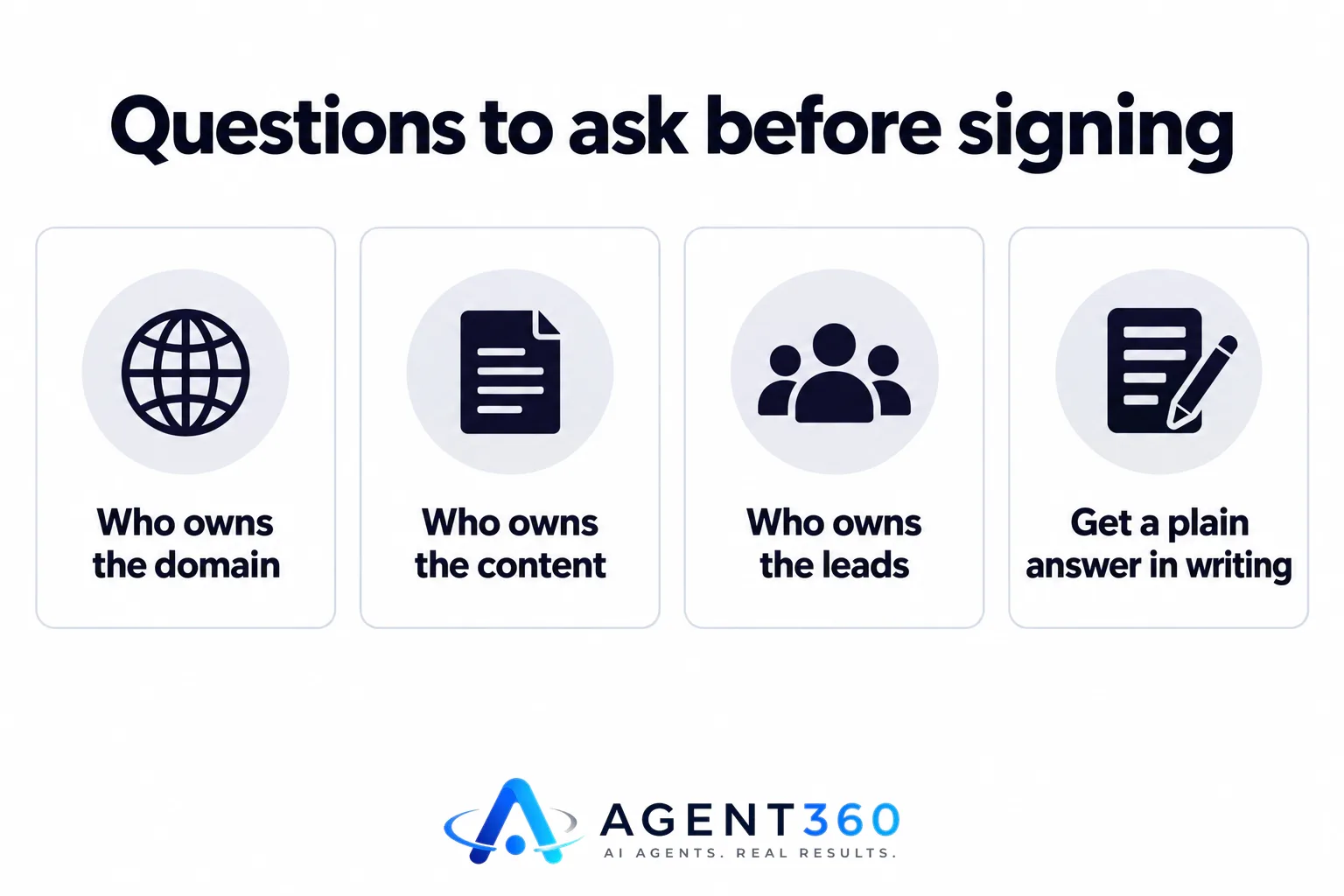
Ask who owns the domain, the content and the leads before you sign
Some platforms build your site on their infrastructure and keep the domain registered under their own account — fine until you want to leave, at which point moving it turns into a negotiation. Same goes for the blog posts, the ad creative and the customer list sitting in their CRM. Get a plain answer in writing: if you cancel next year, do you walk away with your domain, your content and your contact list intact, or do you start over?
Where Booked fits in this category
Booked runs on this third model: one team, one plan, from $297 a month, covering the website, SEO, AEO and GEO for AI search, Google and Meta ads, landing pages, instant lead response, booking with deposits, and review requests — with ad budget paid directly to Google and Meta from your own account, not bundled into the fee. It's month to month, no setup fee, and you keep your domain, leads and customer list if you cancel. The pricing page breaks down what changes between the three plans, and the get-found service page explains how the SEO, AEO and GEO work together.

Frequently asked questions
Is Thryv or Hibu an all-in-one option?
Both sell bundled website-and-marketing packages aimed at local businesses, which puts them in the same broad category. The real differences show up in contract length, how ad spend gets billed, and how much of the work the same account team actually handles versus how many departments your request passes through — worth confirming on a sales call, not assumed from the website.
How much does all-in-one marketing cost for a small business?
Done-for-you plans in this category generally start in the $250–$600 a month range for a single location, before ad spend. The lower end covers one location and a capped ad budget; higher tiers add more content, higher ad spend ceilings, and dedicated account support.
Can I switch providers without losing my website?
Only if you own the domain and the hosting sits in your name, or the contract guarantees a clean handover. Confirm this before you sign, not after you've decided to leave — it's the single most common point of friction when a business switches providers.
More articles
- Best Alternatives to Scorpion for Local Business Marketing
- The Best Done-For-You Marketing Under $500 a Month
- Who Builds a Website and Runs SEO, Ads and Social?
- What Is the Best All-in-One Marketing Service for a Local Business?
- Booked vs Thryv: A Fair, Side-by-Side Comparison
- How ChatGPT Picks Which Local Business to Recommend
- Done-for-You Website and Marketing: What You Still Do
- Small Business Website and SEO Package: What Should Be Included
