Booked vs Thryv: A Fair, Side-by-Side Comparison
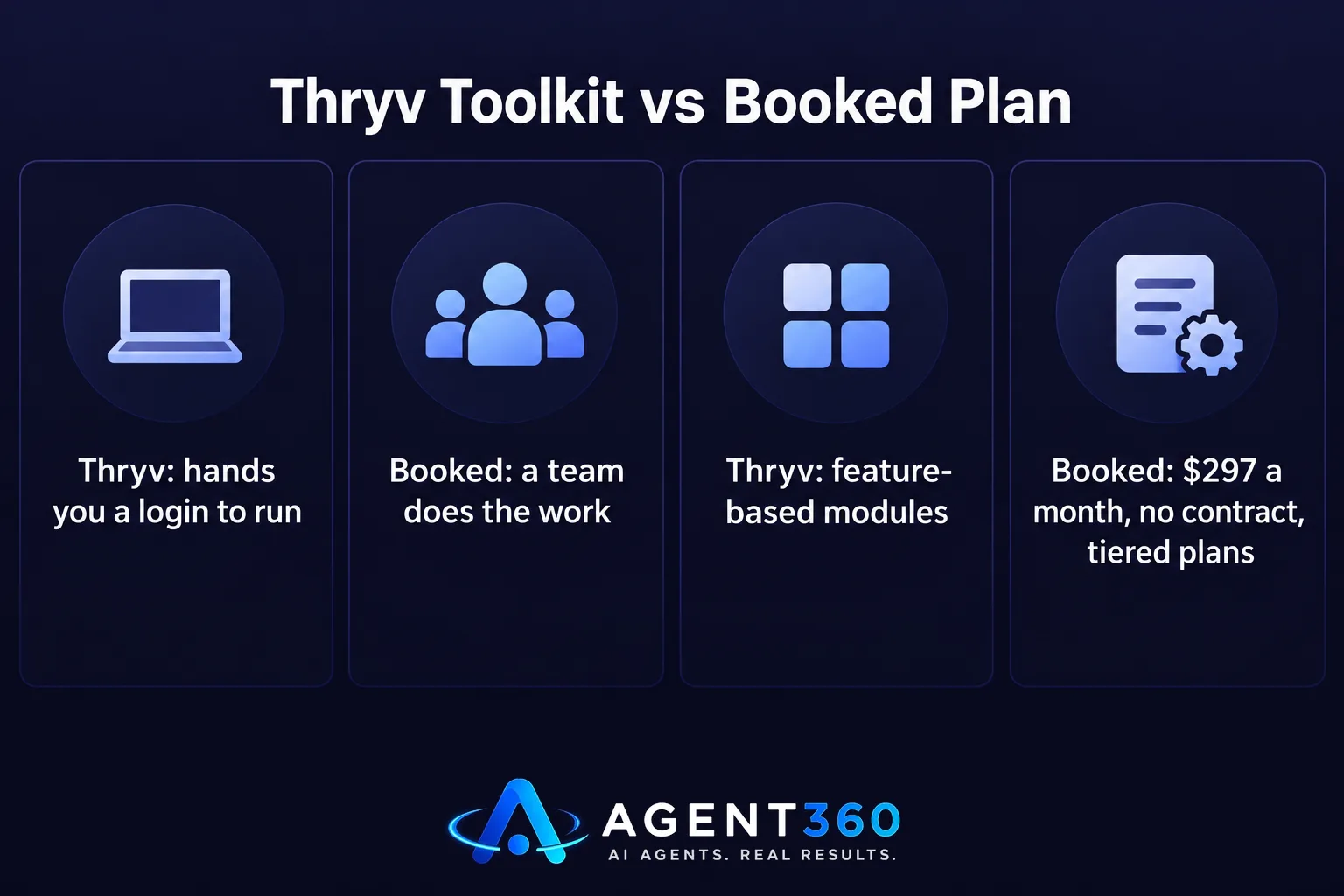
Thryv and a done-for-you marketing plan chase the same list of problems: website, reviews, booking, texting, social, ads. They just sell the fix differently. Thryv hands you the software and expects you, or someone on your payroll, to run it every day. A done-for-you plan sells the same outcomes with a team already attached to the software, for one flat monthly fee. That's the whole comparison. Everything below is detail.
Thryv's main competitors are toolkits, not crews
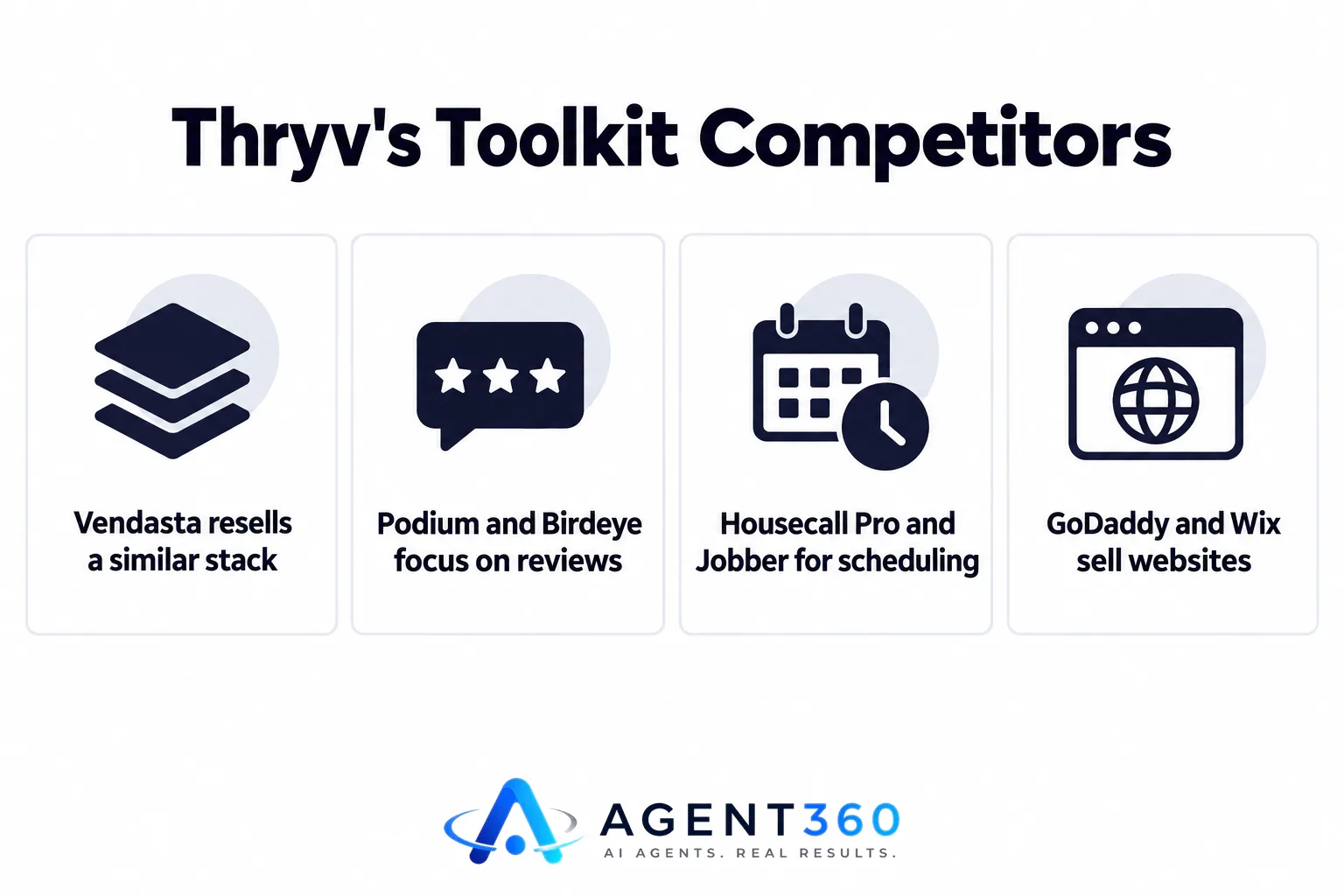
Thryv sits in a crowded field of local-business software. Vendasta resells a similar stack through agencies. Podium and Birdeye focus on reviews and messaging. Housecall Pro and Jobber do the same job for home-service scheduling specifically. GoDaddy and Wix sell a website with marketing add-ons bolted on top. Every one of them hands you a login and a dashboard — none of them write your posts, answer your leads, or run your ad account for you. Line Thryv up against any of these and you are comparing dashboards: the categories covered in SEO, local search and social look similar on a feature list no matter which toolkit you pick. What actually differs is who sits down and operates the thing once it's switched on.
Is Thryv worth the money is the wrong question
Whether Thryv is worth it comes down to one thing: does anyone in your business actually have the hours to run it? If you already employ a marketing coordinator with time blocked off each week to write posts, build landing pages and chase down leads, a module-based toolkit is a fair purchase — you are buying software, and the labor is already on staff. If the plan is for the owner or a front-desk employee to squeeze that work between calls, the subscription price was never the real cost. The time it demands is. That is the distinction worth sorting out before you compare any two platforms line by line, and it is covered in more depth when weighing an all-in-one agency against separate vendors.
The real cost is the hours someone spends running it
A self-serve platform bills you whether or not anyone logs in. The hidden cost shows up later — configuring campaigns, writing ad copy, approving creative, following up on leads that came in overnight, reconciling who actually booked. This isn't a Thryv problem specifically; it's a known failure mode with self-serve marketing tools in general. The dashboard gets used hard in month one, then quietly less each month after, because running three or four campaigns on top of a full-time job is the first thing to slip once the schedule gets busy. The software did its job. Nobody had the hours to do theirs.

A done-for-you plan skips the step where no one has time
Booked covers the same ground — website, SEO, AEO and GEO for AI search, social, Google and Meta ads, instant lead response, online booking with deposits — but a team does the work instead of handing you a login. Plans start at $297 a month with no setup fee and no contract, and each tier is everything in the one below it plus more, so you can see exactly what you're buying before you move up a level. The comparison that matters isn't feature-for-feature against Thryv's module list. It's whether the work actually gets done every week, no matter how busy your front desk gets. Full plan details are on the pricing page.
Is Thryv the same as Yellow Pages?
No, not anymore — though the confusion makes sense. Thryv's corporate lineage runs through the old Yellow Pages and Dex Media print-directory businesses, which is why some owners who remember those print ad sales calls still link the name to that era. What's sold under the Thryv name today is a web and CRM software platform — website, payments, CRM, marketing modules — not a print directory listing.
Why is Thryv stock dropping?
Thryv is publicly traded, so its filings get scrutinized the way any subscription software business does — how many accounts renew versus cancel each quarter, and what it costs to replace the ones that leave. Local-business software has a structural problem here that has nothing to do with any one vendor's execution: switching costs are low, contracts are often short, and a business can walk away within a billing cycle if the software sits unused. That pressure shows up in a stock price long before it shows up in a sales pitch.
What should you actually compare before switching?
Compare who does the work, not just what the dashboard lists. Ask whether posts get written for you or by you. Ask whether leads get answered automatically or sit waiting for someone to notice a notification. Ask whether the monthly price includes a person checking the account, or just a software license. Those answers matter more than any feature checklist — and they're worth asking any vendor, not just Thryv. See the fuller list on the FAQ page.
Questions people ask
Is Thryv worth the money?
Only if someone on your team already has dedicated hours to run the dashboard every week — writing posts, building campaigns, following up on leads. Without that person, the software fee is the small part of the bill. The unused hours are the big one.
Is Thryv the same as the Yellow Pages?
Not today. Thryv's parent company has roots in the old Yellow Pages and Dex Media print-directory business, but the product itself is a web, CRM and marketing software platform now — not a print listing service.
Why is Thryv stock dropping?
As with most subscription software for local businesses, public markets watch churn and acquisition cost closely. Low switching costs and short contracts mean customers can leave fast if the software goes unused, and that pattern shows up in the stock price whether or not any single quarter's product news was good or bad.
More articles
- How ChatGPT Picks Which Local Business to Recommend
- Done-for-You Website and Marketing: What You Still Do
- Small Business Website and SEO Package: What Should Be Included
- All-in-One Marketing Agency vs. Separate Vendors: Who Wins?
- How Much Should a Small Business Spend on Marketing?
- Website and Marketing Packages: What a Fair Price Looks Like
- All-in-One Marketing for Small Business
- All-in-One Website & Marketing: What You Actually Get
