Done-for-You Website and Marketing: What You Still Do

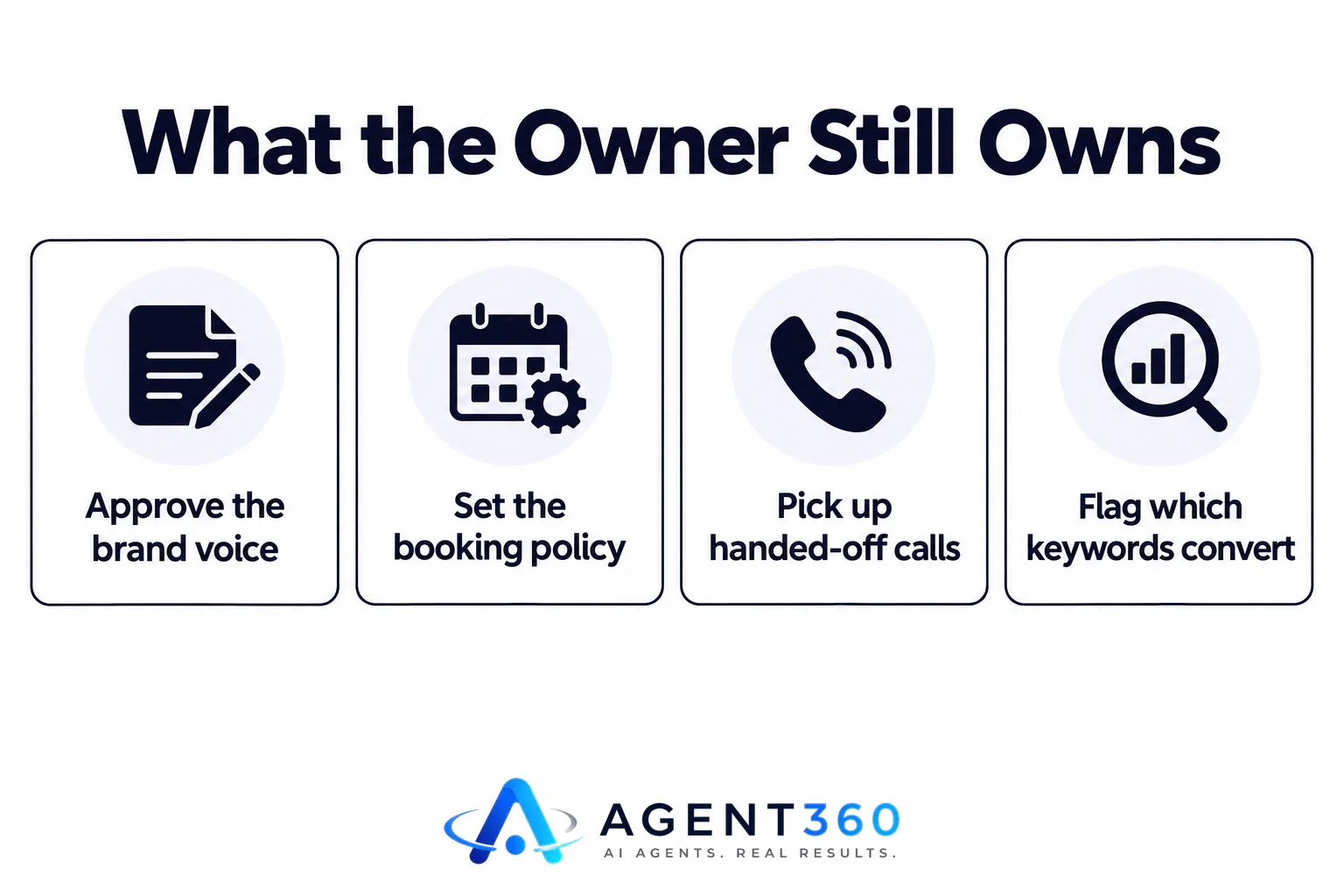
A done-for-you website and marketing setup means a team builds your site, writes your content, runs your ads, and answers your leads. It does not mean you vanish from the business. Three things still need an owner's signature: the brand voice, the booking policy, and anything involving money or a judgment call a machine shouldn't make alone. Everything else — the actual execution — is what you're paying someone else to carry.
If a vendor tells you there's nothing left for you to do, that's a sales pitch, not a scope. Here's the real list.
You still approve the voice before the first post goes out
Nobody can write as your business without hearing from you first. A one-time kickoff call is where this gets settled: your services, your pricing range, how formal or casual you sound, what you never want said about a competitor, and which reviews or jobs you're proud enough to feature. After that call, a done-for-you team should draft social posts, articles and ad copy without you writing a word. The input happens once, up front. It's the single conversation that decides whether 100 articles a month sound like your business or like nobody's.
You still set the booking policy, because it's your money
Deposits, cancellation windows, no-show fees, which services require a card on file — these are business decisions, not marketing settings. A platform can build the booking page, connect the payment processor, and charge the card automatically when a client cancels inside your window or no-shows. It cannot decide what your policy should be. That's a five-minute conversation, once, and it should run through your own payment account so the money lands with you directly — not through a vendor's processor.
You still pick up when the system hands you the call
AI phone answering and instant text-back close the gap on missed calls, but they're built to hand off, not replace you. A receptionist bot can quote prices, check availability and book a slot at 9pm on a Sunday. It should still forward anything it can't resolve — a complaint, a custom quote, a client who wants to talk to a person — straight to you or your team. If nobody's checking that handoff queue, the automation is answering the phone and then going quiet. That's worse than no automation at all.

You still own the keywords that actually matter to your business
SEO, AEO and GEO work best when someone who knows the business flags which searches bring in real jobs and which ones bring in tire-kickers. A vendor tracking 25 or 100 keywords can tell you which ones are moving. Only you know that “emergency” jobs convert at twice the rate of “quote” jobs, or that one service pays for the whole month. That input belongs in the monthly review, not buried in a spreadsheet nobody reads.
Expect a short setup, then a short recurring check-in
The honest shape of done-for-you work is front-loaded: one real kickoff call covering the business, the brand, the booking rules and the ad budget, then a lighter cadence after that. Most owners find the ongoing commitment is a monthly report review — 20 to 30 minutes looking at what each lead cost and where it came from — plus approving anything flagged for sign-off, like a new landing page or a bigger ad spend. If a provider's onboarding runs past a couple of calls, or drags out over multiple weeks of back-and-forth, the scope is bigger than “done for you,” whatever the pitch said.
A platform can draw this line for you instead of leaving you to guess
Booked is built around that split on purpose: the website, SEO, AEO, GEO, ads, landing pages, lead follow-up, booking page and review requests all run without you touching them day to day, starting at $297 a month with no setup fee. What stays with you is the one kickoff call, approving your brand voice and booking rules, and a monthly dashboard showing what each dollar brought in. You can also approve every post and ad individually if you'd rather see things before they go live. Your ad budget still goes straight from your account to Google and Meta, so you always see what's spent.
Watch for the providers who hide the ongoing work
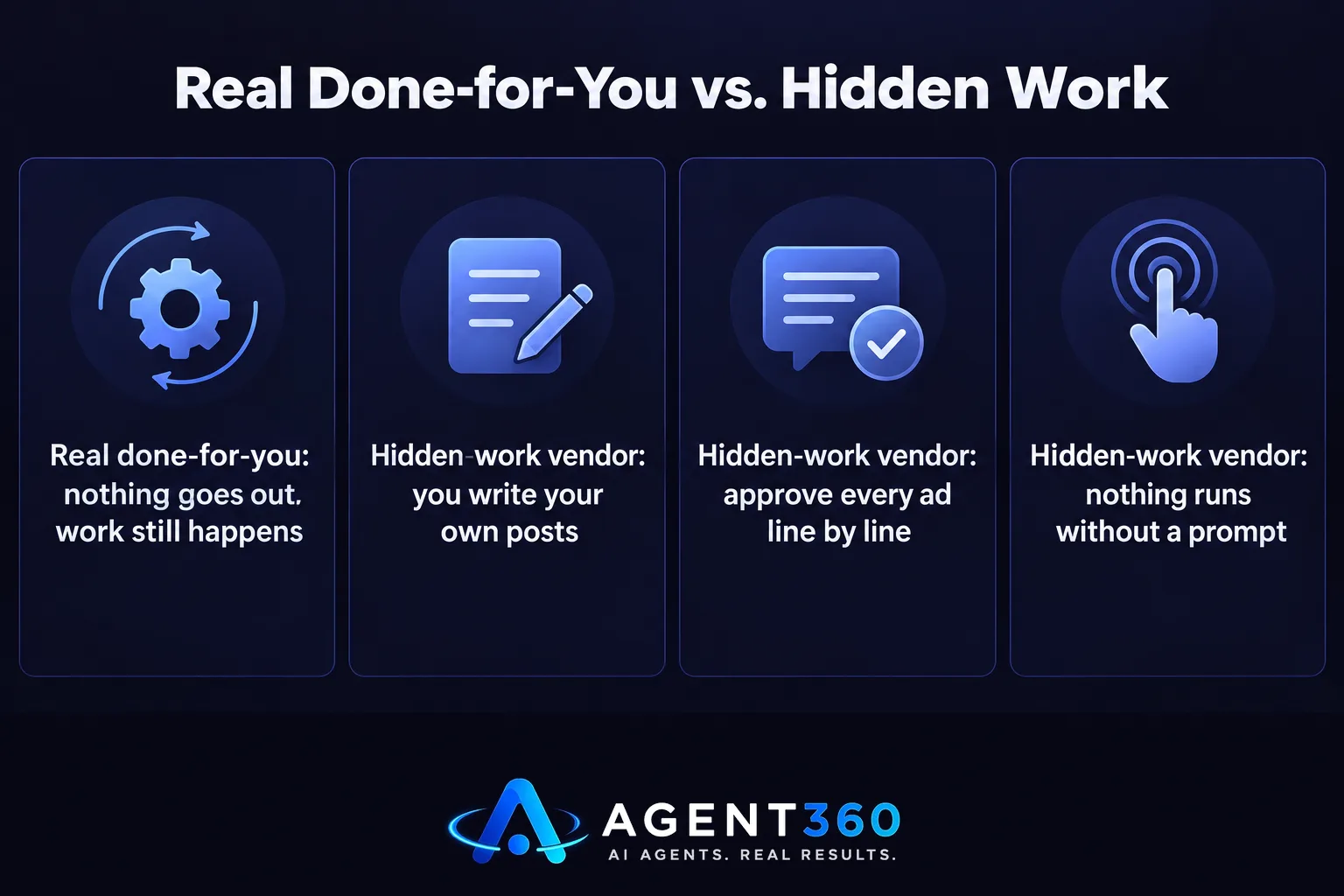
Some vendors sell “done for you” and then quietly need you to write your own posts, approve every ad line by line, or chase them for a status update because nothing runs without a prompt. The test is simple: ask what happens in a month where you do nothing. If the answer is “nothing goes out,” it isn't done-for-you — it's a tool with your name on it. Compare a few providers against a real all-in-one marketing setup before you sign anything, and check what a fair website and marketing package should actually include for the price.
Questions people ask before signing up
How much time does done-for-you marketing actually take each month?
Past the initial kickoff call, plan on 20 to 30 minutes a month reviewing results and approving anything flagged for sign-off. Owners who want to review every post or ad before it goes out will spend more time; owners comfortable letting the team run and reporting back will spend less.
Can I still write my own posts or pick my own ads?
Yes, on a properly built done-for-you plan. You can approve everything before it publishes, or let the team run independently and review the monthly report. Neither choice should cost extra — it's a setting, not an upgrade.
What happens if I don't respond to an approval request?
Depends on the vendor's default, so ask before signing. Some providers hold a post or ad until you approve it; others publish on schedule unless you flag a change. Neither is wrong, but you should know which one you're getting — a held post that nobody approves is just a week of silence on your feed.
More articles
- Small Business Website and SEO Package: What Should Be Included
- All-in-One Marketing Agency vs. Separate Vendors: Who Wins?
- How Much Should a Small Business Spend on Marketing?
- Website and Marketing Packages: What a Fair Price Looks Like
- All-in-One Marketing for Small Business
- All-in-One Website & Marketing: What You Actually Get
- Small Business Marketing Budget: What to Actually Spend
- Speed to Lead: Why the First Five Minutes Decide the Sale
