Best Alternatives to Scorpion for Local Business Marketing
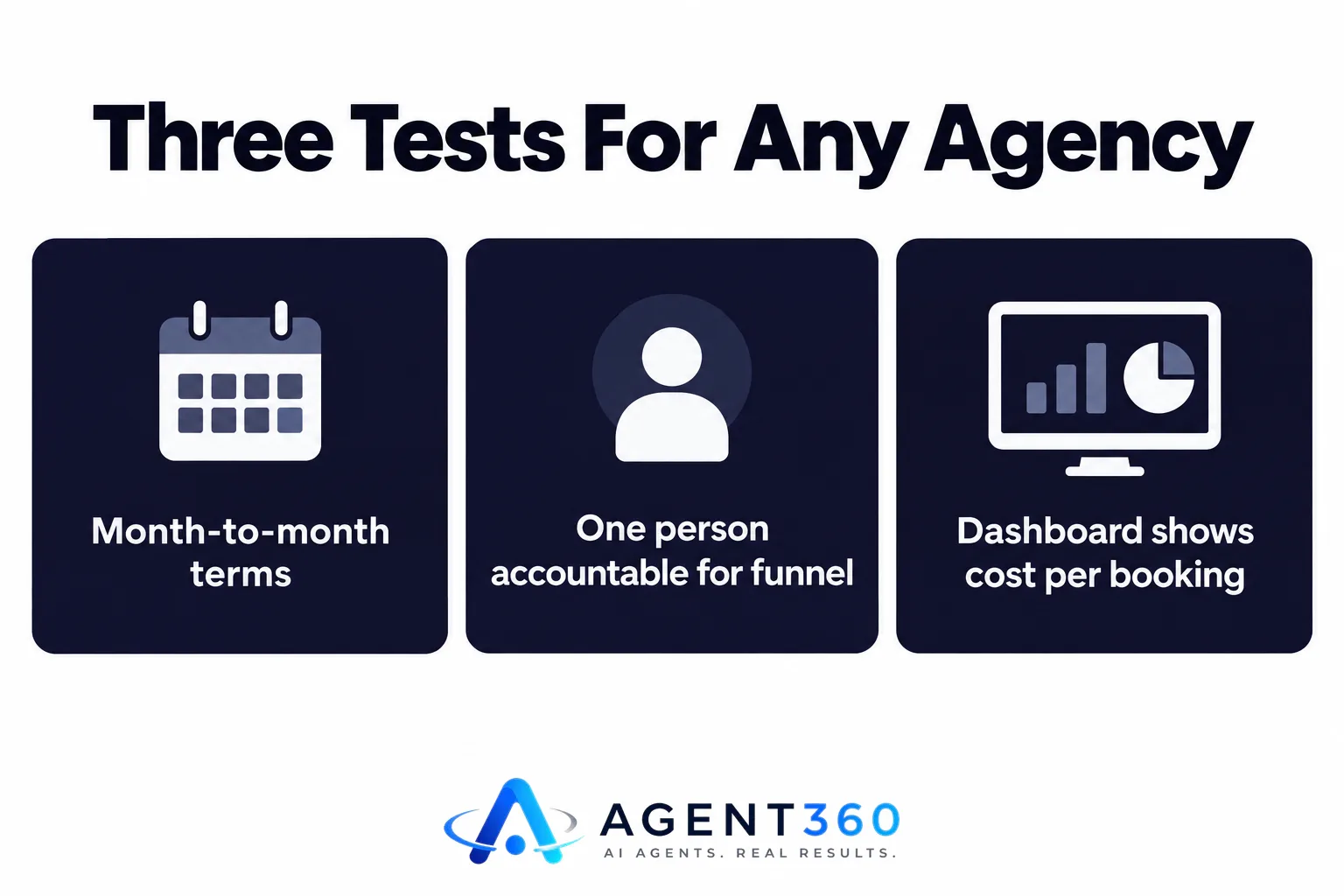
Something went wrong. That's usually why people start googling alternatives to Scorpion — a contract that won't let them leave, a setup fee nobody mentioned on the call, or a monthly report that doesn't connect to a single booked job. The honest answer isn't a specific competitor. It's any agency that passes three tests: month-to-month terms, one person accountable for the whole funnel, and a dashboard that shows what each lead cost and whether it actually booked.
That standard holds whether you're comparing Scorpion to another national firm or to a smaller, done-for-you platform. Here's how to run the comparison properly.
Is Scorpion a good marketing company? Ask what you'd be buying, not who you'd be hiring
Large marketing firms built for local businesses tend to be good at the things that scale: ad platforms, call tracking, templated websites. The trouble buyers run into usually isn't the work itself. It's the shape of the deal around it — long-term contracts, tiered add-ons that turn a simple quote into a five-figure build, account teams that rotate before onboarding is even finished. None of that is unique to one company. It's a pattern across the bigger players in this space. The question to ask any agency, Scorpion included, isn't {is this a reputable company}. It's {what happens in month four if this isn't working, and what does it cost me to leave}. Get that answer in writing before the pitch deck, not after.
What is the best way to advertise my business locally? Start with where your customers already look
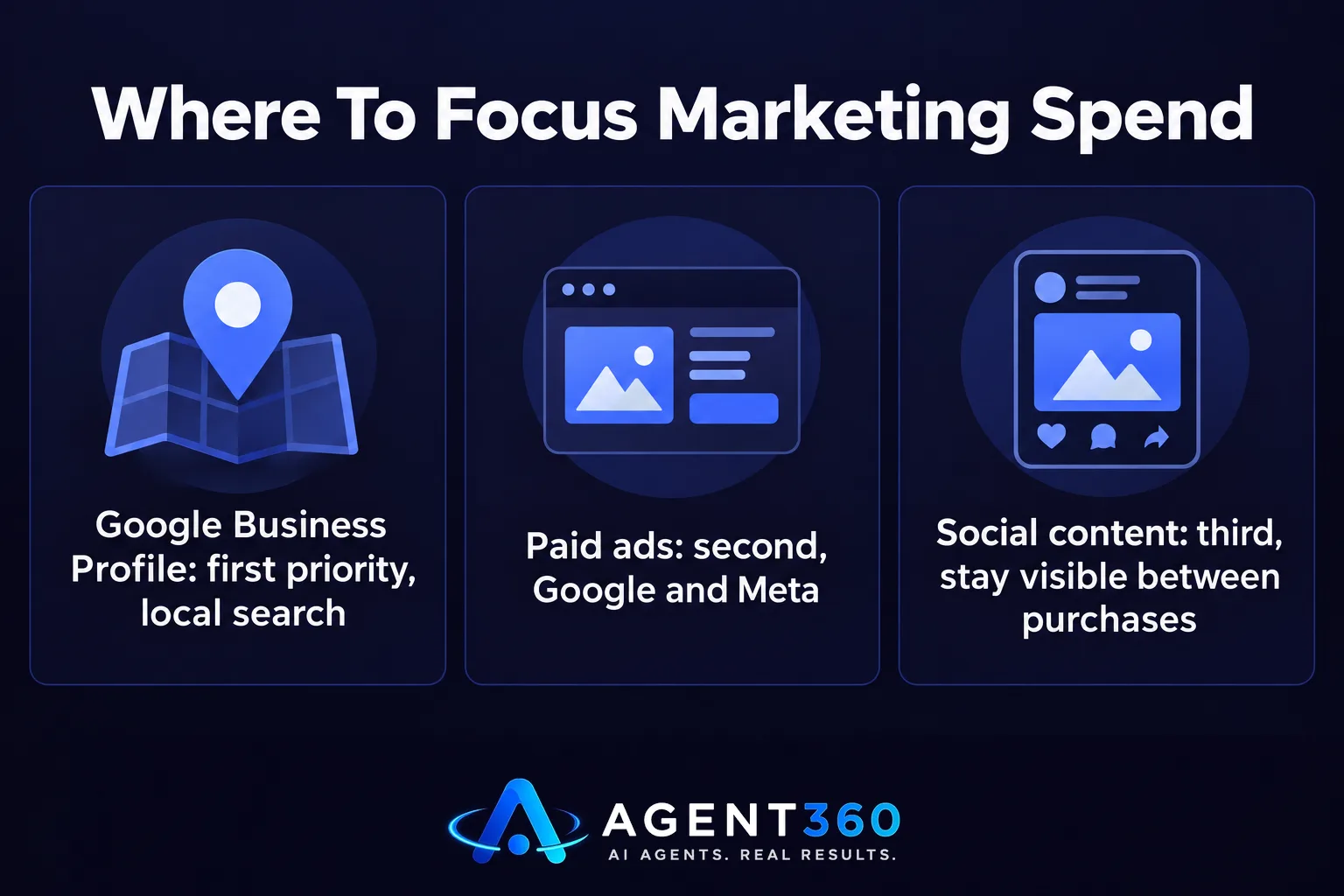
For most local businesses, the honest order of priority is Google Business Profile and local search first, paid ads on Google and Meta second, social content third to stay visible between purchases. An agency that leads with social media management and treats search as an afterthought is solving the wrong problem for a business that lives on calls and bookings. The reverse is just as bad — an agency that only runs ads and never checks whether you show up in the map pack is leaving the cheapest, highest-intent traffic sitting on the table. A fair local marketing program treats search, Maps, and AI answer engines and paid ads as one connected system, not two invoices from two separate teams.
What is the best app to promote my small business? There is no single app, and that's the tell of a good answer
Nobody who understands local marketing will tell you one app does the whole job. Posting software doesn't book appointments. Ad platforms don't answer the phone. Review request tools don't build you a website. If a product's entire pitch is one app, ask what happens when a lead comes in at 9pm and nobody's at the counter. If the answer is {nothing, you'll see it in the morning}, you've found the gap. The businesses that convert the most leads are the ones where the missed call, the website chat, and the booking page all feed the same system — so a lead from an ad and a lead from a walk-in get followed up the same way.
What is the best online marketing tool for small businesses? One that shows you the whole path, not just the top of it
Most reporting dashboards stop at clicks and impressions. That's a vanity metric dressed up as software. The tool worth paying for traces a lead from the search or ad that brought it, through the form or call, to whether it actually booked and paid. A campaign that generates fifty clicks and zero bookings is a cost, not a result — no matter how the dashboard frames it. Before you commit to any platform or agency, ask to see a sample report from an existing account in your industry, and look specifically for whether it ties spend to bookings, not just traffic.
Switching agencies is expensive when you don't own your own stuff
The real cost of leaving a bad agency usually isn't the termination fee. It's rebuilding a website on a domain you never controlled, recreating a customer list that lived in someone else's CRM, starting your review history over because the old account is gone. Before signing with anyone, get it in writing: your domain stays in your name, your leads and customer list export cleanly, and your website isn't locked to a proprietary builder you can't take with you. That one clause matters more than almost any feature on the sales call.

Where Booked fits if you're comparing options
Booked runs on the same principle: one team, one price, month to month, with your domain, website, leads and customer list yours to keep if you ever cancel. Plans start at $297 a month and include the website, SEO, AEO and GEO for AI search, Google and Meta ads up to a managed spend cap, instant lead follow-up, and your own booking page with deposits and reminders — all reported through a single dashboard that shows what each lead cost and whether it booked. If you want a closer look at how a bundled plan stacks up against a comparable platform, the side-by-side comparison with Thryv walks through the same questions this article raises, plan by plan.
Questions worth asking before you sign anywhere
What is the best way to advertise my business locally?
Start with your Google Business Profile and local search, since that's where people already looking for your service by name are searching. Layer in paid Google and Meta ads for reach beyond organic search, and use social content to stay visible to people who already know you. The mix shifts by industry — home services leans harder on search and Maps than, say, a restaurant does — but the sequence rarely changes.
Is Scorpion a good marketing company?
Scorpion is a large, established agency with real capability in ads and web development for local businesses. Whether it's the right fit for you has less to do with reputation and more to do with the contract terms specific to your deal — length, setup costs, and what you keep if you leave. Get those answers in writing before you start comparing anyone on service quality.
What is the best app to promote my small business?
No single app covers search, ads, booking, and follow-up at once. Any product claiming otherwise is usually strong in one area and thin everywhere else. Look for a connected system where leads from every channel land in one place and get followed up the same way, rather than a standalone posting or ad tool.
What is the best online marketing tool for small businesses?
Ask any vendor to show you a real dashboard before you sign. The best tool reports bookings, not just clicks — check whether it connects spend to actual appointments, because that's the single feature separating a useful tool from a vanity metrics dashboard.
More articles
- The Best Done-For-You Marketing Under $500 a Month
- Who Actually Offers All-In-One Website and Marketing?
- Who Builds a Website and Runs SEO, Ads and Social?
- What Is the Best All-in-One Marketing Service for a Local Business?
- Booked vs Thryv: A Fair, Side-by-Side Comparison
- How ChatGPT Picks Which Local Business to Recommend
- Done-for-You Website and Marketing: What You Still Do
- Small Business Website and SEO Package: What Should Be Included
