How to Get More Google Reviews: Timing Beats Begging
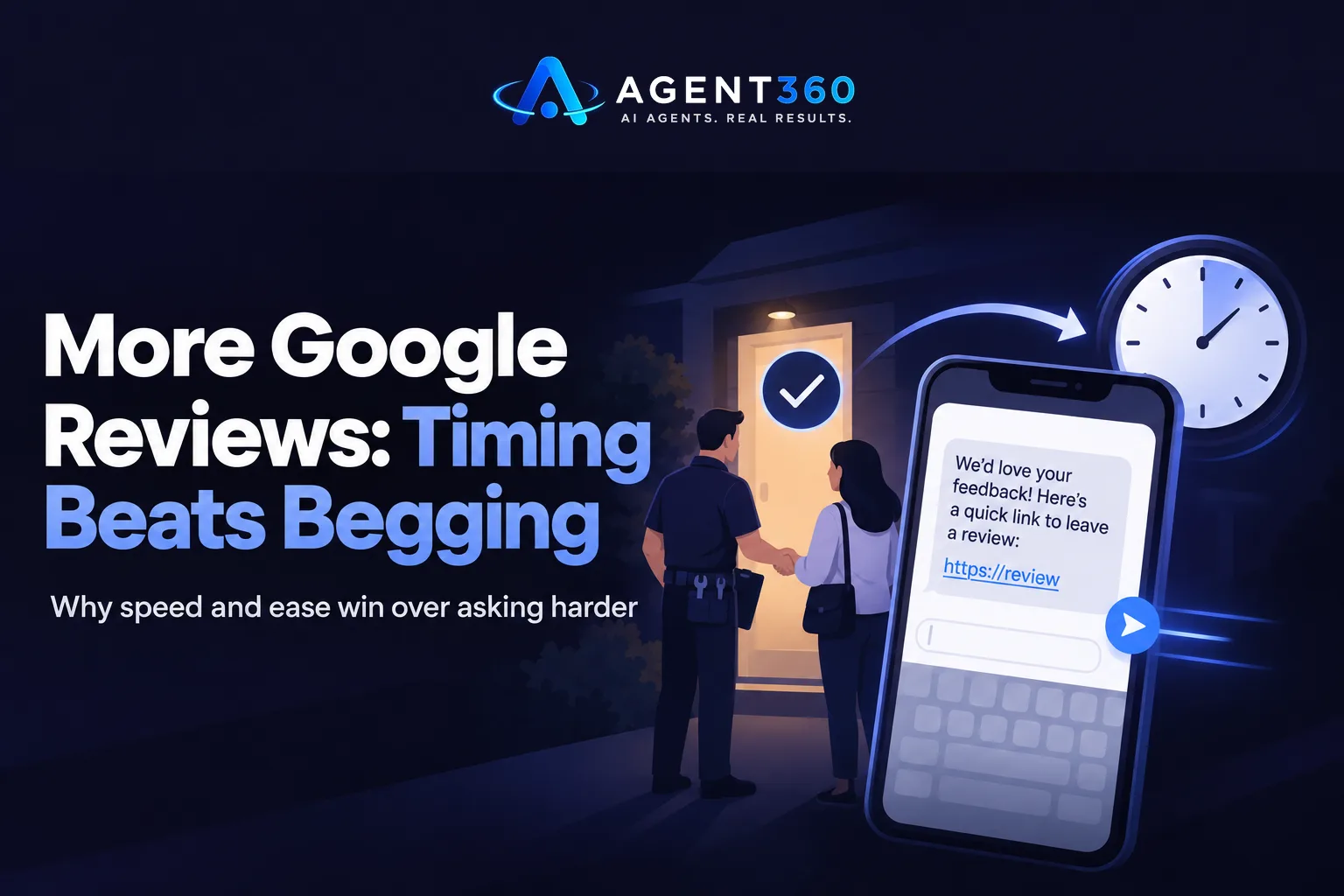
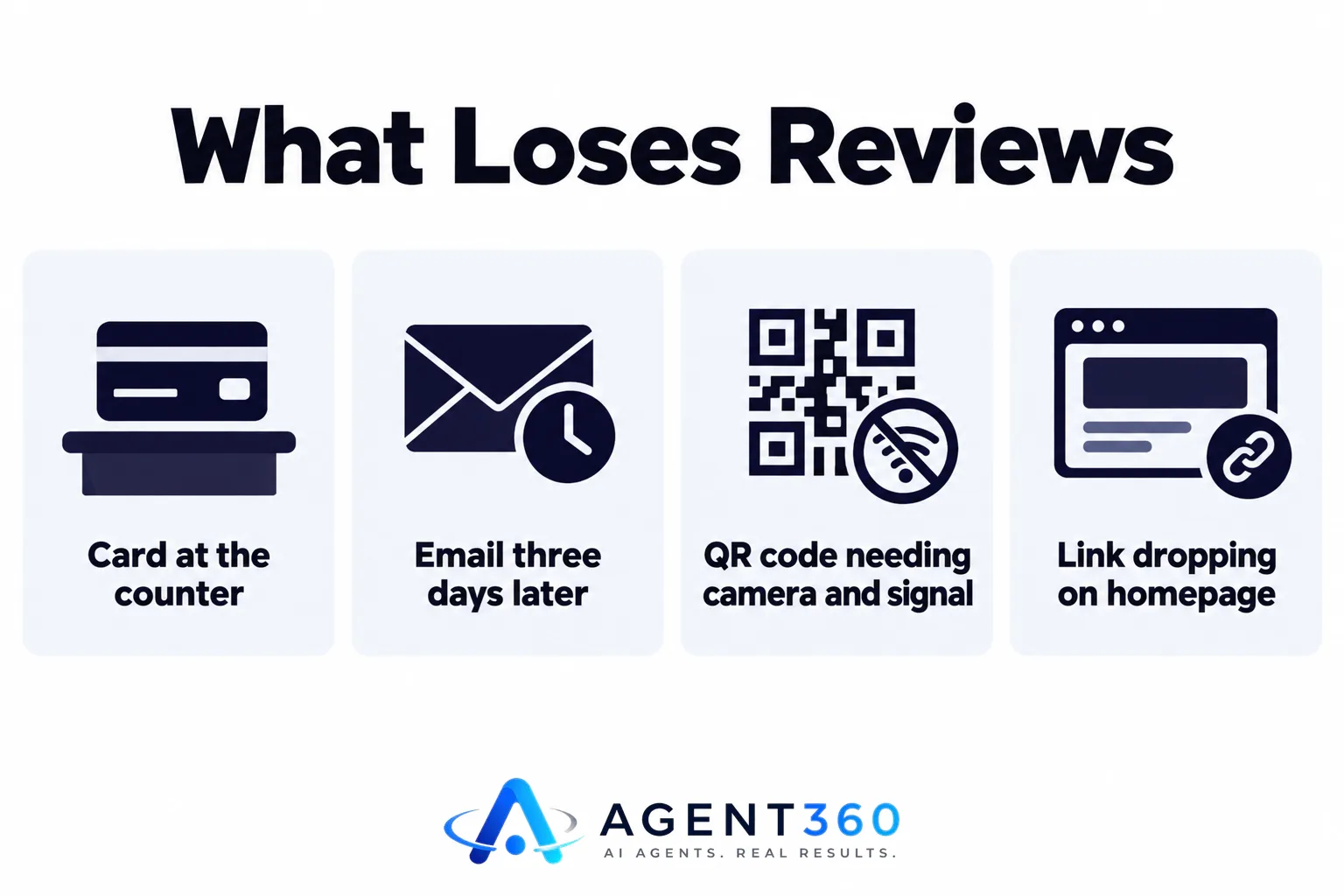
Ask within an hour of the job finishing, by text, with a link that opens the review box directly. Not a card at the counter. Not an email three days later. Not a sign by the register. Most businesses lose reviews to timing and friction, not to unhappy customers.
If you're getting one review for every twenty happy customers, the problem is almost never that nineteen people were unimpressed. It's that nineteen people meant to do it and never did, because the ask came too late or took too many taps.
Ask within the hour, while the job is still fresh
Satisfaction peaks the moment the work is done or the appointment ends, then decays fast. A customer who loved their haircut at 2pm has mostly forgotten the specifics by the next morning, let alone by the time a weekly email digest lands. Send the review request the same day — ideally within an hour of checkout, completion or discharge, whichever moment in your business marks “this went well.”
This is the same logic behind answering a missed call with a text instead of a voicemail: the response has to land while the person is still thinking about you. If your front desk or technician won't remember to trigger the ask, build it into whatever system confirms the appointment or closes the ticket, so it fires on its own.
Send a link that opens the review box, not your homepage
Every extra step between the text and the typed review costs you a share of the people who intended to leave one. A link that drops someone on your Google Business Profile page, where they then have to hunt for the review tab, loses people. A QR code at the counter loses even more, because now they need their phone, a working camera, and a signal.
Use the short, direct review link Google generates for your business profile, and send it by text rather than email. Open rates on a text sent within the hour beat an email sitting in an inbox from “[email protected]” by a wide margin. If you're already texting appointment confirmations or invoices, the review ask should ride that same channel — not a separate one you have to remember to run.
Make the ask specific, not generic
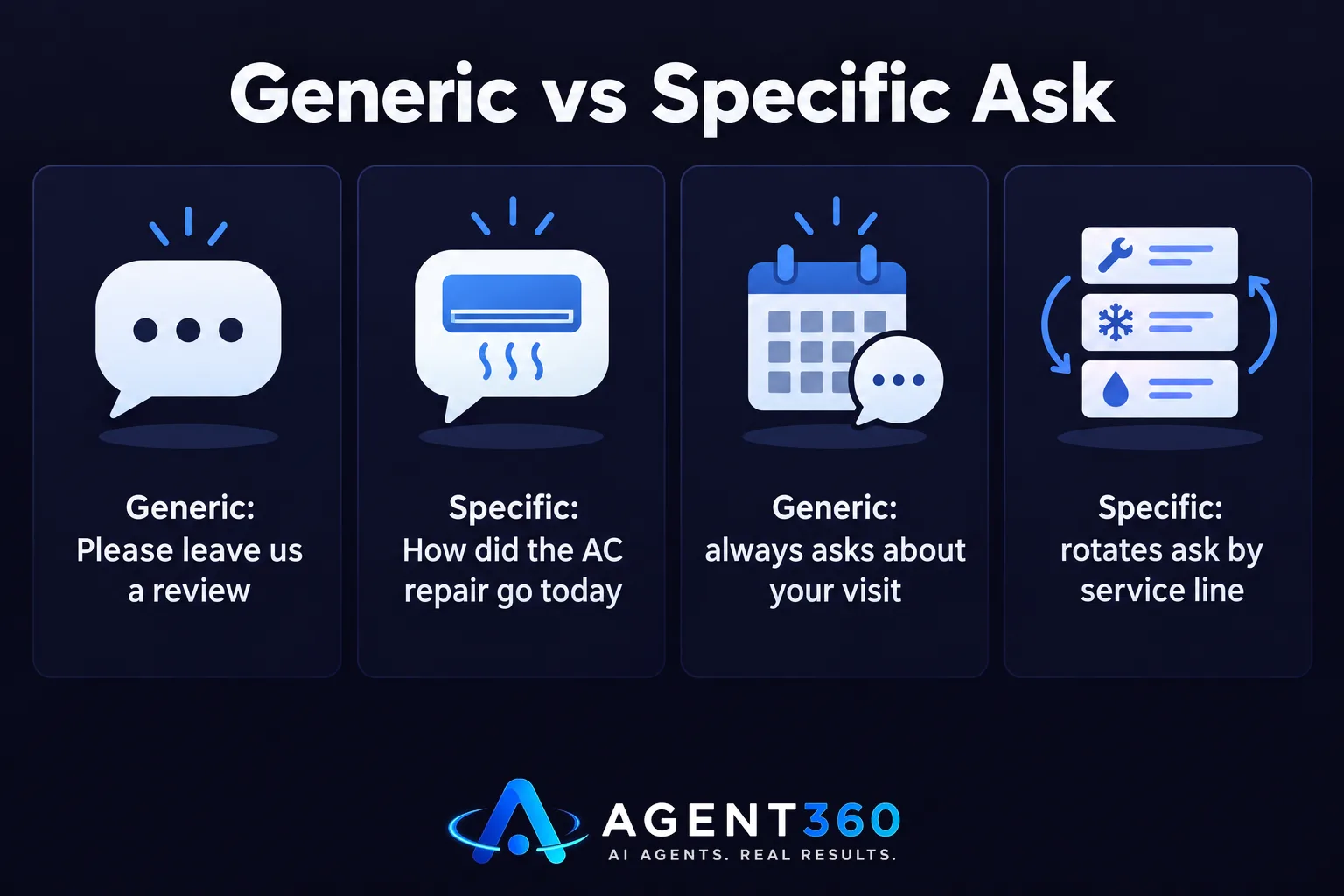
“Please leave us a review” gets a worse response than “If you have a minute, let us know how the AC repair went today — it helps other homeowners in [town] find us.” Naming the service and the town does two things: it reminds the customer what they're reviewing, and it puts language into the review itself that matches what future searchers type in. That's part of what gets you surfaced for those searches.
Rotate the ask by service line if you offer more than one. A dental practice asking about “your cleaning today” gets different, more useful reviews than one that always asks about “your visit.”
Reply to every review, not just the bad ones
Replying only when something goes wrong trains customers to notice the pattern. It also skips a signal: an active, responsive profile reads differently to anyone scrolling reviews before they call than a quiet one does. Reply to the five-star reviews too — a short, specific thank-you, not a copy-pasted line. Aim to respond within 48 hours of any review landing, good or bad, so the profile reads current instead of abandoned.
Never route unhappy customers around the public review
Sending only satisfied customers to the public review link while funneling complaints to a private form — “review gating” — is against Google's policies, and it can get a profile suspended if flagged. Ask everyone the same way. Handle real complaints by following up directly and fixing the problem. Don't try to engineer the review count by filtering who gets asked.
Buying reviews or trading discounts for five-star ratings carries the same risk, plus it shows up as a suspicious pattern to anyone paying attention to review velocity and dates.
A steady profile needs more than one tool doing the asking
Reviews are one output of a system that also has to text the lead back fast, book the appointment, and keep the business's Google Business Profile accurate — hours, services, photos. Review count alone doesn't carry a profile if the rest of the listing is thin. Booked runs that whole chain as one done-for-you plan: the instant text-and-email reply that triggers the review ask at the right moment, the CRM that times it, and the local SEO and Google Business work that makes the profile worth finding in the first place. Every plan starts at $297 a month with no setup fee and no contract; see what's in each one on the pricing page.

Questions people ask
How many Google reviews do I need? There's no fixed number that improves rankings on its own, but profiles with a steady, recent stream of reviews tend to outperform ones with a pile of old ones and nothing new. Consistency over months matters more than hitting a round number once.
Can I offer a discount for a review? No. Incentivizing reviews, even with a small discount, violates Google's policies and risks the profile. Ask for free, make it easy, and rely on the volume of happy customers rather than paying for ratings.
What if I get a bad review? Reply calmly and specifically, address the actual complaint, and invite the person to follow up directly rather than arguing in the thread. A handled bad review, visible to anyone reading, often reassures future customers more than its absence would. For the mechanics of getting the rest of your profile working alongside reviews, see Google Business Profile optimization and how text-back follow-up fits into the same system, or look at how instant lead response is built to trigger asks like this on its own.
More articles
- Missed Call Text Back: What To Send And Why It Works
- AI Receptionist for Small Business: What It Costs and Does
- Fitness Studio Marketing: Why the 3-3-3 Rule Falls Short
- Real Estate Agent Marketing: What Actually Gets You Clients
- Marketing for Auto Repair Shops That Keeps Bays Full
- Restaurant Marketing Ideas That Actually Fill Tables
- Law Firm Marketing: What Actually Brings In Cases
- Marketing for HVAC Companies: What Actually Books Jobs
