Law Firm Marketing: What Actually Brings In Cases

Your website looks sharp. Your Google ranking is fine. And the phone still goes to voicemail at 6pm. That's not a marketing problem — that's an intake problem wearing a marketing budget. Law firm marketing is the whole system that turns a search, a referral, or an ad click into a signed client, and most firms spend on the part that matters least (branding) while ignoring the part that loses the most cases (intake).
Here's what actually moves the number of signed cases, not just the number of visitors.
Law firm marketing is intake, not branding
Ask ten lawyers what marketing means and nine will describe the outward-facing parts: the website, the logo, maybe a billboard. That's advertising. Marketing, for a firm that survives on new clients, is the whole chain — someone searches, finds you, contacts you, and either becomes a client or doesn't. Every link in that chain is marketing's job. Including the one most lawyers treat as an afterthought: what happens in the minutes after the contact form gets submitted.
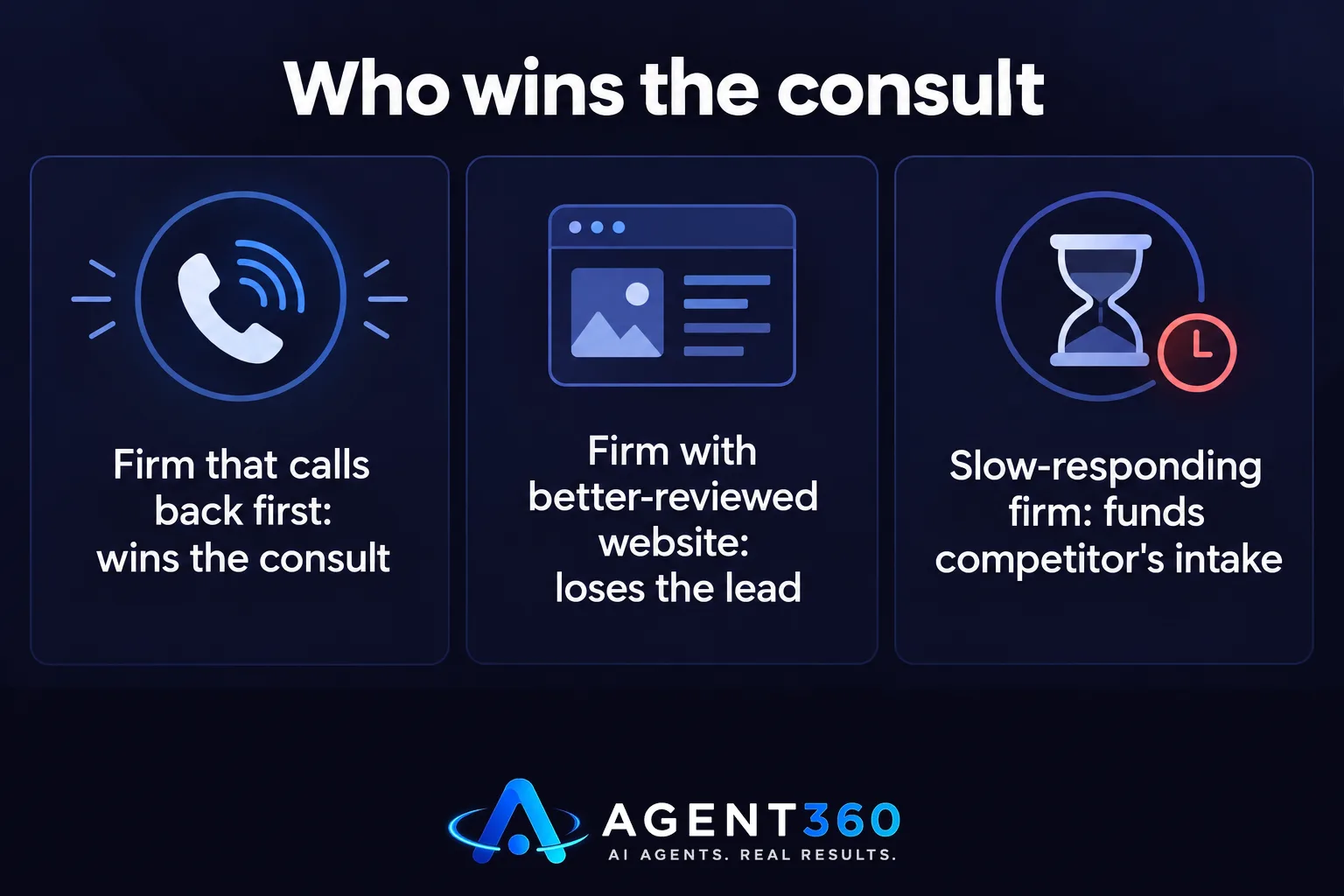
Personal injury and family law leads shop around. Someone in a car accident or a divorce is usually contacting two or three firms the same day, often within the hour. The firm that calls back first gets the consult far more often than the firm with the better-reviewed website. That's not a hunch; it's the entire logic of why instant lead response belongs in the marketing budget, not the ops budget. A firm that ranks well but answers slowly is funding its competitor's intake.
The 3-3-3 rule is a repetition rule, not a content formula
Most versions of the 3-3-3 rule say the same thing in different words: take one core message, put it into three formats, and run it across three channels, three times each, before you assume it didn't work. For a law firm, that looks like one page on, say, "what to do after a rear-end collision," turned into a short video, a social post, and an FAQ answer, pushed through search, social, and email, more than once.
The point isn't the content calendar. It's that one blog post published once, or one ad run for two weeks, tells you almost nothing. Legal buying cycles are slow and the decision is high-stakes, so prospects often see a firm's name three or four times before they call. Firms that judge a campaign after one touch and kill it are the same firms wondering why marketing "doesn't work" for law.
Judge a law firm marketing company by response time, not its client list
There's no single "best" law firm marketing company. There's a firm that answers your calls fast, tracks every lead back to the channel that produced it, and will show you the number, not just the invoice. Before you ask any agency about pricing, ask this instead: How fast does a lead get a reply? Can I see which keyword or ad brought in each signed client? What happens to a lead at 9pm on a Saturday?
Vague answers to any of those mean you're buying traffic, not case volume. A firm's directory listing or SEO case study means little if the leads it generates sit in an inbox overnight. Done-for-you services built for service businesses — including law firms — get judged on exactly this: whether a lead gets a text or email reply in seconds, not whether the website wins design awards.
Five marketing moves worth doing before you spend on ads
In rough order of what pays off fastest:
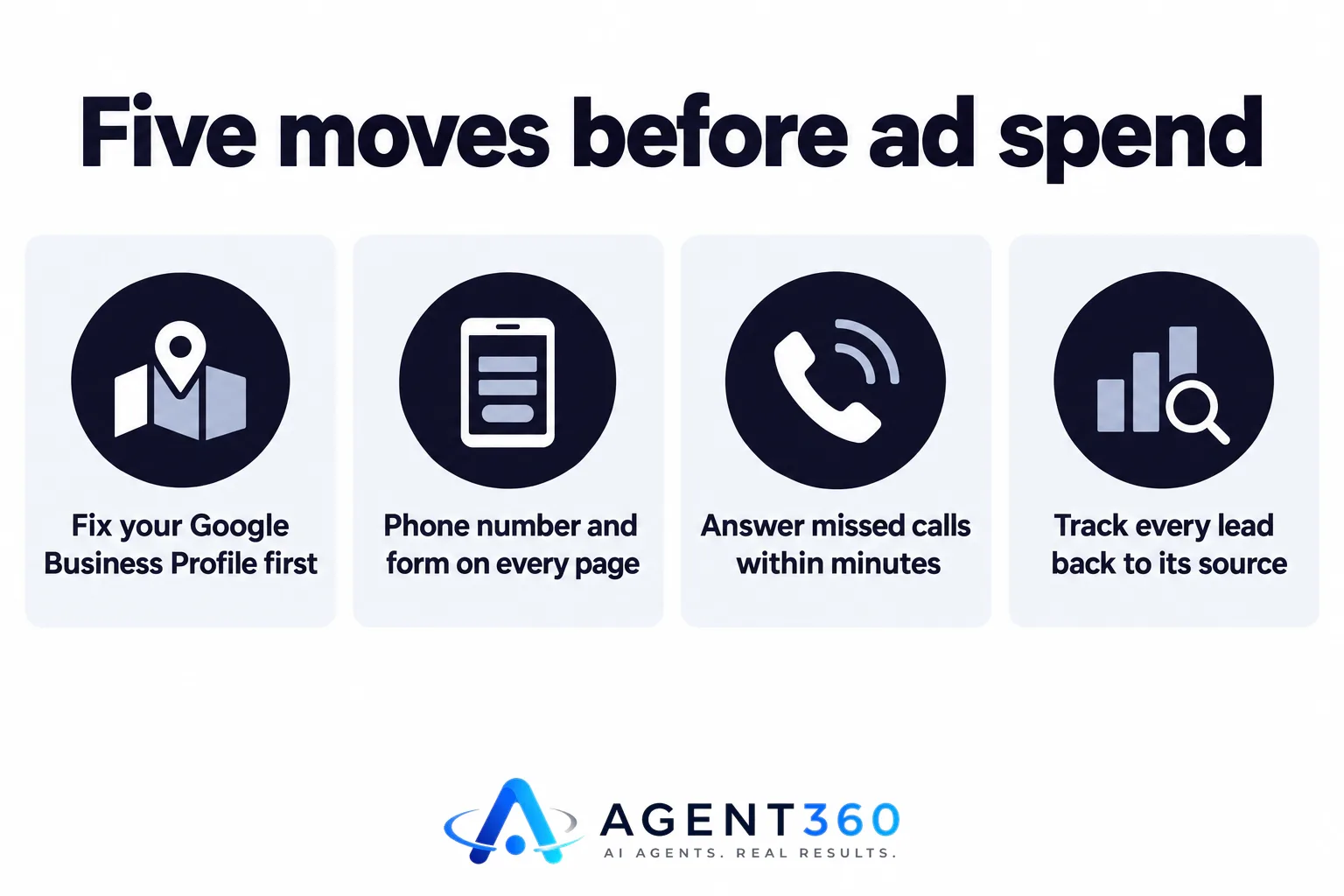
- Fix your Google Business Profile first. Practice areas, service area, hours, and photos — this is free and it's often what decides whether you show up in the map pack for "divorce lawyer near me."
- Put a phone number and a form on every page, not just contact. Someone reading your DUI page is ready to call right then; don't make them navigate.
- Answer every missed call within minutes, not hours. A missed-call text-back that fires automatically recovers leads that would otherwise call the next firm on the list.
- Write for the actual questions people ask, not for "comprehensive legal services." "What happens if I'm partially at fault for an accident" ranks and converts better than a generic practice-area page.
- Track every lead back to its source before you spend a dollar on ads, so you know whether Google Ads, Google Maps, or referrals produce signed clients — not just inquiries.
None of this requires a rebrand. It requires discipline about the handoff from "found you" to "talked to you."
Where a firm like Booked fits
Booked runs this as one system instead of five vendors: local SEO and Google Business to get the firm found, a site built to convert rather than just look good, and instant text-and-email reply plus 24/7 AI phone answering so no after-hours call goes to voicemail. Every lead gets tracked back to the search, ad, or post that produced it, shown on a dashboard, not buried in an invoice. Plans start at $297 a month with no setup fee and no contract — details are on the pricing page.

What is marketing in a law firm?
Marketing in a law firm covers every step between someone needing legal help and that person signing with you: being found in search and on Google Maps, having a site that makes the next step obvious, answering inquiries fast enough to beat other firms they're also contacting, and following up with people who didn't convert the first time.
What is the 3-3-3 rule for marketing?
Most versions describe the same idea: take one message, produce it in three formats, and distribute it across three channels, repeating it at least three times, because prospects rarely act on the first exposure. It's a reminder to repeat and diversify a message rather than publish once and move on.
Who is the best law firm marketing company?
There's no single best firm for every practice area. Look for a company that can show you lead-to-source tracking, guarantees a fast response time on new inquiries, and will tell you plainly what it can and can't promise about rankings. Be skeptical of anyone who guarantees a ranking or a case count.
What are some effective marketing ideas for a law firm?
Start here: a complete, active Google Business Profile, practice-area pages written around the exact questions clients search, a phone number on every page, automatic text-back on missed calls, and lead tracking so you know which channel actually produces signed clients before you scale ad spend.
More articles
- Marketing for Auto Repair Shops That Keeps Bays Full
- Restaurant Marketing Ideas That Actually Fill Tables
- Marketing for HVAC Companies: What Actually Books Jobs
- Marketing for Dentists: What Actually Fills the Schedule
- Google Business Profile Optimization: What Moves Rankings
- Local SEO Services: What They Should Actually Do
- Done-For-You Marketing for Small Business: What It Buys
- Marketing for Small Local Businesses: The Rules Worth Keeping
