Marketing for HVAC Companies: What Actually Books Jobs

Nobody books a job because of your logo. Three mechanisms book HVAC jobs: showing up when someone searches for AC repair near them, answering that call or form before the next company does, and turning this year's install into next year's maintenance plan. Get those three right and the rest — social posts, branding, the seasonal promo — is decoration on a machine that already works.
Most HVAC owners spend their marketing dollars backwards: ad budget first, response and visibility second. That order loses jobs to the competitor who answers the phone faster, even with a smaller budget.
The call you miss in the first two minutes gets answered by someone else
A homeowner with a dead air conditioner in July does not wait for a callback. They call the next number on the list. The first contractor to pick up or text back usually wins the job, not the one with the best reviews or the lowest quote. That makes speed the single highest-leverage thing in HVAC marketing — and it's the part most shops get wrong, because the tech who'd answer the phone is also the tech under a condenser unit right now.
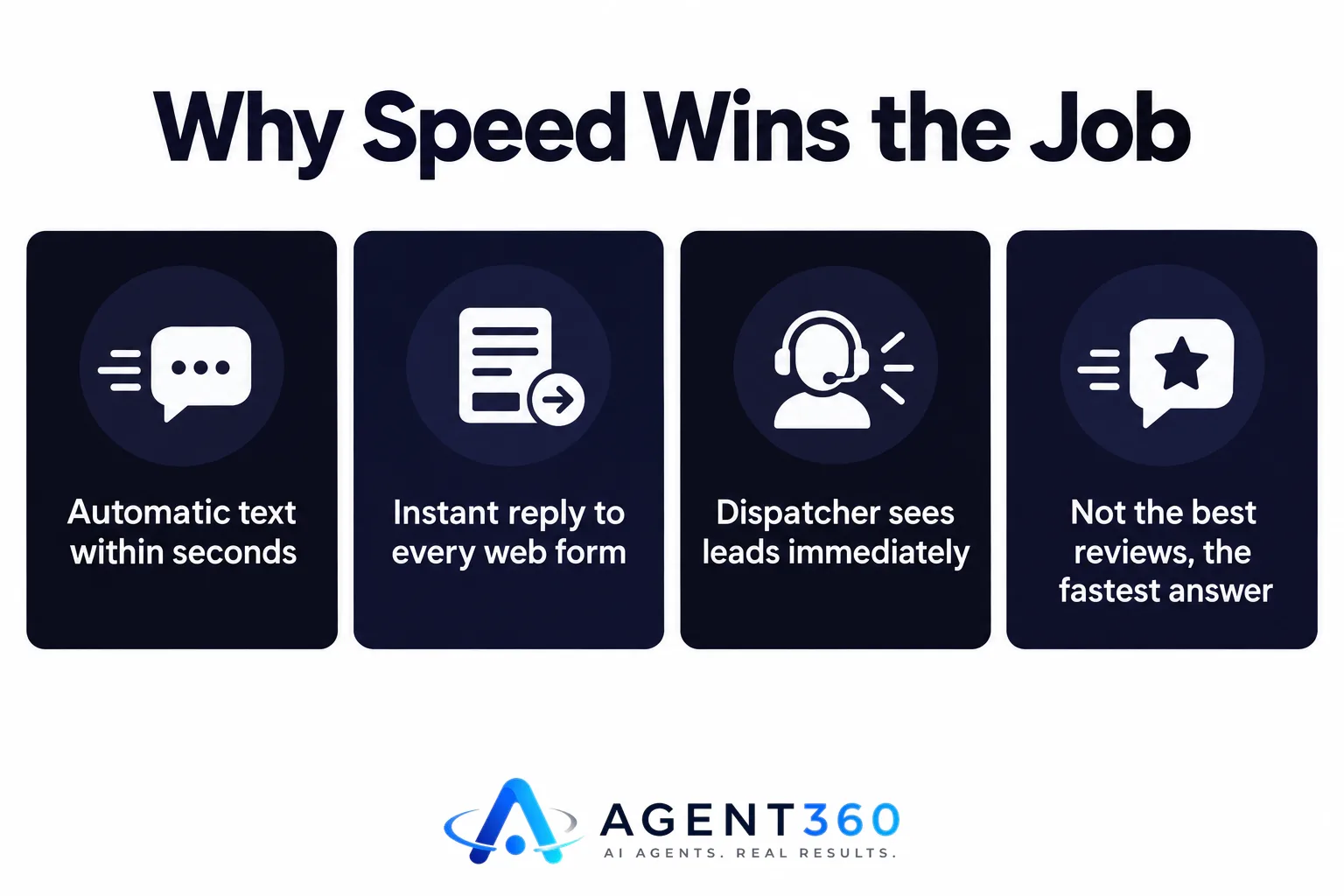
The fix is mechanical, not motivational. Every missed call gets an automatic text within seconds. Every web form gets an instant reply. Every lead lands somewhere a dispatcher can see it the moment it comes in, not at the end of the day. That's a follow-up system, not a marketing campaign, and it belongs under how a company responds to leads rather than under advertising.
Your Google Business Profile does more selling than your website
When someone searches “furnace repair” near their zip code, the map pack shows up before any organic result does. Three listings, their reviews, their photos, their hours — that's the first impression, and most HVAC companies have never touched their profile beyond filling in the basics. Service area settings, hours kept current during storm season, photos of the actual trucks and techs, and a steady trickle of new reviews after every job move that ranking more than almost anything else a shop does online.

Local Services Ads sit next to the map pack and work on a different mechanism — pay per lead, with a Google Guaranteed badge — which makes them worth running alongside organic local SEO, not instead of it. The full mechanics of what moves a profile are covered in what actually moves Google Business rankings, and the broader visibility work — search, maps, and now AI answers — sits under getting found.
Why is the HVAC industry struggling
Three pressures are squeezing independent shops at once. Labor is scarce and expensive, which pushes up the cost of every service call before marketing even enters the picture. Private-equity-backed consolidators have been buying up HVAC companies and bidding aggressively on the same keywords, which raises what everyone pays for a click in competitive metros. And refrigerant regulation changes have pushed up equipment costs, making homeowners more price-sensitive and quicker to shop around before committing.
You don't fix that by outbidding a national roll-up on paid search. You fix it by owning the local result — the map pack, the neighborhood reviews, the repeat customer list — in a way a call center three states away can't replicate. Local dominance is the lever an independent shop actually controls.
Marketing is not the ad — it's everything a lead touches before they book
A lot of owners think marketing means running a Facebook ad, then get frustrated when the ad brings clicks but not jobs. The ad is one step. After that, the lead still has to land on a page that loads fast and says what you fix. They still have to get a reply before they call someone else. They still have to book into a calendar without playing phone tag, and get asked for a review once the job is done so the next search sees a fresh five-star rating. One weak link anywhere in that chain wastes everything spent upstream of it. That full chain — found, clicked, converted, followed up, brought back — is the actual definition of marketing for a service business. It's why fixing the website or the follow-up process is often worth more than adding ad budget.
What to spend, and where it should go
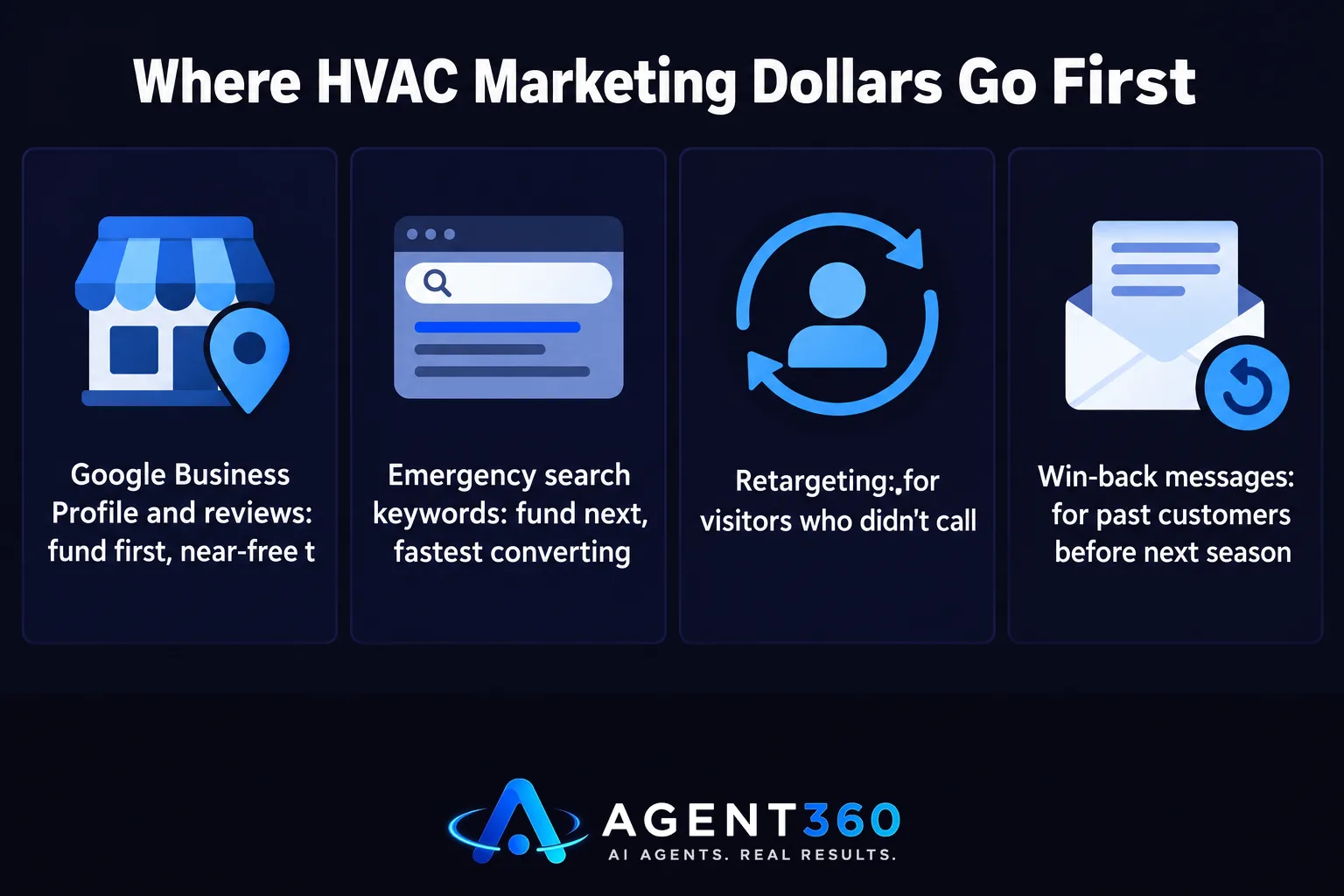
There's no universal number here, because cost per lead moves with the season, the metro, and how many consolidators are bidding against you that month. What stays consistent is the order of priority. Fund the Google Business Profile and review flow first, since that traffic is close to free once it's ranking. Fund search ads for emergency keywords like “no heat” or “AC not cooling” next, since that intent converts fastest. Then fund retargeting for the visitors who looked and didn't call, and win-back messages to past customers before the next heating or cooling season starts. Track cost per booked job, not cost per lead or cost per click — a cheap lead that never answers the phone costs more than an expensive one that books.
Where done-for-you marketing fits
Booked's Starter plan runs this stack for a single HVAC location at $297 a month — Google Business and local SEO, Google and Meta ads managed on up to $1,500 of ad spend you control directly, instant text and email reply on every lead, and a dashboard showing which search or ad booked the job. The Pro plan adds 24/7 AI phone answering that books the appointment on a missed call instead of just texting back. Industry specifics for the trade are covered under home services marketing.
Do funny HVAC business names help marketing?
A memorable name helps someone recall you later, but it doesn't move the three things that actually book jobs: whether you show up in the map pack, whether you answer faster than the next listing, and whether your reviews are newer and better than theirs. Spend the creative energy on the Google profile and the follow-up speed before you worry about the name on the truck.
Questions worth asking before you spend another dollar
How much should an HVAC company spend on marketing? Enough to fund a steady presence in local search and a competitive position on emergency keywords in your metro — for most single-location shops that starts in the low hundreds to low thousands a month and scales with season. Judge it by cost per booked job, reviewed monthly, not by a fixed percentage of revenue.
What's the fastest way to get more HVAC leads this month? Fix response time and the Google Business Profile before adding ad spend. A faster reply to existing traffic usually books more jobs than a bigger budget pointed at the same slow follow-up.
Is paid search or local SEO more important for HVAC? They solve different problems. Local SEO and Google Business compound over months and cost little once ranked; paid search and Local Services Ads deliver immediate volume for a price per lead. A shop with months to build should lean SEO; a shop that needs calls this week should lean paid — and run both in parallel once the budget allows.
More articles
- Marketing for Auto Repair Shops That Keeps Bays Full
- Restaurant Marketing Ideas That Actually Fill Tables
- Law Firm Marketing: What Actually Brings In Cases
- Marketing for Dentists: What Actually Fills the Schedule
- Google Business Profile Optimization: What Moves Rankings
- Local SEO Services: What They Should Actually Do
- Done-For-You Marketing for Small Business: What It Buys
- Marketing for Small Local Businesses: The Rules Worth Keeping
