Marketing for Auto Repair Shops That Keeps Bays Full
Marketing for an auto repair shop comes down to three things working together: showing up when someone searches “brake repair near me”, answering the phone or the form before they call the next shop, and giving people enough reason to trust you before they ever hand over the keys. Most shops nail one of these and lose jobs on the other two. Here's what each one actually takes.
What are the best marketing strategies for an auto repair shop?
Rank for the map pack before you spend a dollar on ads. Someone whose check-engine light just came on is searching on their phone, mid-drive, and picking from the three shops Google shows on the map — not the ten links underneath. That means a complete Google Business Profile, recent photos of the bay and the counter, and reviews that name specific services instead of just handing out five stars. Treat local search as the foundation and ads as the accelerant, and you'll spend less per job than the shop that leads with ads and hopes the website catches up.
After Maps, the strategies that actually hold up are the boring ones: a service page for every repair you handle often — alignments, brakes, diagnostics, fleet maintenance — a review-request text sent the day the car gets picked up, and a Google Ads campaign built around repair terms instead of your shop's name. Seasonal pushes work too: AC checks in spring, battery and tire campaigns before winter. They work because they match what people are already typing, not because the offer is clever.
Answer the $3,000 question before the customer has to ask a stranger
People search some version of “is it worth fixing a car that costs $3,000 to repair” constantly, usually right after an estimate scares them. There's no single rule here. Some insurers total a car once repair costs pass a set share of its value; some owners just use a flat dollar figure as their own cutoff. That uncertainty is exactly why a page on your own site answering it honestly — with your repair costs and your guidance on car age — pulls in searches no competitor is capturing. A shop willing to say “here's when it's not worth fixing” reads as more trustworthy than one that just quotes a number and waits for the phone to ring.
This is the kind of content search engines and AI assistants now pull straight into the answer, which is the whole point of AEO and GEO — getting your shop named when someone asks ChatGPT or a Google AI Overview who to call, not just when they type a query into a search box. Our get found work is built around exactly this: owning the questions customers are already asking before they've picked a shop to trust.
The 3 C's matter more to your marketing than your logo does
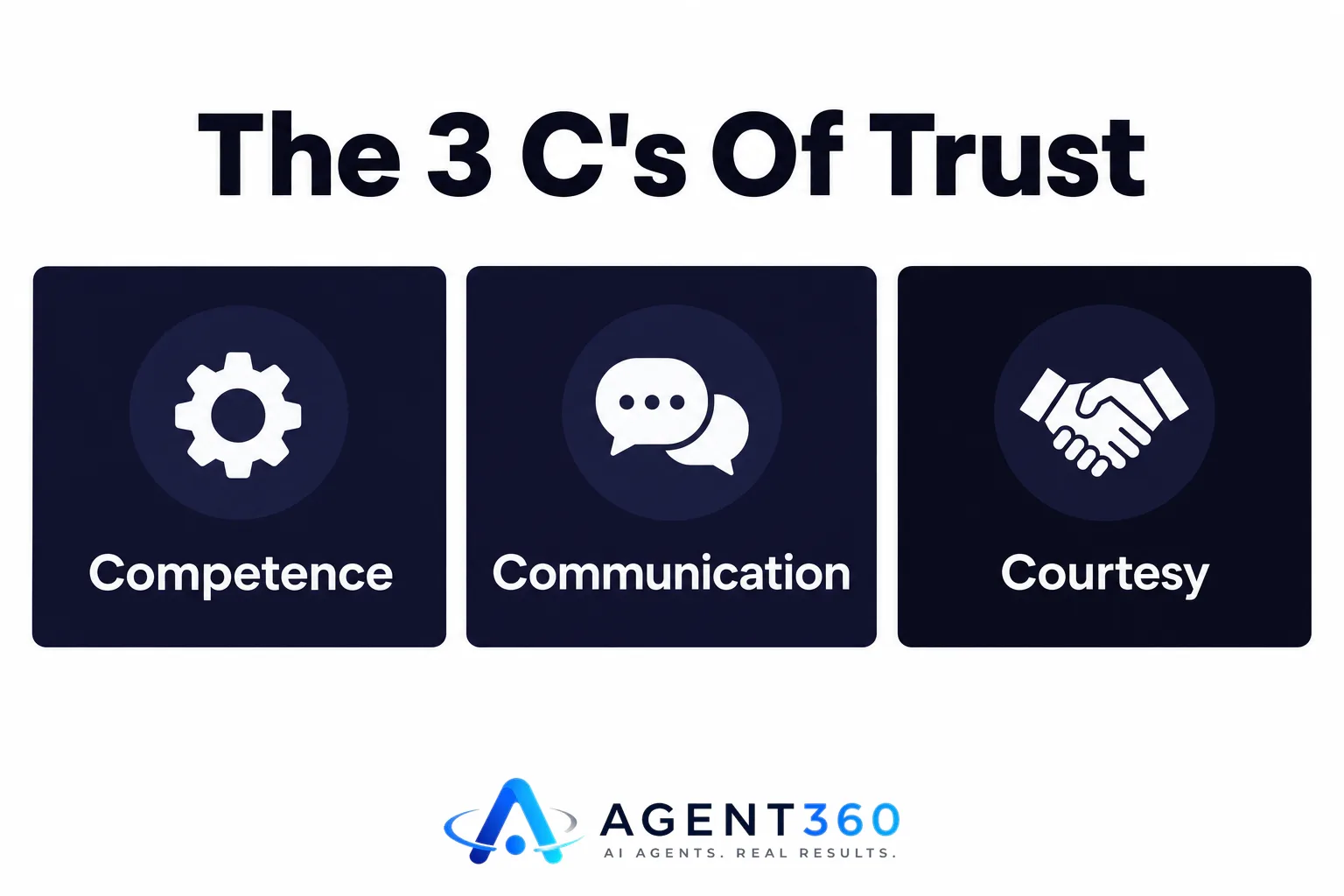
Automotive service training commonly teaches the 3 C's — competence, communication, courtesy — as what separates a shop customers return to from one they use once. It's not written as a marketing framework, but it is the entire content of your reviews, which is the entire content of your marketing. A customer who felt talked down to leaves a two-line review that costs you the next ten searches. A customer who got a clear explanation of the diagnosis, in plain language, before any work started, leaves the review that convinces the next person to book. Train the front counter before you touch the ad budget.
How to advertise for an auto repair shop, by intent not by channel
Match the ad to the moment, not the platform. Google Ads catches people already searching for a specific repair — “transmission shop [city]” — and should point to a page about that exact service, not your homepage. Facebook and Instagram catch people before they're searching at all: oil-change reminders, seasonal tire posts, a quick video of a diagnostic bay, aimed at a radius around your shop. Retargeting brings back the person who got a quote, didn't book, and needs one more nudge a few days later. None of these replace each other. Run only search ads and you miss the drivers who don't know yet that their brakes need attention. Run only social ads and you miss the ones actively comparing quotes right now.
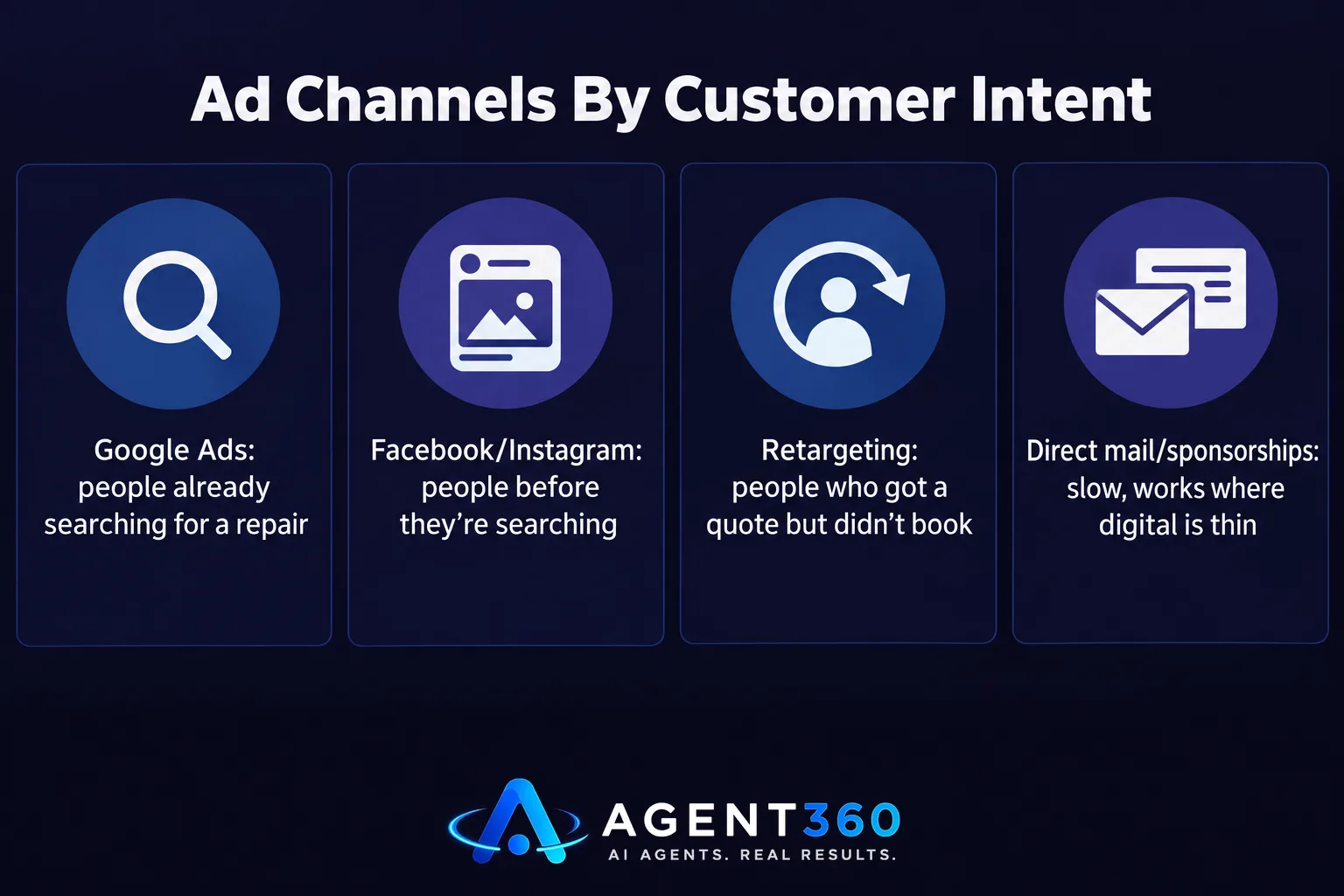
Direct mail and local sponsorships still work in markets where digital competition is thin, but they're the slowest way to find out if your message is any good. Test the message on a channel you can measure in a week. Then put the winner on the channel that takes a month to show results.
Speed to lead decides who gets the car
A shop with its hands under a hood misses calls — that's unavoidable. Losing the job because nobody called back for two hours is avoidable. A missed-call text that fires instantly, something like “sorry we missed you, what's going on with your vehicle?”, keeps the lead warm while the technician finishes the brake job. Shops that answer every call, text and web form within minutes consistently out-book shops with a bigger ad budget and a slower front desk, because the customer has usually already called two other shops in the same ten minutes.

Where Booked fits
Booked runs this as one system instead of five separate vendors: local SEO and Google Business work, Google and Meta ads managed against your budget, a website with a booking page, and instant text-and-email reply to every lead so nobody waits on hold while you're elbow-deep in an engine bay. Plans start at $297 a month, no setup fee, no contract — see what's in each tier on the pricing page, or check the full services list to see how get-found and respond work together.
What are the best marketing strategies for an auto repair shop, in order?
Fix your Google Business Profile and get recent reviews first — it's free and it's where most jobs start. Add service-specific pages to your site next. Then run Google Ads against repair terms, and add retargeting once you've got traffic worth bringing back. Social ads and seasonal campaigns come after the basics are solid, not before.
How to advertise for an auto repair shop on a tight budget?
Start with Google Business Profile posts and review requests — both free. Put your first paid dollars into search ads on your two or three highest-margin repairs instead of spreading a small budget across everything you offer. A focused campaign on brakes or diagnostics will beat a thin campaign on everything else.
More articles
- Restaurant Marketing Ideas That Actually Fill Tables
- Law Firm Marketing: What Actually Brings In Cases
- Marketing for HVAC Companies: What Actually Books Jobs
- Marketing for Dentists: What Actually Fills the Schedule
- Google Business Profile Optimization: What Moves Rankings
- Local SEO Services: What They Should Actually Do
- Done-For-You Marketing for Small Business: What It Buys
- Marketing for Small Local Businesses: The Rules Worth Keeping
