Speed to Lead: Why the First Five Minutes Decide the Sale

Whoever calls the prospect back first usually gets the job. That is speed to lead: the time between a prospect submitting a form, calling, or messaging you, and the moment someone from your business actually responds. It is the single biggest predictor of whether that lead turns into a customer. Most businesses measure it badly, or not at all.
Here is why it works this way. The person who filled out your form also filled out two or three others. They are not loyal to a brand; they are comparing quotes. Whoever answers first gets the conversation. And the conversation usually decides the sale before price ever comes up.
The clock starts when the lead hits submit, not when you check your phone
Most businesses measure response time from when they noticed the lead. That is the wrong clock. The real one starts the instant the form is submitted, the call is missed, or the chat message is sent. A lead comes in at 2:14pm. You call back at 3:40pm. That is an 86-minute response time — not 20 minutes, because you happened to glance at your phone at 3:20.
This distinction matters because it exposes the real gap: the time a lead sits unattended while you are on another job, in a meeting, or asleep. That gap is where leads go cold, and where competitors get the call instead.
Five minutes is the number worth protecting
Five minutes. That is the figure sales and marketing teams keep coming back to: respond inside five minutes and a lead is dramatically more likely to engage than if you wait thirty. Every extra minute past that first window makes the lead harder to reach, because they have either booked with someone else or just moved on with their day.
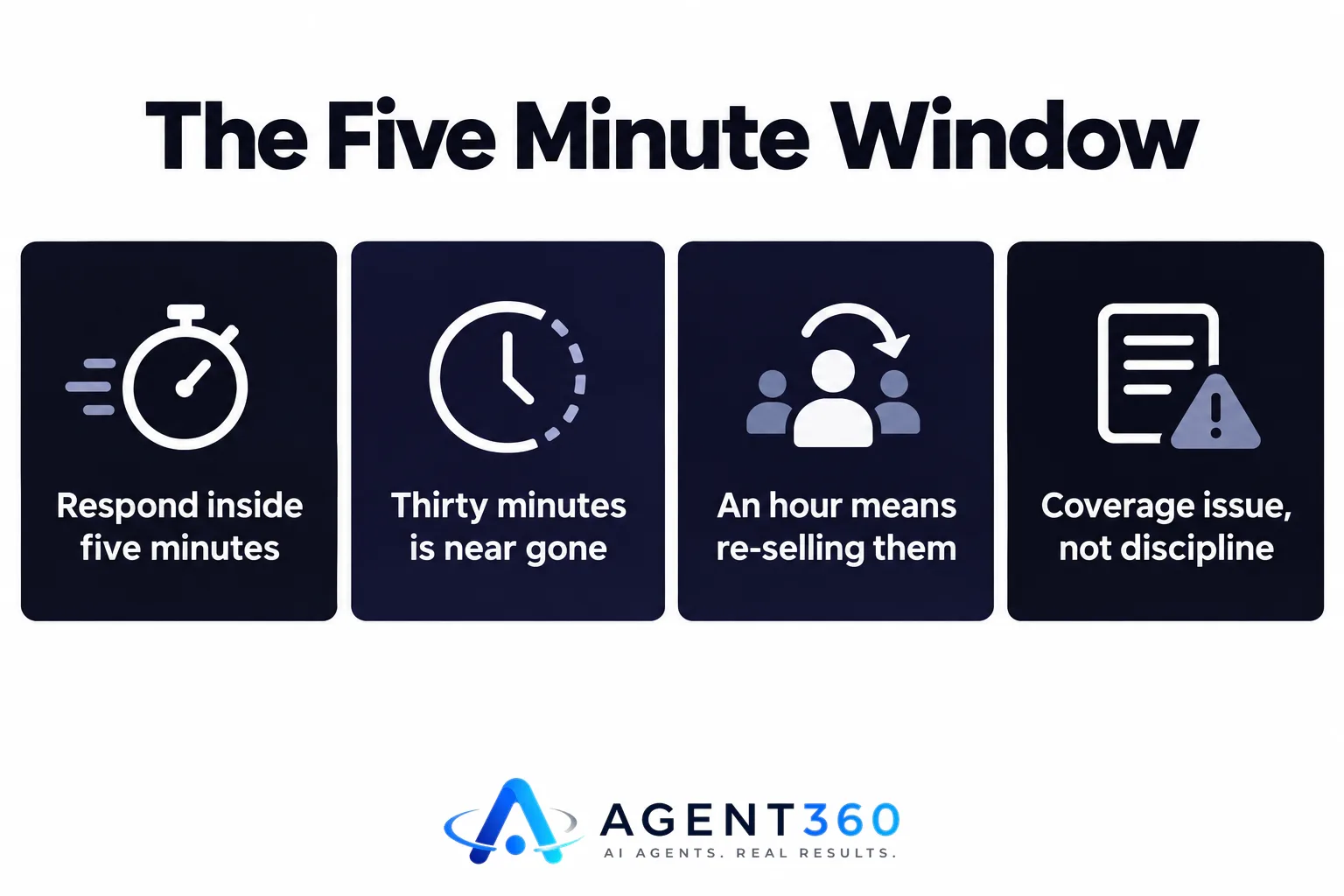
Thirty minutes is not a small delay here. It is close to the point where a lead is effectively gone. An hour puts you in a different category entirely — now you have to re-sell them on even talking to you, let alone buying.
Few small businesses can staff a human to hit five minutes around the clock. That is the real problem speed to lead is pointing at. Not a discipline issue. A coverage issue.
A missed call is not a lost lead until you fail to call back fast
Phone leads behave differently than form leads. A missed call from a prospect rarely gets a second attempt — they move to the next name on their list within minutes, especially for anything urgent, like a plumbing leak or a locked-out car. The fix is not answering every call live. It is making sure a missed call triggers an instant text back, so the prospect gets a human-sounding reply before they have finished dialing the next number. What that text should say matters just as much as how fast it goes out.

Speed beats pitch quality, up to a point
Here is the uncomfortable part for anyone who prides themselves on a polished sales process: a mediocre but instant response usually beats a great response that shows up an hour late. Being first sets the frame. The prospect starts comparing every other business to you, instead of comparing you to everyone else.
That has a limit, though. Speed does not rescue a bad fit, a price that is wildly off-market, or a business with no openings. It wins the tie-breaker among options the prospect was already willing to consider. If your close rate stays low even with a fast response, the problem lives somewhere else in the funnel. Not the clock.
What to measure: response time, not just close rate
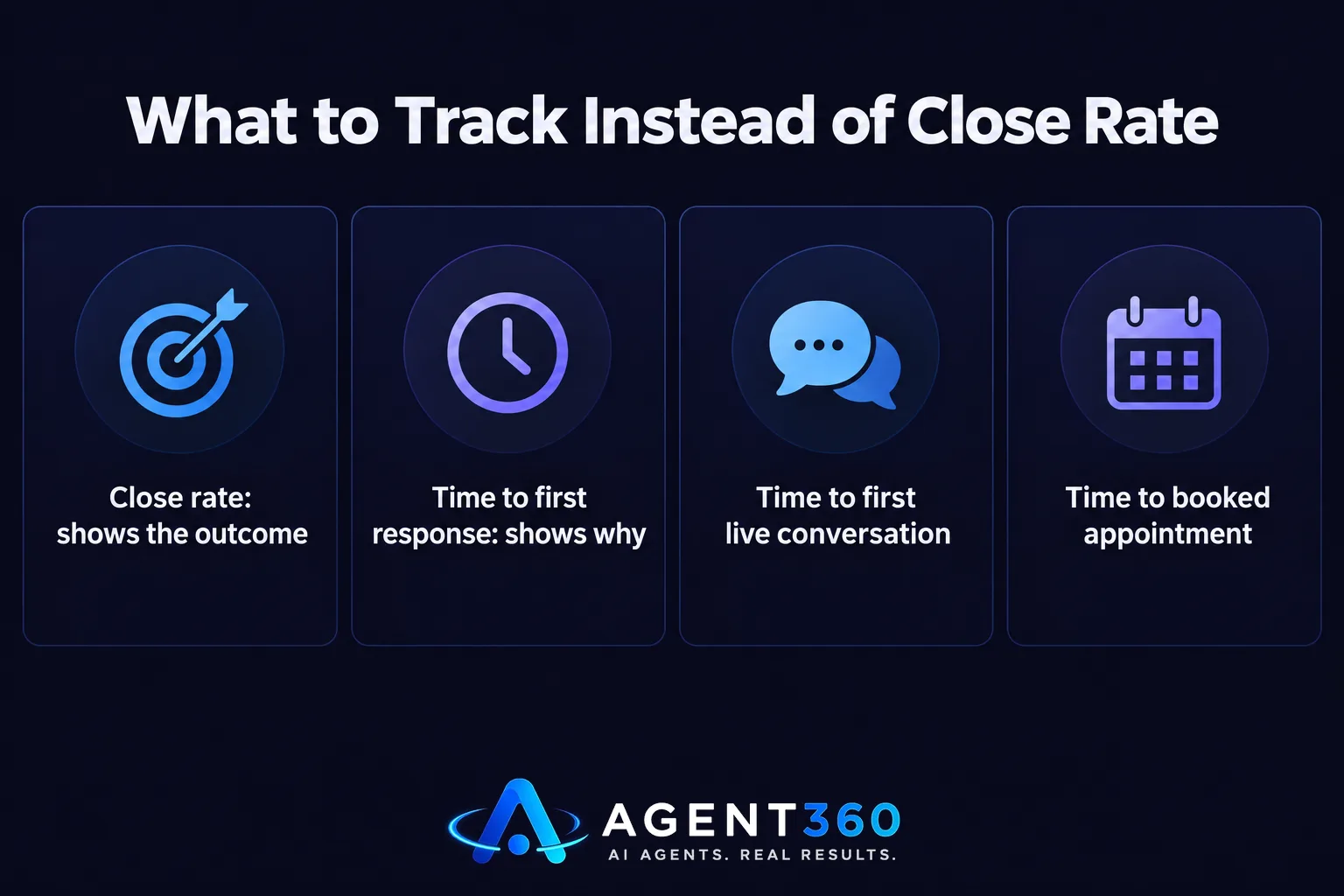
Close rate tells you the outcome. Response time tells you why. Track three numbers separately for every lead source: time to first response, time to first live conversation, and time to booked appointment. A business can have a great close rate and still be leaking revenue, if half its leads never get a response inside the window that matters.
Break this down by source and by hour of day. A lead from a Google ad at 9pm on a Saturday needs the same speed as one that comes in at 10am on a Tuesday — but most businesses only have coverage for the second one. That gap is usually where the real leak sits.
Where this gets automated
The honest fix for most small businesses is not hiring someone to sit by the phone. It is routing every missed call, form fill, and chat message into instant automated follow-up, with a human picking up the thread once the lead engages. That is what the respond layer of a marketing system is supposed to do: text and email the moment a lead comes in, book directly into a calendar, and hand off to an AI receptionist for calls that come in outside business hours. Booked builds this into every plan starting at $297 a month, with instant reply included from the Starter tier and 24/7 AI phone answering added at the Pro level — see the plans for the full breakdown.
What counts as speed to lead?
Speed to lead is the elapsed time between a prospect contacting a business — by form, call, chat, or text — and that business making first contact back. It is measured from the moment the lead takes action, not from when staff notice it.
How fast is fast enough?
Five minutes is the widely used benchmark for a first response. Response quality matters less than most businesses assume inside that window; what matters is getting a real person, or a convincing automated reply, in front of the prospect before they move on to the next option.
Does speed to lead matter more for some industries than others?
It matters most where the prospect has several comparable options and an urgent need: home services, auto repair, legal consultations, and med spas all see sharp drop-offs in response rate after the first hour. It matters less for slow, considered purchases, like high-end real estate or complex professional services — though even there, a fast first reply just sets a better tone.
More articles
- Lead Follow-Up for Small Business: The System That Works
- How to Get Recommended by ChatGPT for Your Business
- How to Get Found on Google Maps, Not Just Listed
- Website For Small Business: Builder, Cost, Or Done-For-You
- Google Ads for Local Business: What a Real Budget Looks Like
- How to Get More Google Reviews: Timing Beats Begging
- Missed Call Text Back: What To Send And Why It Works
- AI Receptionist for Small Business: What It Costs and Does
