When Should I Stop a Cold Email Campaign?
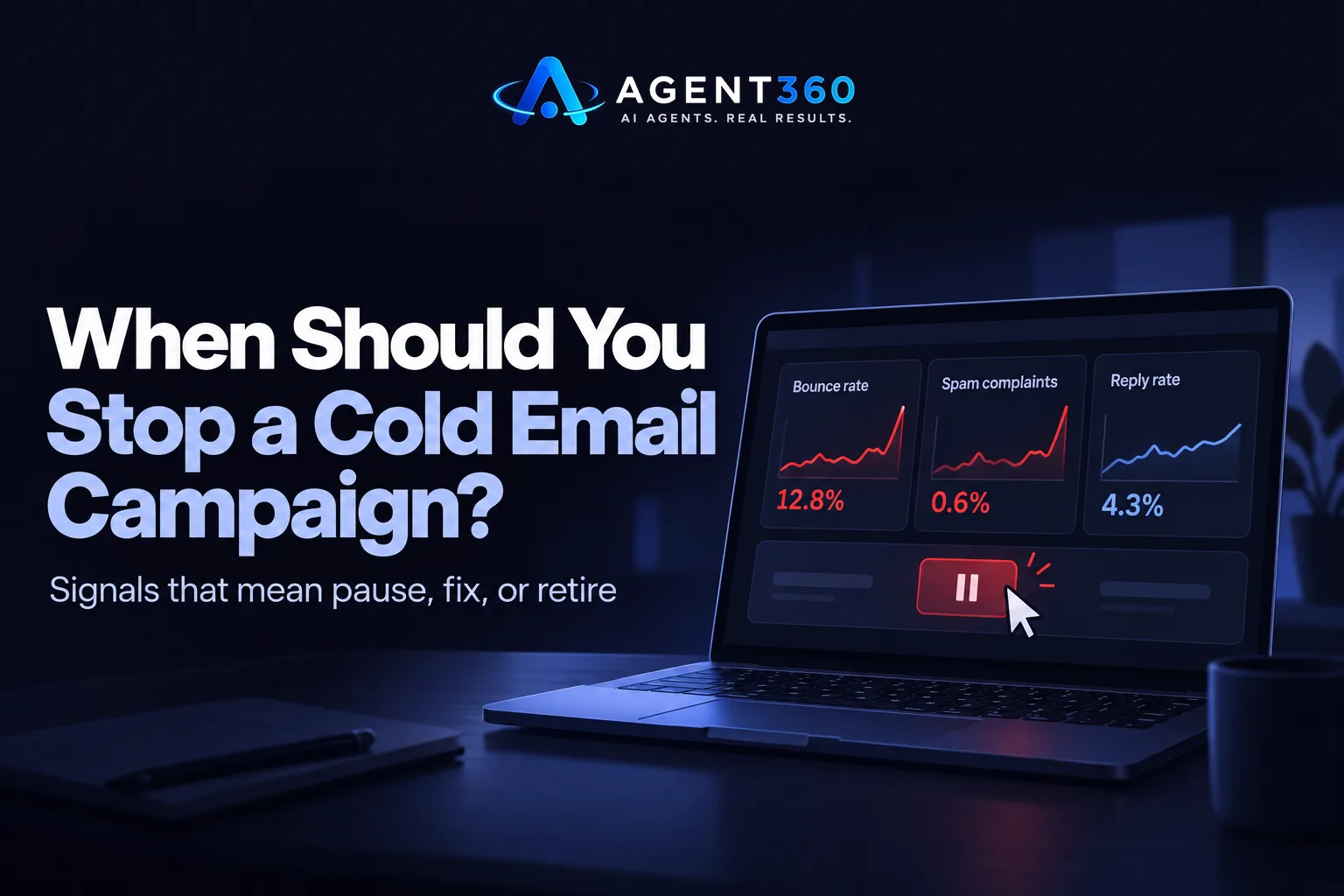
Stop a cold email campaign the moment your bounce rate climbs past a safe range, your reply rate flatlines across a full list, or your sending domain shows signs of deliverability trouble. Any one of these on its own is a warning. Two at once means stop sending today, not next week.
Most founders and sales leaders keep a dying campaign running too long because the dashboard still shows opens and a few replies trickling in. The real damage is happening underneath: a damaged domain, a burned list, or a sequence that prospects have started marking as spam. Catching it early is cheaper than rebuilding a sender reputation later.
This article walks through the specific signals that mean stop, the difference between pausing a list and killing a sequence, and what to check before you write off a campaign as dead.
Key Takeaways
- Stop immediately if bounce rate or spam complaints spike — these damage your domain, not just this campaign.
- A flat reply rate across a full list usually means the offer or targeting is wrong, not the volume.
- Check sending limits and domain health before you blame the copy.
- Pause and diagnose before you kill — a quick fix can save weeks of list-building work.
- Separate list fatigue from sequence fatigue; they call for different fixes.
Table of Contents
What Deliverability Signals Mean It's Time to Stop?
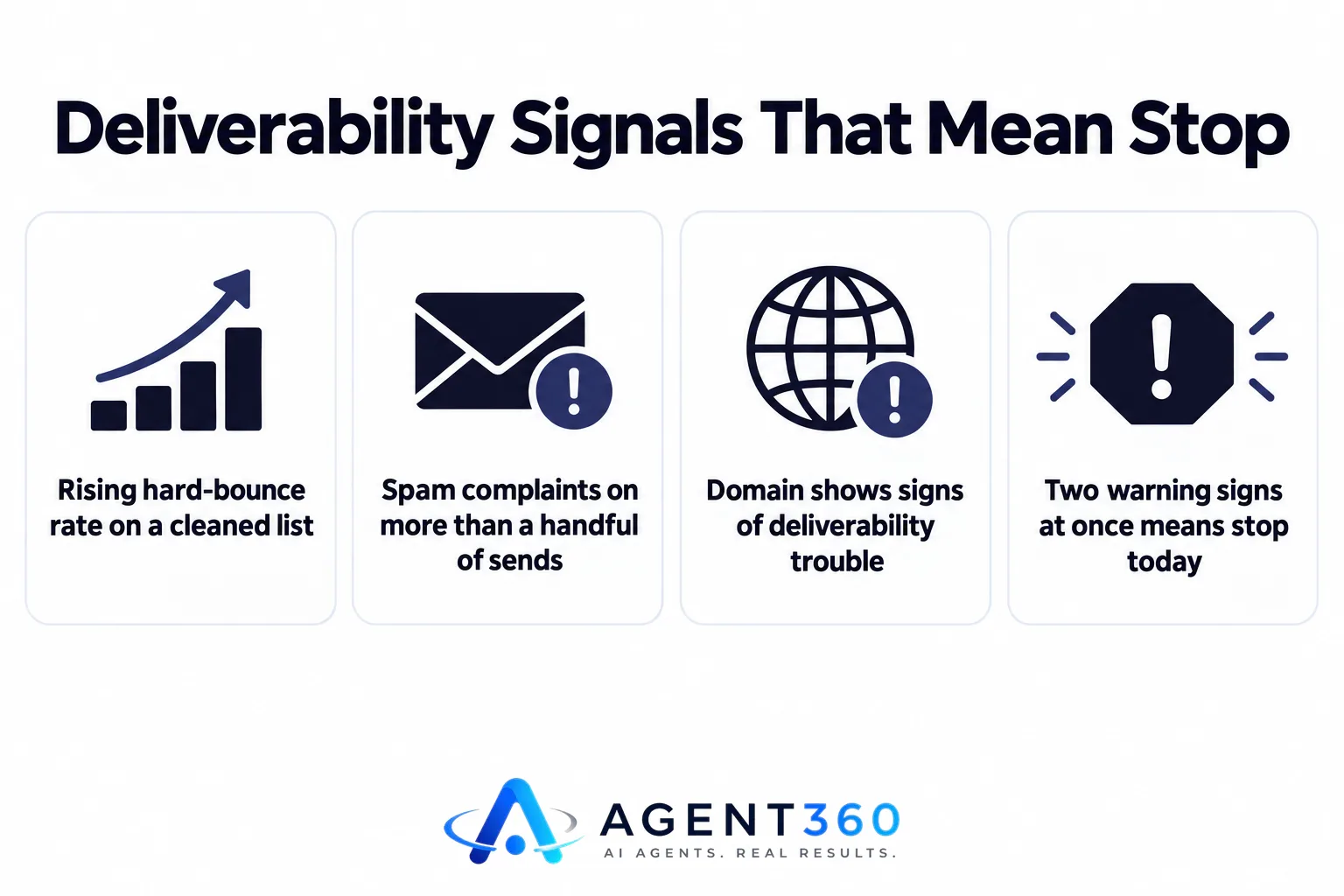
Stop sending the moment bounce rate or spam complaints rise, because both damage the sending domain itself, not just the current campaign. Deliverability problems don't stay contained to one list. Once an inbox provider flags a domain, every future campaign from that domain inherits the problem.
What bounce rate is too high?
A rising hard-bounce rate on a cleaned list is the clearest signal something is wrong with the data or the sending setup, not the message. Check the list source first — a batch of unverified or scraped addresses will bounce regardless of how good the copy is.
What do spam complaints tell you?
Spam complaints are a stronger signal than low opens, because a complaint means a real person took action against the email. If complaints appear on more than a handful of sends, pause the whole sequence and check subject lines, sending frequency, and whether the list was opted in correctly.
How Low Does a Reply Rate Have to Go Before You Stop?
Stop a sequence when the reply rate stays near zero across a full, well-targeted list, because that points to the offer or targeting, not bad luck on a few sends. Open rate is not a reliable signal anymore — privacy features in most email clients inflate it — so reply rate and bounce rate are what matter.
Is a slow start normal?
A slow first week is normal while a domain warms up and the sequence finds its rhythm; that's different from a flat line across hundreds of sends. The timeline for cold email to produce replies is covered in more detail in how long cold email takes to work, which is worth checking before calling a campaign dead too early.
Does low reply rate always mean stop?
No — a low reply rate with a healthy bounce rate often means the message or targeting needs a rewrite, not a shutdown. Pause, change one variable (subject line, opening line, or the list segment), and test again before scrapping the whole campaign.
Is a Dead List Different From a Dead Sequence?
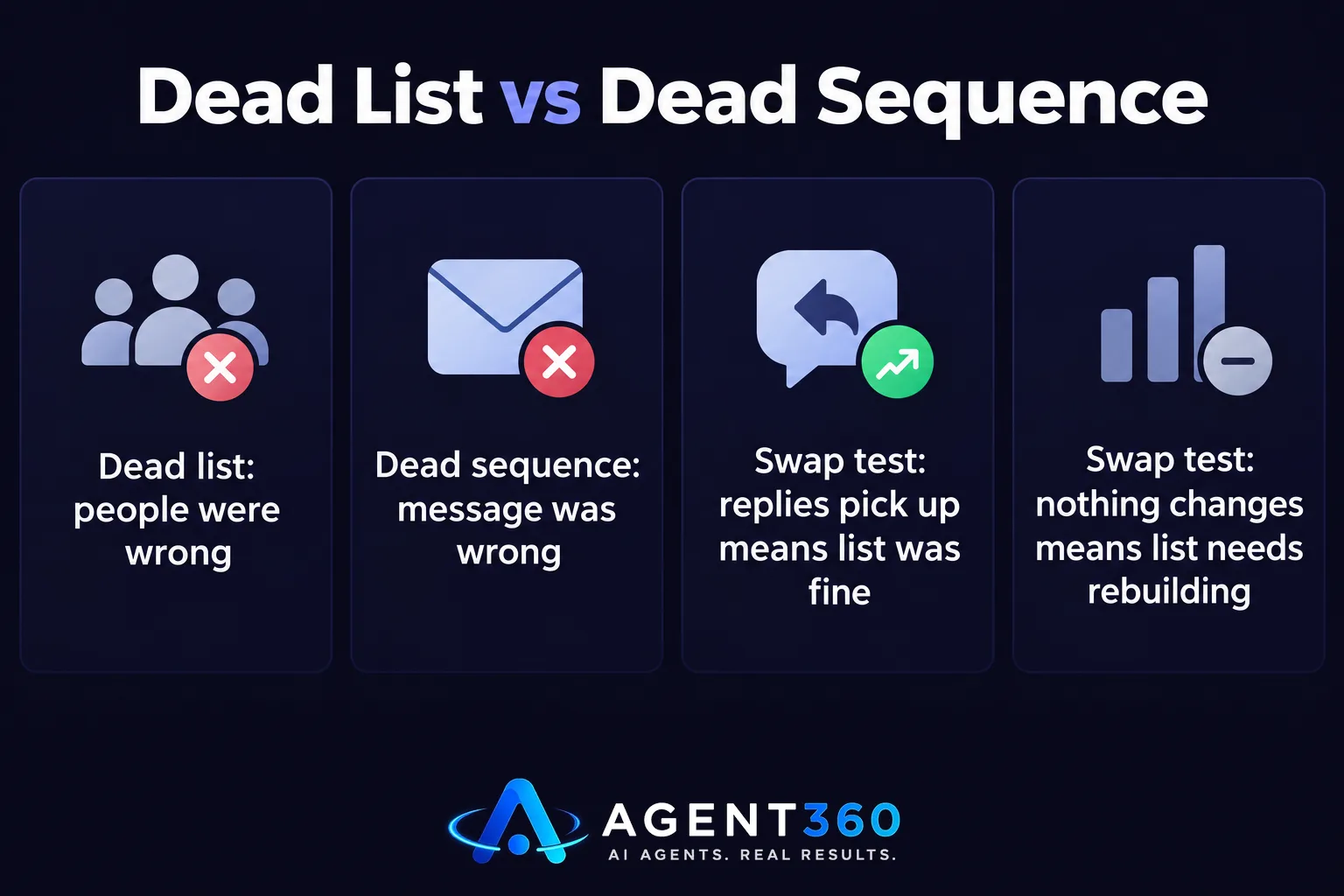
Yes — a dead list means the people were wrong, a dead sequence means the message was wrong, and mixing the two up wastes the fix. A list goes dead when it's been contacted too many times, when the segment no longer matches a buying signal, or when the data has aged out. A sequence goes dead when the same list keeps responding to a different message but not this one.
How do you tell which one it is?
Swap the sequence on a small slice of the same list. If replies pick up, the list was fine and the message was the problem. If nothing changes, the list itself needs to be rebuilt or re-qualified against current buying signals.
What Should You Check Before You Pull the Plug?
Run a short diagnostic before killing a campaign, because the fix is often faster than starting over. A few minutes of checking can separate a copy problem from a data problem or a technical one.

- Check domain health. Look at bounce rate and spam complaint rate for the last few hundred sends before touching the copy.
- Segment the replies. Pull out which sub-segment of the list is responding versus going silent — a blended number hides the real signal.
- Test one variable. Change the opening line or the offer on a small batch rather than rewriting the whole sequence at once.
- Confirm the targeting still matches a live buying signal. A list built six months ago may no longer reflect who's actually in-market.
- Decide: pause, fix, or retire. Pause for a deliverability issue, fix for a messaging issue, retire the list only when the segment itself is exhausted.
Keep Pipeline Moving Without Guessing When to Pull a Campaign
Deciding when to stop a cold email campaign gets easier when prospecting and sending are built on live buying signals instead of a static list bought once and emailed until it stops working. Agent360 finds buyers showing active signals, runs outreach across email, LinkedIn, and phone, and tracks reply and bounce signals in one place so a dying campaign is visible before it damages your domain.
For founders and sales teams running outbound without a dedicated SDR, that visibility is the difference between pausing early and rebuilding a sender reputation for weeks.
See how AI prospecting and multi-channel outreach work together on the outreach product page.
Frequently Asked Questions
What bounce rate means I should stop sending?
A hard-bounce rate that climbs on a list that was previously clean is the clearest sign to stop immediately — it usually points to a data or technical problem that will keep getting worse the longer sending continues.
Should I stop a campaign if open rates are low?
No, not on open rate alone. Privacy features in major email clients make open rate unreliable; bounce rate and reply rate are stronger signals of whether a campaign is working.
How many emails should I send before judging a campaign as dead?
There's no fixed number that applies to every list, but judging a campaign on a handful of sends is too early — give a properly warmed domain and a well-targeted segment enough volume to see a real reply pattern before rewriting or retiring it.
Can I restart a paused cold email campaign?
Yes, once the underlying issue is fixed — a cleaned list, a corrected technical setup, or a reworked message — a paused campaign can usually restart on the same domain as long as sending resumes gradually rather than all at once.
Is it better to pause or completely delete a campaign?
Pause first. Deleting removes the data you need to diagnose what went wrong, while pausing lets you test a fix on a small segment before deciding whether the campaign is worth rebuilding.
More articles
- An Instantly Alternative That Does More Than Send Email
- Apollo Alternative: What to Look for Beyond Contact Data
- Can One Person Run Outbound Sales? Yes, With the Right Setup
- Email Domain Warm-Up: How Long It Actually Takes
- How Long Does Cold Email Take to Work? A Real Timeline
- How Long Does Outbound Take to Work? A Realistic Timeline
- Outbound Software Without Per Seat Pricing: What to Buy
- Sales Software With No Per User Pricing: What to Buy
