Smartlead vs Lemlist: Which Cold Email Tool Fits You?

Smartlead vs Lemlist comes down to one question: are you sending high volumes of cold email across many inboxes, or are you running smaller sequences that mix email with LinkedIn touches? Smartlead is built around sending scale and inbox management. Lemlist is built around multichannel sequences and message personalization.
Neither tool books the meeting for you. Both get an email into a prospect's inbox or a LinkedIn message into their feed, then leave the reply, the qualification, and the calendar booking to you or your team.
The right pick depends on how your outbound actually runs today, not on which tool has the longer feature list.
Key Takeaways
- Smartlead is built for sending volume across many inboxes; Lemlist is built for multichannel sequences that mix email and LinkedIn.
- Neither tool books meetings on your calendar or qualifies replies for you.
- Pricing on both scales with inboxes, contacts, or seats, so model your real volume before you commit.
- If you want email, LinkedIn, calls, and meeting booking in one system, compare Smartlead and Lemlist side by side against a full-funnel option.
- Match the tool to your bottleneck: sending capacity, channel mix, or the manual work after a reply lands.
Table of Contents
What's the core difference between Smartlead and Lemlist?
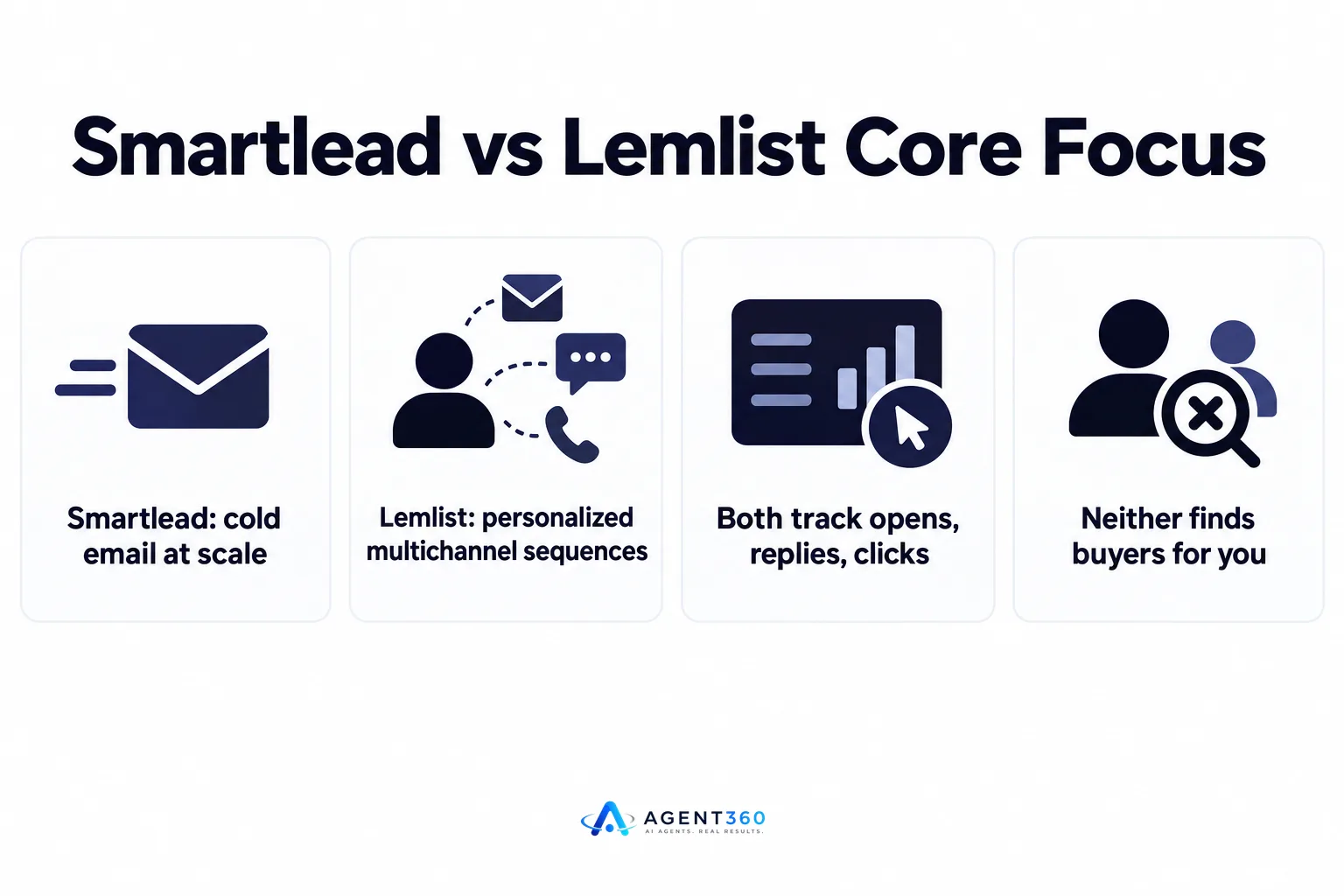
Smartlead focuses on cold email at scale; Lemlist focuses on personalized, multichannel sequences. Both send cold email and track opens, replies, and clicks. The split shows up in what each one optimizes for first.
Who is each tool built for?
Smartlead's positioning leans toward agencies and teams running cold email across many client accounts or many sending domains at once, with warmup and inbox rotation built into the core workflow. Lemlist leans toward founders and smaller sales teams who want one sequence to touch a prospect by email and then follow up on LinkedIn, often with image or video personalization baked into the message.
What do they both cover?
Both tools let you build sequences, set delays between steps, track engagement, and connect to a CRM or a sending tool through integrations. Neither one finds buyers for you or tells you which accounts are showing signals worth acting on right now.
Which tool fits high-volume cold email sending?
Smartlead fits better once you're sending from many inboxes and need to manage deliverability across all of them. Its workflow is built around adding sending accounts, warming them up, and rotating sends so no single inbox gets flagged.
What happens when you add more sending inboxes?
As you add inboxes, you need warmup running on each one, rotation logic so volume spreads evenly, and a way to pull a sending account out fast if its reputation drops. Smartlead's interface is organized around managing that list of inboxes directly. Lemlist supports multiple sending accounts too, but its interface and pricing are built more around sequences and contacts than around managing a large pool of inboxes.
Which tool fits multichannel outreach that includes LinkedIn?
Lemlist fits better if LinkedIn steps are a core part of your sequence, not an afterthought. It builds LinkedIn connection requests, views, and messages into the same sequence as email, so a prospect can get touched on both channels without you managing two separate tools.

Does Smartlead handle LinkedIn as well?
Smartlead has added LinkedIn steps to its sequences, but its strongest workflows and documentation still center on email. If your outbound genuinely splits across email, LinkedIn, and calls, a tool built for multi-channel outreach from the ground up will usually need less workaround than bolting LinkedIn onto an email-first tool.
How do the pricing models compare?
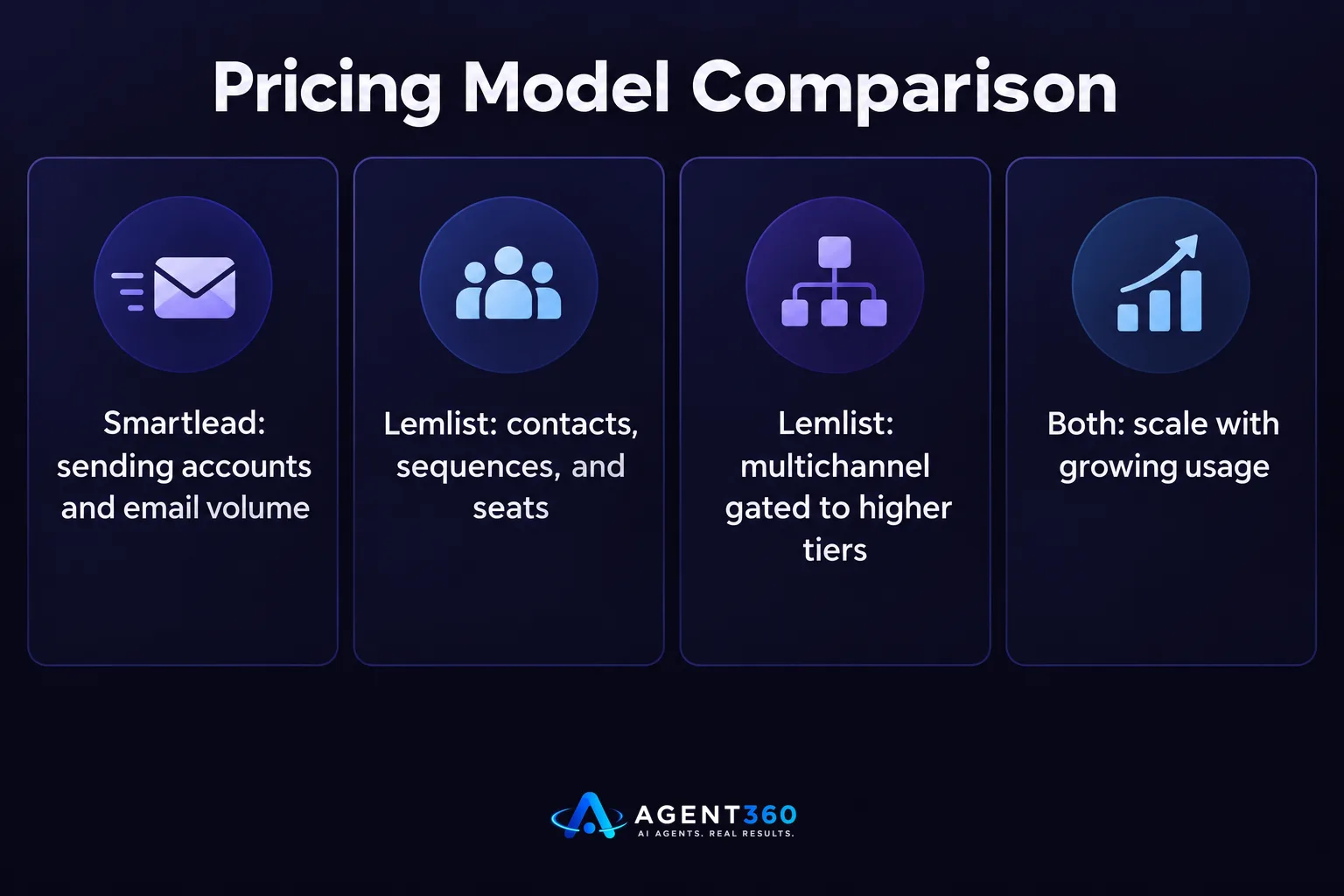
Both scale with volume, but the unit they charge for is different. Smartlead's plans scale with the number of sending accounts and the total email volume you push through them. Lemlist's plans scale more around contacts, sequences, and seats, with multichannel features gated to higher tiers.
What should you check before you commit to either?
Check your sending account count today and where it's headed in six months, since that's what drives cost on a volume-based tool. Check how many of your sequences actually need a LinkedIn step, since that's what drives cost on a channel-based tool. Neither vendor publishes a number that fits every team, so run your own volume through a trial before you sign an annual plan.
How do you decide between Smartlead and Lemlist?
- Count your sending inboxes. If you're running five or more domains to hit volume, weight the decision toward the tool built around inbox management.
- Map your channel mix. If LinkedIn carries real weight in your sequence, weight the decision toward the tool that treats it as a first-class step, not an add-on.
- List what happens after a reply. Neither tool sorts replies into “interested,” “not now,” and “no,” or books the meeting on your calendar, so plan for that work separately.
- Run a 30-day trial on your own list. Load real prospects, not a sample list, so deliverability and reply rates reflect your actual market.
- Decide where the manual work lands. If the bottleneck is really the follow-up and booking step, a sending tool swap won't fix it.
Want Meetings Booked Without Managing a Tool Stack?
Smartlead and Lemlist both get a message in front of a prospect. Neither one finds the buyer in the first place, detects that a company is in-market right now, or puts a confirmed meeting on your calendar. That's the gap between a sending tool and a full outbound system.
Agent360 combines AI prospecting and buying-signal detection with multi-channel outreach across LinkedIn, email, and phone, then books the meeting directly on your calendar and tracks the deal in built-in CRM tools. It's built for founders running their own outbound and for sales teams who need pipeline filled with less manual work, not another inbox to warm up.
See pricing and plans to compare the cost of a full system against stitching sending tools together yourself.
Frequently Asked Questions
Is Smartlead or Lemlist better for cold email deliverability?
Deliverability depends more on your sending practices, domain setup, and list quality than on which tool you pick. Smartlead's workflow is built more directly around managing many inboxes and their warmup status, which helps if you're scaling sending accounts fast.
Can Lemlist send cold email at the same volume as Smartlead?
Lemlist supports multiple sending accounts and can handle real volume, but its interface and pricing model are built more around sequences and personalization than around managing a large pool of inboxes directly.
Do Smartlead and Lemlist book meetings for me?
No. Both tools send messages and track replies, but a human or a separate system still has to qualify the reply and book the meeting on a calendar.
Which tool is cheaper for a small team?
It depends on your volume. A small team sending from one or two inboxes may find Lemlist's contact-based pricing cheaper, while a team adding sending accounts fast may find Smartlead's volume-based pricing scales better. Model your actual numbers in each pricing calculator before deciding.
Do I need both a sending tool and a CRM?
Most teams do, since neither Smartlead nor Lemlist is built to manage a full sales pipeline from first touch to closed deal. Check how a connected CRM fits into outbound if you want fewer tools to maintain.
More articles
- The Best Cold Email Tool Depends on Your Outbound Stack
- Apollo vs ZoomInfo: Which Fits Your B2B Sales Team?
- Apollo vs Smartlead: Which One Actually Books Meetings?
- Instantly vs Smartlead: Which Cold Email Tool Wins?
- Cold Email Software Comparison: What Actually Matters
- LinkedIn Outreach Limits: What They Are and How to Stay Under Them
- Agent 360: Who It's For, What It Costs and How It Works
- What Is Agent360? Outbound, Meetings and CRM Explained
