Apollo vs ZoomInfo: Which Fits Your B2B Sales Team?
Apollo vs ZoomInfo comes down to one trade-off: ZoomInfo is built for enterprise teams that need deep, verified contact and intent data and can pay enterprise prices for it, while Apollo is built as a cheaper, more self-serve platform that bundles a large contact database with basic outreach tools.
Neither tool books a meeting on its own. Both hand you a list of names and, in Apollo's case, a way to email them. What happens after that — follow-up, multi-channel sequencing, getting the meeting on a calendar — is still on you.
This post breaks down where the two actually differ, who each one suits, and what you still have to build around either choice.
Key Takeaways
- ZoomInfo is priced and built for larger teams that need verified data at scale; Apollo is priced for smaller teams and individual founders.
- Apollo bundles basic email outreach with its database; ZoomInfo is primarily a data and intent-signal platform, not a sending tool.
- Data quality on both tools varies by industry and region, so test a sample list against your own market before committing to either.
- If your gap is meetings booked, not just contacts found, compare what each platform leaves you to build yourself against a tool that includes prospecting and booking in one workflow.
- Neither platform replaces the follow-up and sequencing work that turns a contact list into a calendar full of meetings.
Table of Contents
What's the core difference between Apollo and ZoomInfo?
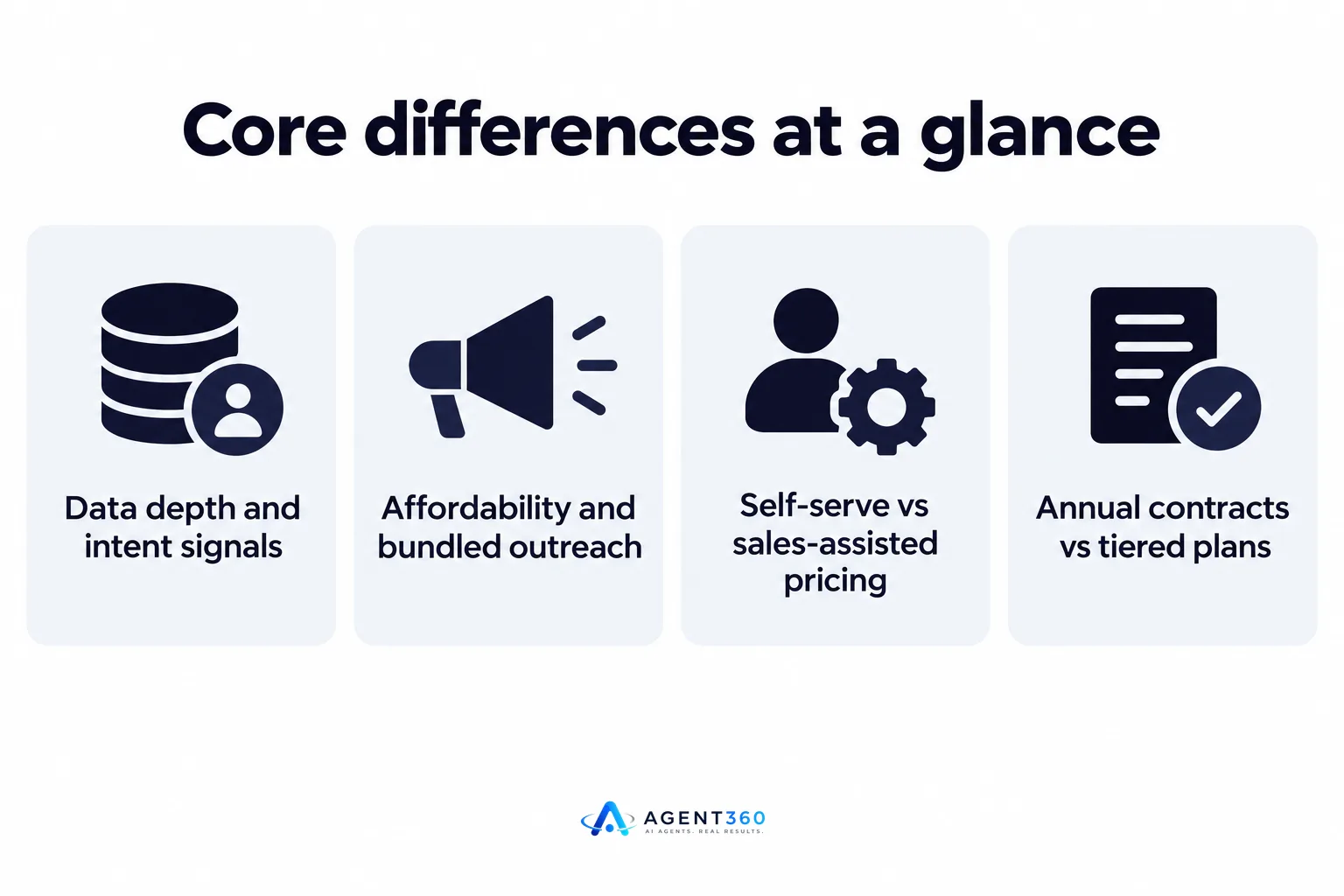
ZoomInfo focuses on data depth and buying-intent signals for larger sales orgs; Apollo focuses on affordability and a bundled, self-serve workflow. Both start from the same job — finding the right contact at the right company — but they solve it for different buyers.
How do their data sources differ?
ZoomInfo has built its reputation on contact and company data verification, plus intent signals drawn from web activity, which larger revenue teams use to prioritize accounts. Apollo maintains its own contact database and layers in firmographic filters, but it's generally positioned as a lighter-weight, lower-cost alternative rather than a data-verification specialist. Accuracy on both varies by region and industry, so a sample pull against your actual target list matters more than either company's marketing claims.
How do their pricing models differ?
Apollo publishes tiered, self-serve pricing on its own site aimed at individuals and small teams. ZoomInfo sells primarily through sales-assisted, contract-based pricing aimed at mid-market and enterprise accounts. If you're a founder or a two-person sales team, you'll likely find Apollo's self-serve model easier to start and stop; ZoomInfo's model is built around annual commitments.
Which one fits a small B2B sales team better?
Apollo generally fits smaller teams better because of its lower cost and self-serve setup; ZoomInfo fits teams that already have the budget and headcount to act on enterprise-grade data. The deciding factor isn't which database is bigger — it's whether you have the people to act on what either tool surfaces.
What does a founder running outbound alone need?
A founder doing their own outbound usually doesn't need an enterprise intent-data platform; they need a short list of real buyers and a way to reach them without spending every afternoon on manual follow-up. For that buyer, the bigger question isn't Apollo vs ZoomInfo — it's whether a data tool alone, with no built-in sequencing or booking, actually closes the gap between “found a contact” and “got a meeting.”
What do you give up either way?
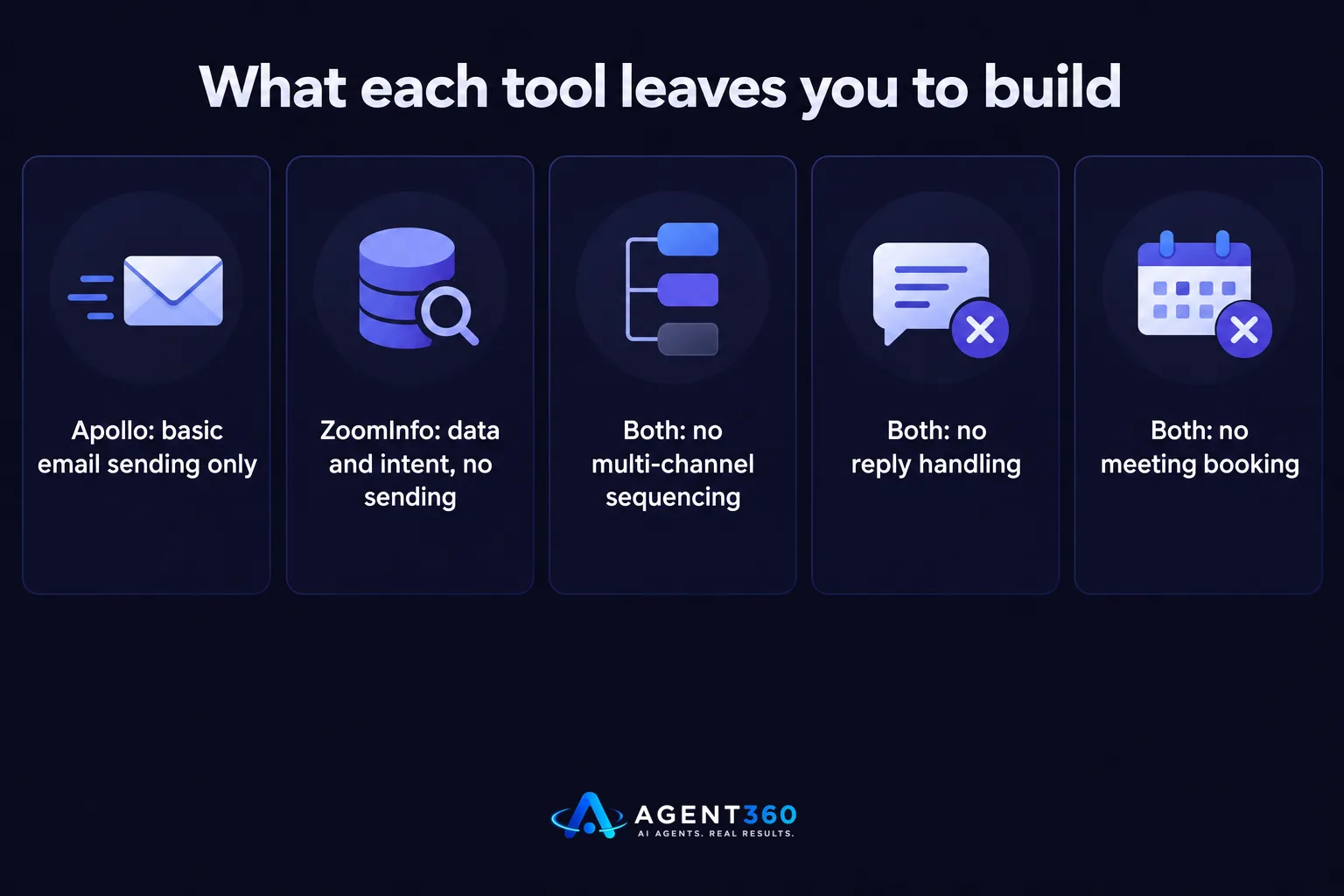
Both tools stop at the data layer; neither sequences outreach across channels or books the meeting for you. That's true whether you pick the cheaper option or the expensive one.
What do both tools leave you to build yourself?
Apollo includes basic email sending, but multi-channel sequencing across LinkedIn and phone, reply handling, and calendar booking still need separate tools or manual work. ZoomInfo is even more data-focused; most teams pair it with a separate outreach platform and a CRM. Either way, you're assembling a stack rather than buying a finished workflow.
How do you decide between Apollo and ZoomInfo?
Decide based on budget, team size and whether you need intent signals or just contact data. Walk through these steps before committing to either platform.
- Define your list size. If you need a few hundred verified contacts a month, Apollo's lower cost likely covers it; if you need account-level intent signals across thousands of companies, ZoomInfo's model starts to justify its price.
- Pull a sample list from each. Request a trial export from both and check accuracy against companies you already know, rather than trusting either vendor's stated match rate.
- Map what happens after the list. Decide who will write sequences, handle replies, and get meetings onto a calendar — neither platform does this part for you.
- Check contract terms. Confirm whether you're locked into an annual deal before you've proven the data holds up for your specific market.
- Compare against an all-in-one option. If the real bottleneck is meetings booked rather than contacts found, weigh either tool against a platform that pairs buying-signal detection with outreach and booking.
Get a Workflow That Goes Past the Contact List
Apollo and ZoomInfo both answer “who do I call.” They don't answer “who follows up, on which channel, until a meeting lands on the calendar.” That gap is where most small teams lose the deals a good list should have produced.

Agent360 combines AI prospecting and buying-signal detection with multi-channel outreach across LinkedIn, email and phone, meeting booking directly on your calendar, and CRM tools to track the pipeline — built for B2B sales teams and founders who need a steady flow of booked meetings without adding an SDR.
See how the two approaches stack up directly against Agent360 vs Apollo or Agent360 vs ZoomInfo before you commit to either platform.
Frequently Asked Questions
Is Apollo cheaper than ZoomInfo?
Apollo's published pricing targets individuals and small teams with self-serve plans, while ZoomInfo typically sells through sales-assisted, contract-based pricing aimed at larger teams. For an exact comparison, check each company's current pricing page, since both change tiers over time.
Does Apollo include outreach, or just data?
Apollo includes basic email sending alongside its contact database, but multi-channel sequencing across LinkedIn and phone, and meeting booking, are separate capabilities you'd need to add or build.
What is ZoomInfo's intent data used for?
ZoomInfo's intent signals are designed to help sales teams prioritize which accounts to contact based on web research activity, so reps spend time on companies already showing buying behavior rather than cold-calling a flat list.
Can a small team use ZoomInfo?
Small teams can use ZoomInfo, but its pricing model and contract structure are generally built around larger budgets, so it's worth confirming current entry-level plans directly with ZoomInfo before assuming it fits a small-team budget.
Do I still need a separate outreach tool with either platform?
Yes. Both Apollo and ZoomInfo are primarily data platforms; sequencing outreach across channels, handling replies, and booking meetings onto a calendar typically require a separate tool or manual process either way.
More articles
- The Best Cold Email Tool Depends on Your Outbound Stack
- Smartlead vs Lemlist: Which Cold Email Tool Fits You?
- Apollo vs Smartlead: Which One Actually Books Meetings?
- Instantly vs Smartlead: Which Cold Email Tool Wins?
- Cold Email Software Comparison: What Actually Matters
- LinkedIn Outreach Limits: What They Are and How to Stay Under Them
- Agent 360: Who It's For, What It Costs and How It Works
- What Is Agent360? Outbound, Meetings and CRM Explained
