Done-For-You Website: What It Costs and What You Get

A done-for-you website means someone else builds it, writes it, launches it and keeps it running — you never touch a drag-and-drop builder. You give direction and approve the result; someone else handles the design, the copy, the hosting setup and the ongoing fixes.
Most owners come to this after the DIY route eats too much time. Or after a freelancer vanishes mid-project, leaving a half-built site behind. The appeal isn't convenience alone — it's having one party accountable for whether the site actually works, not just whether it looks finished.
Here's what a done-for-you website usually costs, whether web design is still worth paying for, how to pick a builder versus a managed service, and what you should actually get handed over once the work's done.
Key Takeaways
- A done-for-you website should include design, copy, launch and ongoing updates, not just a one-time build — check what's actually included before you sign anything.
- Price depends on scope: a single-page site costs far less than a multi-page site with blog, booking forms and local SEO built in.
- Web design is still worth paying for in 2026 because AI tools can generate a page but can't manage hosting, security updates or ongoing changes.
- A website builder works if you have time to maintain it yourself; a managed service works if you'd rather hand that off entirely.
- Ask upfront who owns the domain, the content and the code once the project ends.
Table of Contents
How much does it cost to get a website made for you?
Cost tracks scope, not page count. A template brochure site and a lead-generating site with SEO and forms aren't priced the same, because they don't need the same ongoing work. A one-time freelance build is a flat fee — pay it, and support ends there. A managed plan runs monthly and folds in hosting, updates and small changes as you go.

What drives the price up or down?
Page count matters, but so does whether you need real copywriting instead of filled-in templates, whether the site has to rank locally, and whether future changes are included or billed one at a time. A site built to generate calls or bookings costs more than a static brochure page — it needs working forms, tracking, and a layout actually tested to convert visitors.
Is a one-time build or a monthly plan cheaper long term?
A one-time build looks cheap on day one. Then every change after launch — a new page, a price update, a broken plugin — turns into a separate bill or a DIY scramble. A monthly plan folds all of that into one recurring cost, and it usually comes out cheaper over a year if you'll update the site more than a couple of times.
Is web design still worth it in 2026?
Yes — a website still has a job to do: rank, load fast, convert visitors and stay secure. None of that happens on its own just because a page exists. AI tools can spit out a decent-looking page in minutes, but a page isn't a website. Hosting, domain renewal, security patches, broken links, outdated content — somebody has to watch all of it, and that's exactly the part AI generation skips.
What has changed is where the money goes. Less of it pays for manual page-building, and more of it should go toward strategy — what the site needs to say, who it needs to rank for, and how it connects to ads, SEO and follow-up. That's closer to done-for-you marketing than old-style web design, and it's worth paying for if the alternative is a site nobody touches after launch.
What is the best website builder for a small business?
The best builder is whichever one matches how much time you actually have for upkeep — not which one has the most templates. A drag-and-drop builder works fine if you're willing to log in monthly, update prices, swap photos and check that forms still fire. If that upkeep keeps sliding down your to-do list, a managed service that handles it for you will outperform any builder, simply because the site stays current.
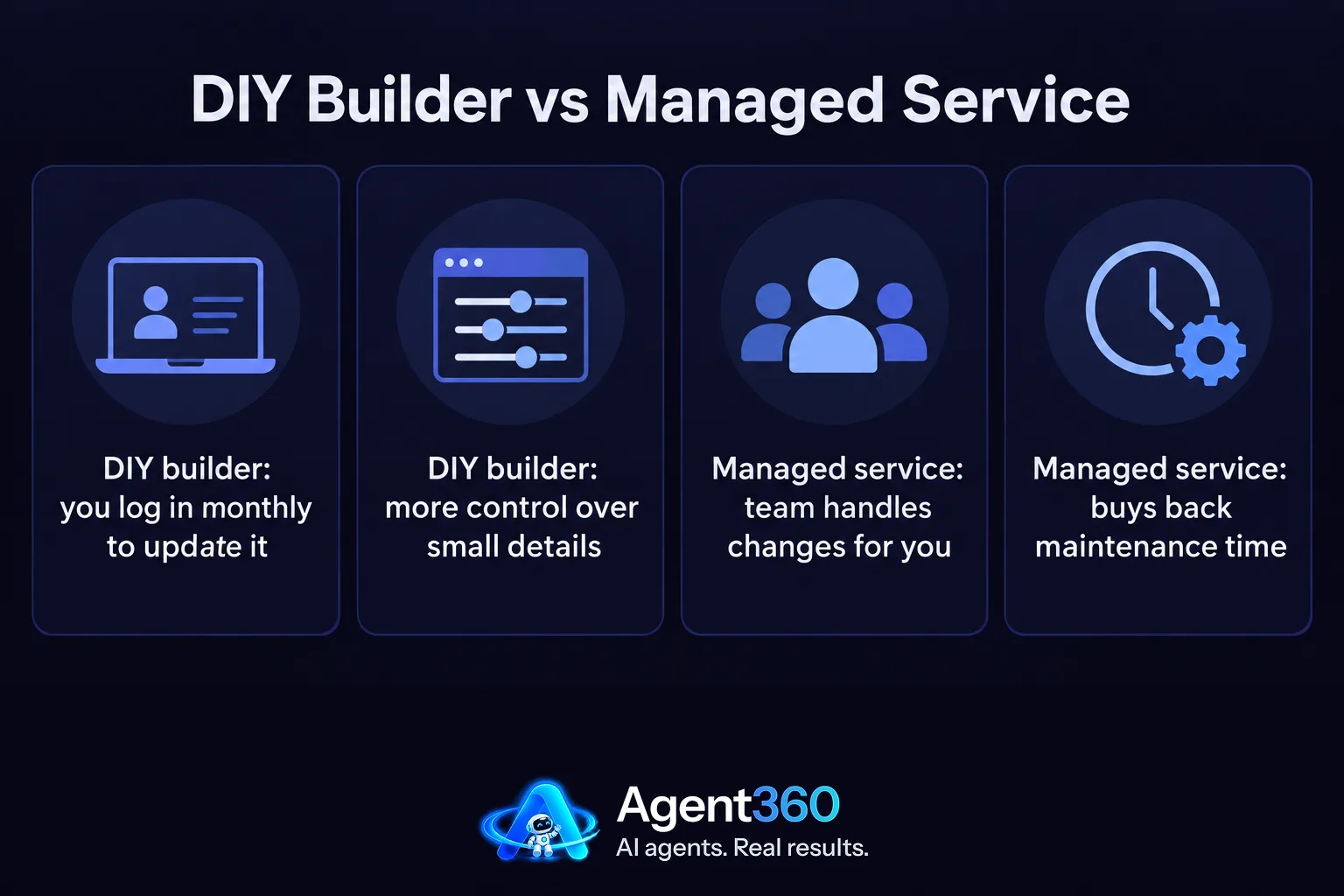
DIY builder vs managed service — what's the difference?
A builder hands you the tools and leaves the work to you — design, copy, SEO settings and fixes, all on your plate. A managed service hands you the finished site and keeps it running; you approve changes, you don't execute them. The trade-off comes down to control versus time: DIY buys you more say over small details, managed service buys back the hours you'd otherwise spend maintaining it.
What do you get when you have a website made for you?
A proper done-for-you build includes discovery, design, written content, launch and a plan for ongoing changes — not just a homepage and a contact form. If any of these steps are missing from a quote, ask what happens the first time you need a change, six months in.
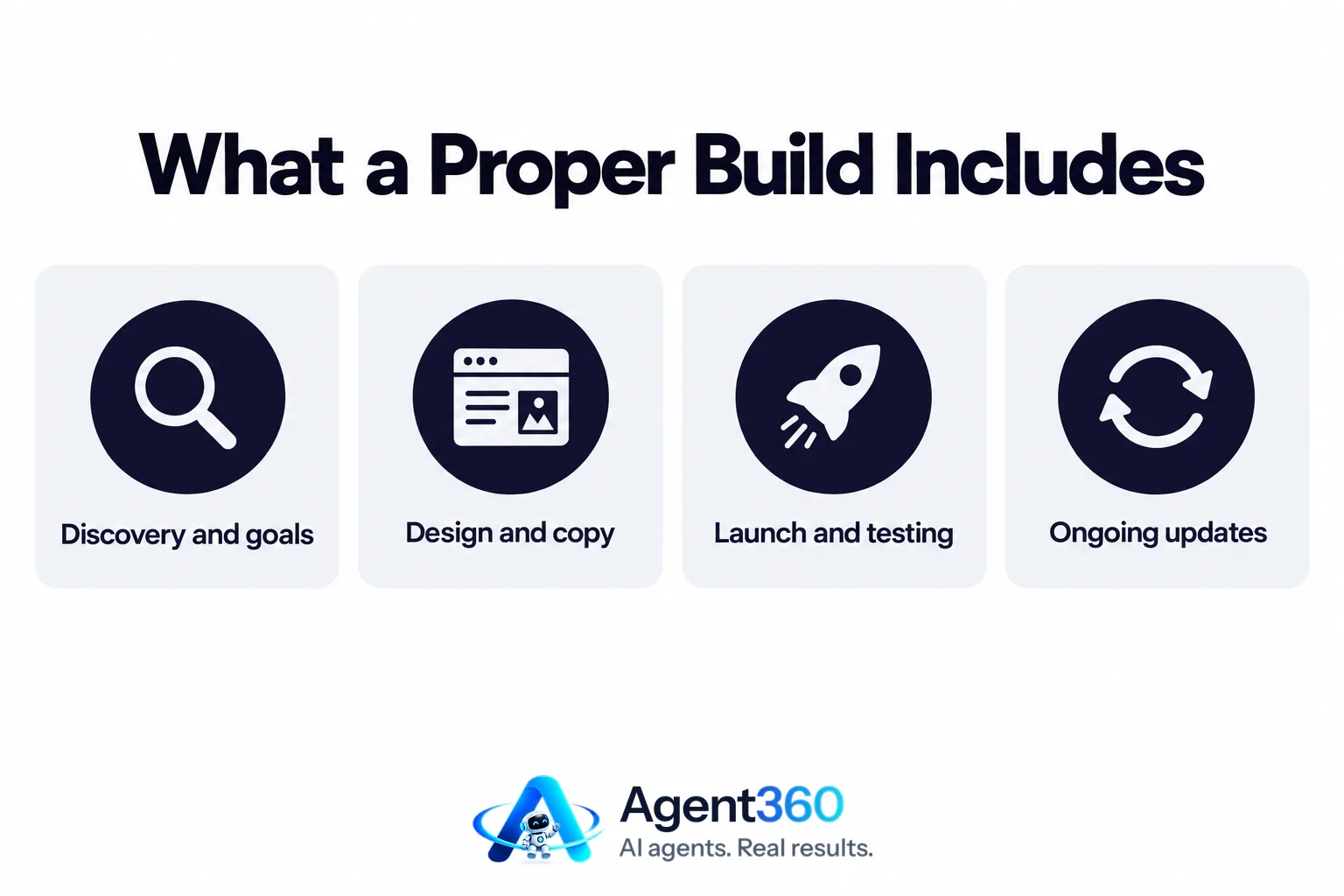
- Discovery and goals. The team should ask what the site needs to do — book calls, sell a service, rank locally — before designing anything.
- Design and copy. Pages are built around your services and written to match how customers actually search, not generic filler text.
- Launch and testing. Forms, phone numbers and load speed get checked before the site goes live, not after.
- Ongoing updates. Prices change, services get added, and the site should be able to change with them without a new invoice every time.
Compare quotes only after you've seen how a managed build actually runs, start to finish, on how it works.
Take the Next Step With a Website That's Actually Done For You
Agent360's WebAgent builds your site and keeps it current as part of an all-in-one growth plan starting at $297/mo — the site sits alongside SEO, ads, funnels, CRM and automation on one monthly bill instead of five separate vendor invoices. That means the site, the SEO work and the lead follow-up are built to work together from day one.
If you're weighing a one-off build against a service that keeps updating the site as your business changes, it's worth comparing the two before you commit to either.
Check current plans on pricing to see what's actually included at each tier.
Frequently Asked Questions
How much does it cost to get a website made for you?
Scope sets the price. A simple brochure site costs less than a multi-page site with SEO, booking forms and ongoing updates baked in, and a monthly managed plan usually works out cheaper over a year than paying per change after a one-time build.
Is web design still worth it in 2026?
Yes. A site still needs hosting, security patches, fast load times and content written for how people actually search — none of that happens on its own just because a page got generated fast.
What is the best website builder for a small business?
Comes down to time. A DIY builder works if you'll log in regularly to maintain it; a managed service works better if you'd rather hand that job off completely.
Have a website made for you — what should be included?
Expect discovery of your goals, design and copy matched to your services, a tested launch, and a plan for ongoing updates. If a quote stops at “we'll build the homepage,” ask what happens the day you need to change it.
Do I own the website once it's built?
Ask before you sign anything. Ownership of the domain, content and code should be spelled out in the agreement, whether you're working with a freelancer or a managed service.
How long does a done-for-you website take to launch?
Timelines move with scope, but a managed build runs through discovery, design and testing in set stages instead of an open-ended freelance timeline. Ask for that stage-by-stage schedule before you sign anything.
More articles
- Clay vs LeadSwift: Which Fits Your Outbound Job?
- Local SEO Checklist: What to Fix First, in Order
- Agent360 vs Belkins: a fair, side-by-side comparison
- Best done-for-you marketing package for local service businesses?
- How to Get Your Business Mentioned in Google AI Answers
- Who Should You Use for Done-For-You Auto Shop Marketing?
- What's a White Label GEO Agency and Who Offers It?
- The Best Marketing Strategy for an Auto Repair Shop
