White Label GEO: Resell AI Visibility Without New Hires
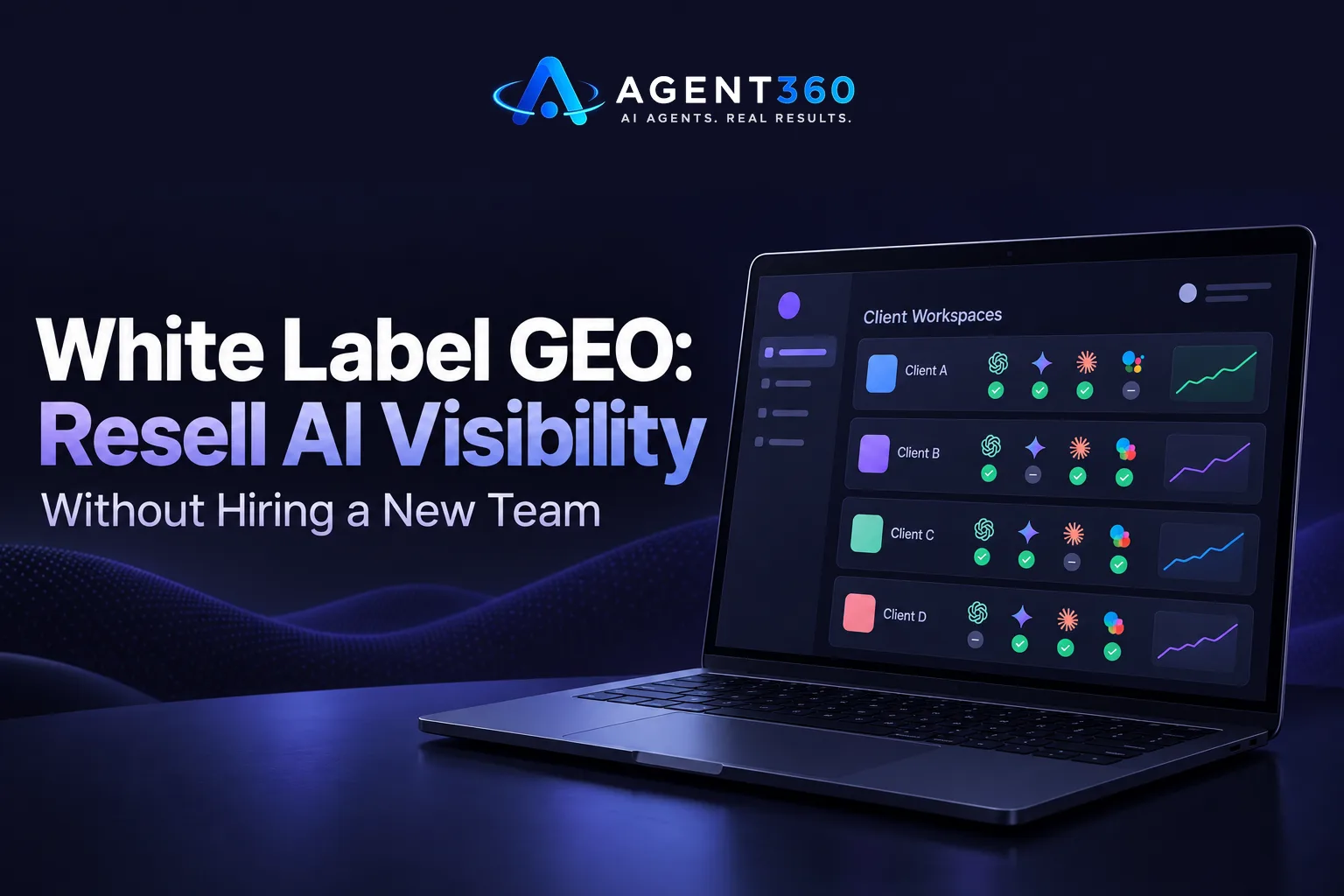
White label GEO is buying the work of getting a client named inside AI answers — ChatGPT, Claude, Google’s AI Overviews — from a vendor, then selling it to your clients under your own agency name. The client sees your logo, your report, your invoice. They never see who actually runs the tracking or writes the pages. Agencies have run this arrangement for SEO and PPC for two decades. Now it’s pointed at a newer problem: buyers ask an AI assistant for a recommendation before they ever open Google.
The term confuses people because two acronyms are colliding in search results right now, and most of what comes up is still written for the old job.
White label SEO rents out rankings; white label GEO rents out being named
White label SEO is an agency paying a third party to do keyword research, build links, write content and report on rankings, then presenting that work as its own to the client. The deliverable is a position in Google’s list of ten blue links, tracked over weeks and months.
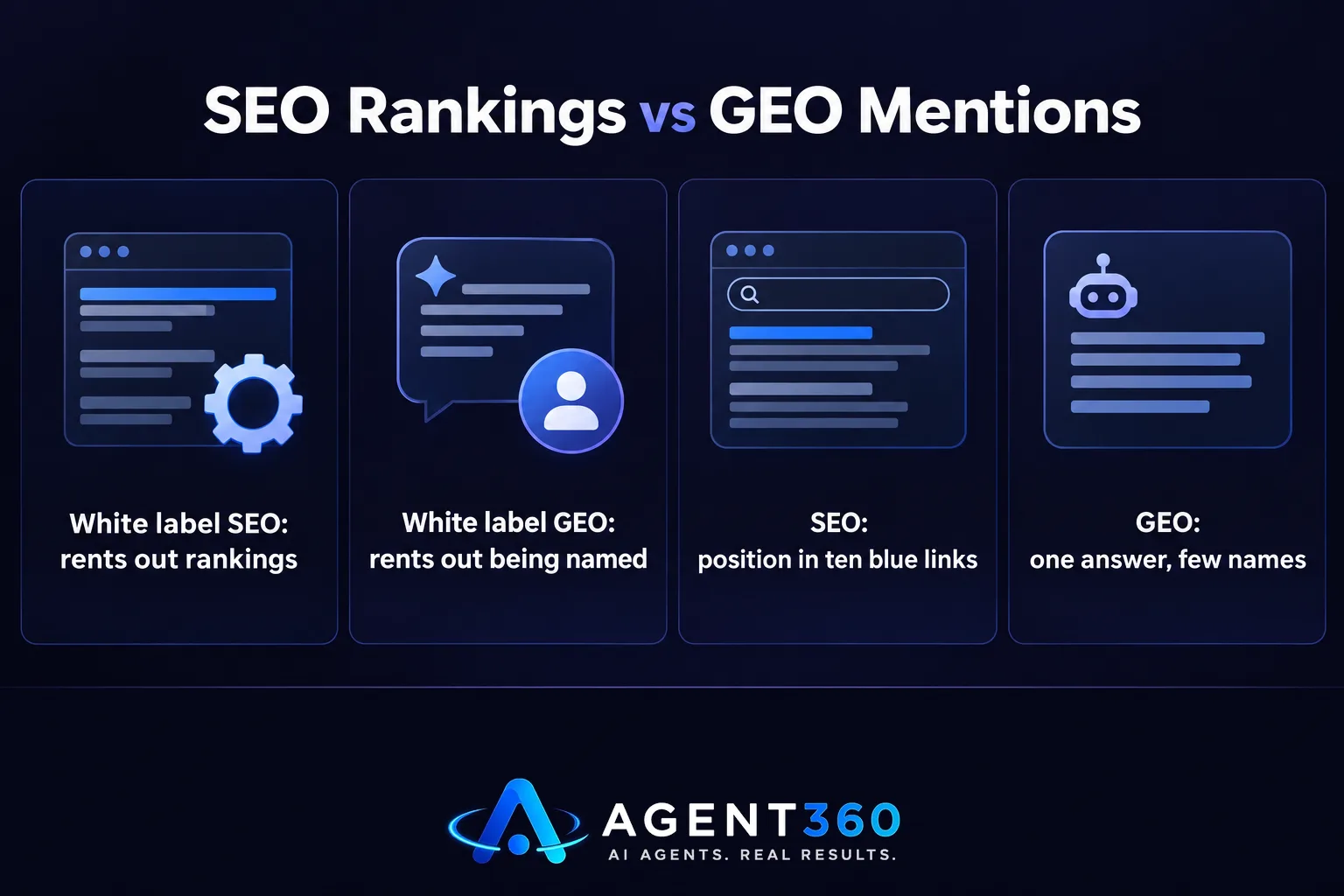
White label GEO rents out a different outcome: whether an AI assistant says your client’s name when someone asks it a question. There’s no list of ten. There’s one answer, sometimes with three or four names in it, sometimes just one. The work underneath looks similar — you still need pages that answer real questions clearly. But what you’re selling and how you report on it both change. A client used to a keyword-position report will ask why you can’t promise where they rank in ChatGPT. You can’t, for the same reason no one can promise a Google position: the system writes a different answer depending on the exact question, the day and the model version. What you can promise is a repeatable check, run on a schedule, that shows whether the client is named this week versus last. A single question to ChatGPT tells you almost nothing on its own — it’s the pattern across weeks that is worth reporting.
GEO means getting named inside the answer, not ranked below it
In digital marketing, GEO — generative engine optimization — is the practice of getting a business named and cited by generative AI tools when they answer a question, rather than just linked to in a traditional search results page. It sits next to AEO (answer engine optimization, aimed more narrowly at summary boxes like Google’s AI Overview) and SEO (the list of links). The three overlap more than the acronyms suggest: a page written clearly enough to earn a citation from Claude is usually also a page Google ranks well, because both reward the same thing — a direct answer, backed by specifics, without padding.
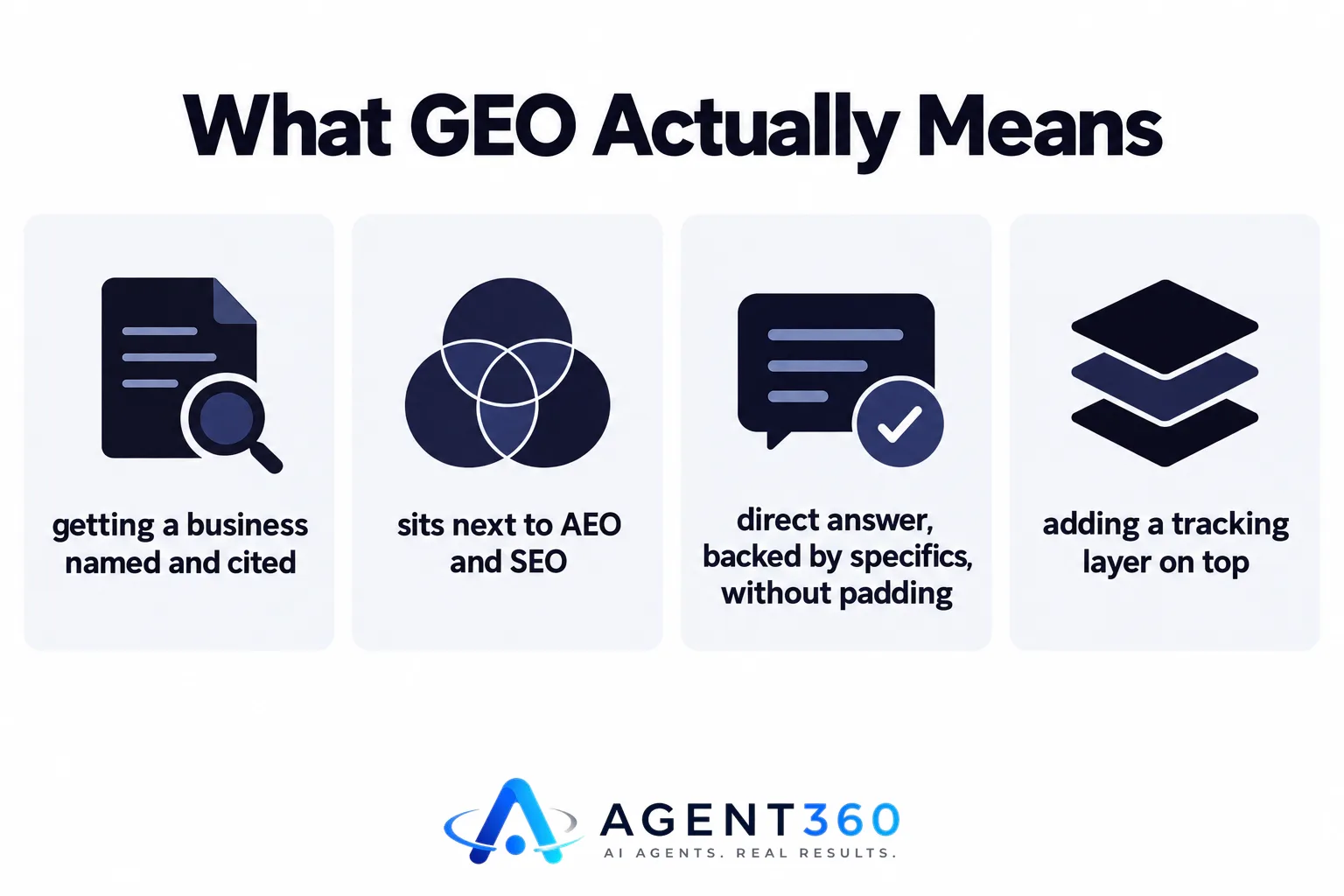
That overlap is the reason white label GEO is sellable at all. You’re not building a second content operation from scratch. You’re adding a tracking layer — which questions get asked, who gets named, who gets cited — on top of content work you may already be doing, and reporting on it separately, because clients pay for things they can see measured.
Price it per client workspace, not per hour of research
The fastest way to lose margin on white label GEO is to staff it like consulting: an analyst manually asking ChatGPT and Claude the same ten questions every week, screenshotting the answers, writing it up. That scales to maybe four or five clients before someone needs to be hired, and the hire eats most of the markup.
Price it instead the way you’d price any workspace-based tool: a flat monthly rate per client, covering a fixed number of tracked questions and a fixed cadence of checks, with the asking and recording automated. That’s the only structure where a twentieth client doesn’t require a twentieth hour of staff time.
Report on the gap, not just the win
A client who gets named in an AI answer wants to know it happened. A client who doesn’t get named wants to know why — and what page would change that. The second report is the one that keeps the retainer. If your white label layer only tells the client whether they were mentioned, you’re delivering a scorecard. If it also shows which competitor was named instead and hands you a page idea to close that gap, you’re delivering a plan. Plans renew.
Where this fits for an agency that already resells SEO
If your agency already resells rankings and content under your own brand, white label GEO is the same motion applied to a newer channel, and it’s worth building rather than ignoring — buyers researching vendors are asking ChatGPT for a shortlist before they ever fill in a form. SearchAgent gives each client its own workspace with its own tracking, plan and articles, so you can score a prospect’s current AI visibility on the sales call and start the work the day they sign, without building a tracking team first. Plans start at $297 a month per workspace; see how agencies run it and the current pricing.

What is white label SEO?
White label SEO is work — keyword research, content, link building, rank tracking — that one company performs and a second company (usually an agency) resells to its own clients under its own brand, with the original provider staying invisible to the end client.
What is the meaning of GEO in digital marketing?
GEO, or generative engine optimization, means doing the work needed for an AI assistant like ChatGPT, Claude or Google’s AI Overviews to name your business and cite your site when it answers a question, rather than optimizing only for a position in a traditional list of search results.
Is white label GEO the same service as white label SEO?
No. They often use the same underlying content, but white label SEO reports on rankings in a list of links, while white label GEO reports on whether and how often a business is named inside an AI-generated answer — a different measurement with a different reporting cadence.
More articles
- An AI Blog Writer Won't Rank You. Here's What Will
- SEO Content Automation: What to Automate, What Not To
- What Is llms.txt and Do You Actually Need One?
- How to Appear in Google AI Overviews
- AI Visibility Tracking: What to Measure and How Often
- Track Brand Mentions in ChatGPT Without Fooling Yourself
- How to Get Mentioned by ChatGPT: A Practical Playbook
- How to Rank in ChatGPT: What Actually Gets You Named
