Which Social Platforms Deserve Your Time, Not Your Guilt
The platform your buyer uses is the only one that matters. Not the one your competitor posts on. Not the one your intern likes. Not whatever has the best algorithm this quarter. If the people who sign your contracts aren't scrolling it, nothing you publish there earns anything back.
Most teams pick platforms the way they pick conference swag — whatever's in front of them. That's how you end up with a LinkedIn page with four posts, a YouTube channel with one video from 2022, and an X account nobody checks. Spreading thin content across five platforms loses to concentrated content on two.
Two platforms beat five, every time
Five platforms sounds like reach. In practice it's five half-finished habits. A team with one writer and one designer can keep two channels sharp — on-brand, on schedule, answering comments — or five channels thin and inconsistent. The thin version loses on every platform at once, because each one's algorithm rewards consistency, and consistency is the first thing that breaks when attention gets split five ways.
Pick two. Run them properly for a quarter. Only then think about a third.
Match the platform to how your buyer actually decides
If you sell to companies, the decision gets made by someone scrolling during a commute or between meetings, reading opinions from people they half-recognise. That's LinkedIn's job: text and credibility, not spectacle.
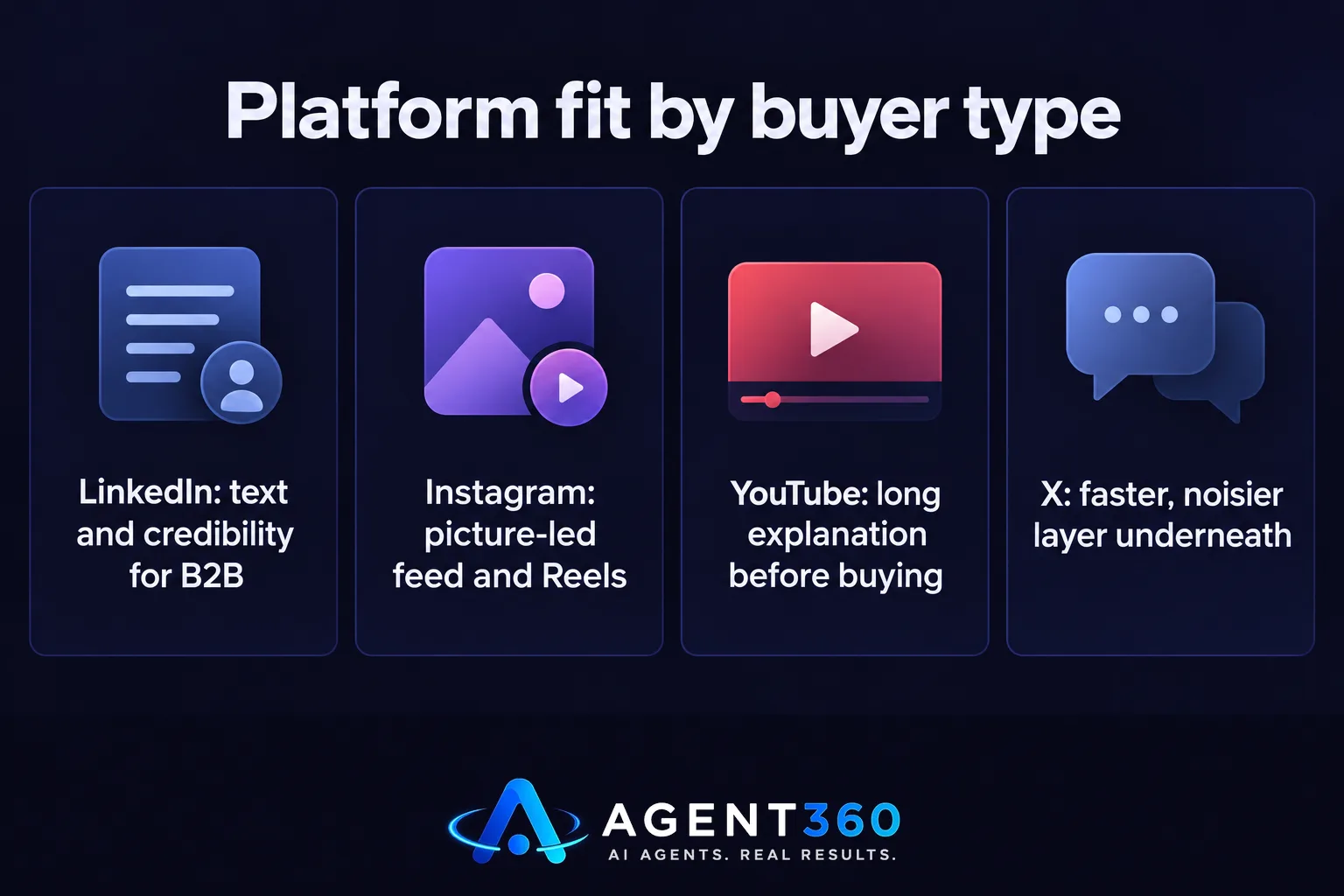
If you sell to people — a product, a service, a studio, a local business — the decision gets made by someone scrolling for ideas and taste, not opinions. That favours a visual platform: Instagram for the picture-led feed and Reels, or YouTube if what you sell benefits from being explained at length before someone buys it.
X sits underneath both — a faster, noisier version of whichever primary channel you already run. Useful for reacting to the moment. Rarely useful as a first platform on its own.
Three signs you picked the wrong first platform
You'll know within six weeks, not six months, if the test is honest.
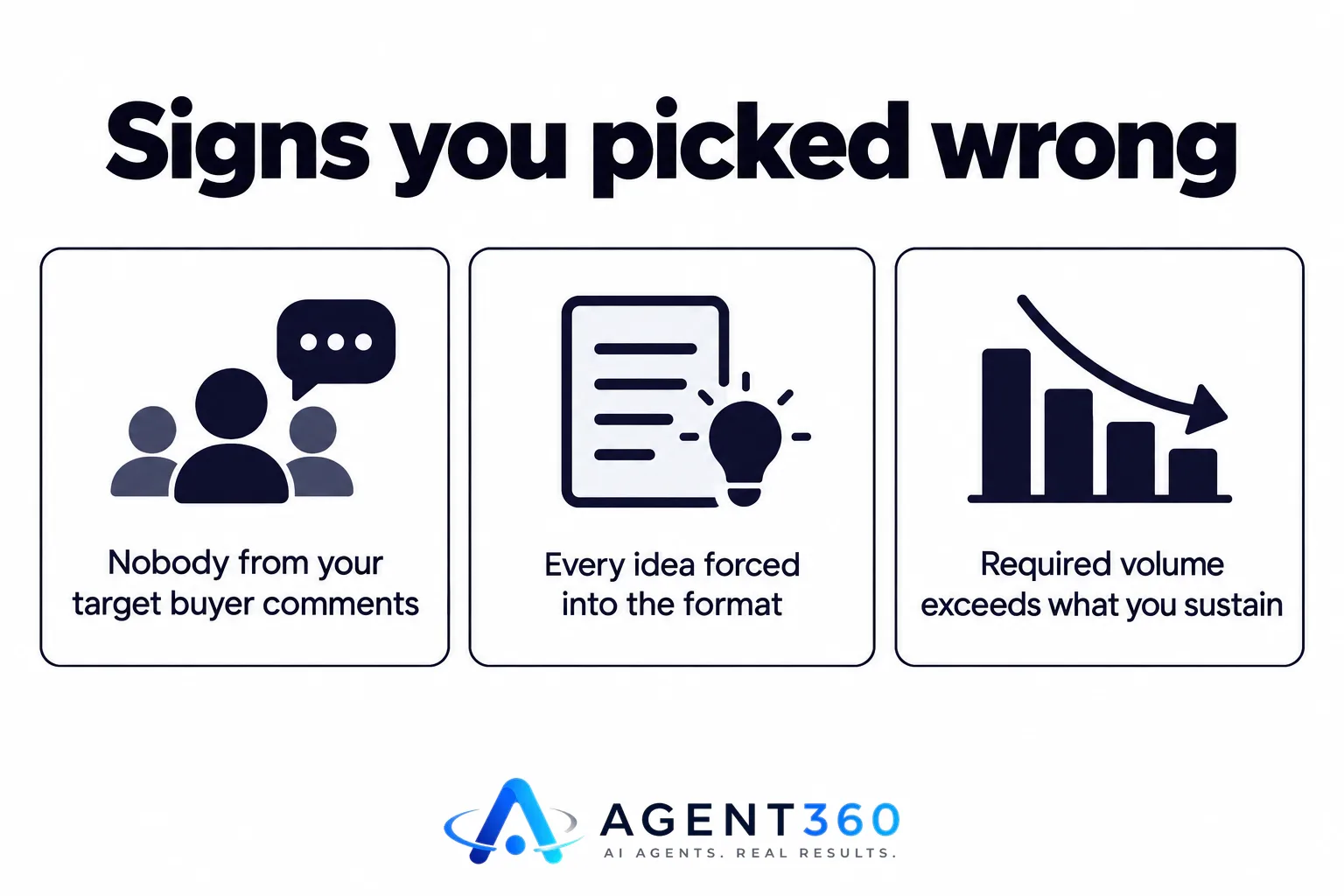
- Nobody from your target buyer comments. Likes from your own team and vague strangers are not a signal. A comment from someone who could actually buy is.
- You are translating every idea to fit the platform's format, rather than the format fitting the idea. If every post feels forced into a shape, the platform and the content do not match.
- The volume required to be seen exceeds what you can sustain. Some platforms reward three posts a week; others effectively need daily output to stay in front of the algorithm. If your team cannot hit that cadence without burning out, the math does not close — regardless of fit.
Add a third platform only after the first two run on their own
“Run on their own” means the calendar is full two weeks out, someone other than the founder can approve a post, and you can point to which posts got replies worth following up on. Before that point, a third platform isn't expansion. It's dilution with extra steps.
When you do add one, make it a byproduct of what you already make, not a separate project. A LinkedIn post and its picture can become an Instagram caption and a 4:5 image with almost no extra writing. A single recorded talk can become YouTube Shorts and TikTok cuts from the same footage — the same logic described in one video, a month of clips. The added platform should cost you minutes, not a new content plan.
Drop a platform the moment it costs more than it returns
Most teams skip this step, because dropping a channel feels like admitting defeat. It isn't. A platform that eats two hours a week and produces nothing — no comments from buyers, no inbound, no measurable reach — is a cost center dressed up as marketing activity. Cut it, and put that time into the platform that's actually working.

Checking this means looking at real numbers by platform, not posting and hoping. Most teams skip that too, because pulling reach, saves and follower growth across four networks by hand is tedious enough that nobody bothers doing it every month.
This is the part BrandAgent is built to make unnecessary. It writes a platform-specific version of each idea — a LinkedIn post, an Instagram caption with its own 4:5 picture, a short video cut for Reels or Shorts — from a single Brand Kit built off your website, so testing a second platform costs you an approval, not a new workflow. The Analyst Agent then pulls views, reach, saves and follower growth for every platform side by side, so the decision to keep or drop a channel rests on numbers, not instinct. Plans start at $97 a month with no contract; see what each tier includes on the pricing page, or compare the approach against hiring an agency on the vs a social media agency page.
Questions worth answering before you commit
How many platforms should a small team realistically run? Two, run consistently, almost always outperforms four run sporadically. Add a third only once the first two produce replies and inbound you can point to, not just views.
Is LinkedIn or Instagram better for B2B? LinkedIn generally wins for company-to-company selling because the buyer is evaluating credibility and opinions. Instagram wins when the product or service is visual, or when the buyer is an individual rather than an organisation — see B2B marketing teams and founders & executives for how each approach differs.
How long should we test a new platform before judging it? Six to eight weeks of consistent posting, at the cadence that platform actually requires, before deciding it doesn't work. Anything shorter is testing your patience, not the platform.
More articles
- AI Social Media Content Generator for Instagram, Explained
- What a Real AI Agent Content Idea Workflow Looks Like
- The Best Time to Post on Instagram Is Not a Clock
- Why Social Media Content Creation Burns Teams Out by Week Six
- A Social Media Approval Workflow That Doesn't Stall
- How to Batch Social Media Content Creation Without Losing a Day
- How to Measure Social Media ROI Without Guessing
- The Social Media Scheduling Tool Checklist Small Businesses Skip
