Website For Small Business: Builder, Cost, Or Done-For-You

A website for a small business has exactly one job: turn a stranger who lands on it into a call, a booking, or a form fill. Everything else — the builder you use, the template, whether it's “AI-generated” — is a means to that end, not the end itself. If you're choosing between a $12-a-month builder, a freelancer, and a done-for-you package, the right answer depends on how much of the lead-capture work you're willing to do yourself.
Most people get stuck comparing builders when the real question is what happens after someone arrives on the page.
The builder matters less than the job you give it
Squarespace, Wix, GoDaddy, Webflow — they all produce a page that looks fine on a phone. None of them, out of the box, answer a lead in under a minute, text back a missed call, or track which page actually converts. That work sits on top of the builder, not inside it.
Pick a builder and stop there, and you've built a brochure, not a lead source.
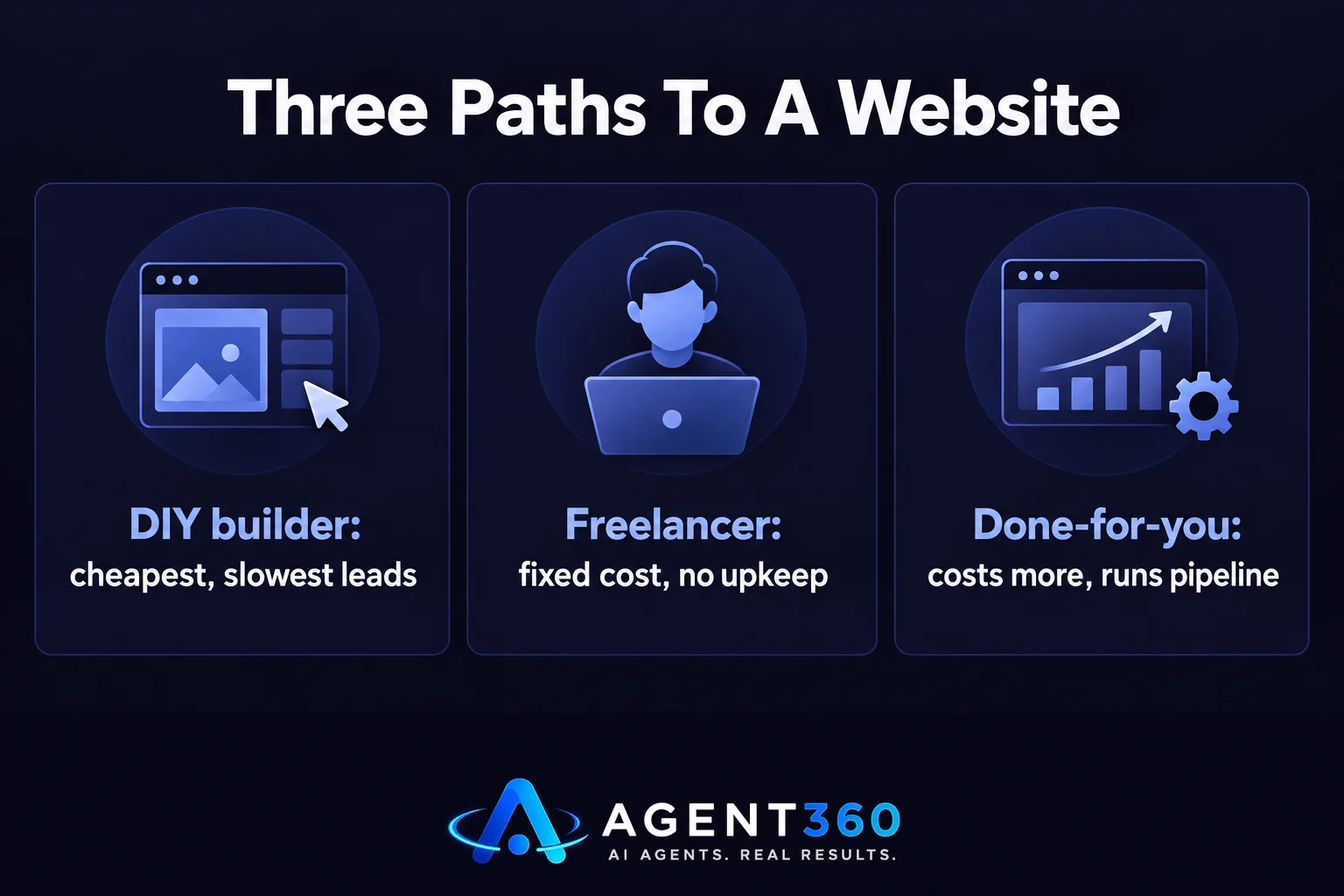
There are three real paths: build it yourself on a drag-and-drop platform, hire a freelancer for a one-time build, or get it handled as part of an ongoing service that also runs your ads, your follow-up, and your local search presence. The first is cheapest and slowest to produce leads. The second is a fixed cost with no one watching it after launch. The third costs more monthly but treats the site as one piece of a pipeline — which is what it actually is.
Conversion-focused design looks at the whole path from click to booking, not just the homepage.
How do I start a website for my small business?
Start with the pages a customer actually needs, not the pages that feel impressive:
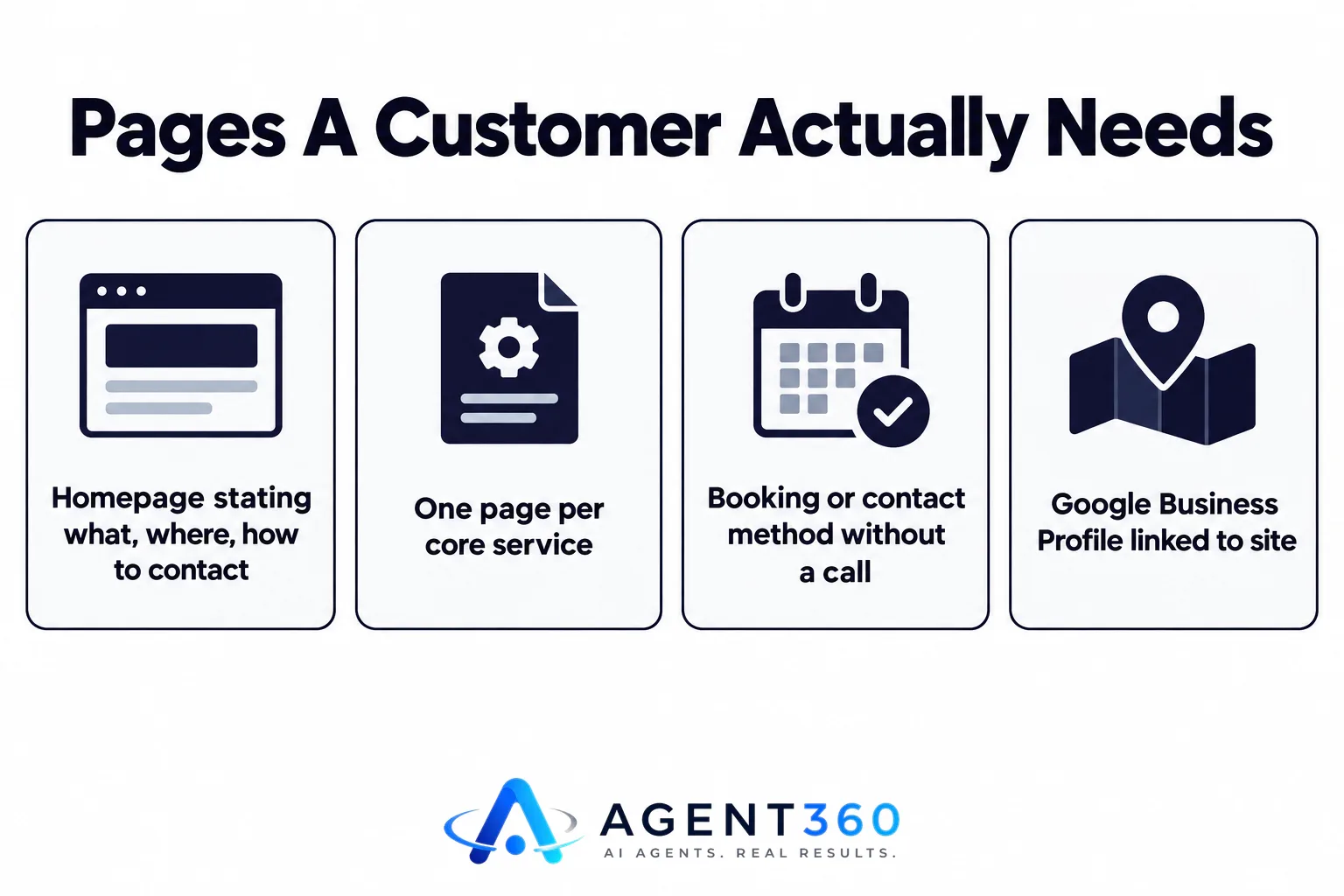
- A homepage that states what you do, where, and how to contact you in the first screen, no scrolling required.
- One page per core service, each with its own form or booking link — not one generic “services” page listing everything.
- A booking or contact method that works without a phone call: online scheduling, a chat widget, or a short form.
- A Google Business Profile linked to the site, since most local searches resolve on the map before they ever reach a website.
Register a domain that matches your business name, pick hosting that loads in under two seconds on mobile, and get the booking or lead form live before you spend a dollar on a single visitor.
Traffic to a site with no clear next step is wasted traffic. Pair the build with basic local search setup so the site actually shows up when someone searches your service and your city.
Is there a free AI website builder available?
Yes — several platforms now generate a draft site from a prompt, and some tiers are free. Use one if you need something live today and have nothing yet. The limitation isn't the AI, it's the free tier underneath it: shared templates that look like every other business on the same platform, a subdomain instead of your own domain, no booking integration, and usually a cap on pages or traffic. None of that stops a site from existing. It stops a site from converting at the rate a dedicated domain with real forms and tracking would.
A free AI builder is a fine place to start. It's a bad place to still be once the site is bringing in calls — at that point the missing pieces (your own domain, a booking flow, lead tracking) cost you more in lost jobs than a proper build ever would have.
Do I need an LLC to run a website?
No. You can register a domain and publish a website as a sole proprietor, under your own name, with no business entity at all. An LLC is a legal and liability decision, separate from the website decision. Where it matters is money: if the site is going to process payments, take deposits, or collect customer data, most payment processors and a fair number of state rules expect a registered business behind the account, not an individual. Form the entity before you start taking payments through the site, not because the website requires it, but because the transactions do.
Price the site by the leads it needs to produce, not by the page count
Pricing conversations usually go wrong because they start with “how many pages” instead of “what does a booked customer pay me.” A five-page DIY build might cost nothing but your time. A freelance build commonly runs from a few hundred dollars for a simple one-pager to several thousand for a multi-service site with booking and payment integration. A done-for-you package that includes hosting, updates, SEO, and ongoing conversion testing runs as a monthly fee instead of a one-time project cost, because the site keeps changing as your offers and ad campaigns do.
The question that actually settles it: if one extra booked job covers the monthly cost, the monthly model pays for itself on month one. Run that math with your own numbers before comparing sticker prices.
A simple ROI calculation makes the comparison concrete instead of a guess, and what a local marketing agency actually charges is worth reading before you sign anything long-term.
Where a done-for-you build fits
Booked builds and hosts the website as part of every plan, starting at $297 a month, with no separate setup fee — the site comes with local SEO, lead forms, instant text-and-email reply on every inquiry, and online booking already wired in, not bolted on later. If you already have a site that's converting, it gets improved in place rather than replaced. Full plan details, including what each tier adds, are on the pricing page.

What are the top 10 business websites?
There's no single authoritative ranking, because “best” depends on the business type — a law firm's site and a restaurant's site are optimizing for different actions. Instead of chasing a top-10 list, pull up three competitors in your own city and check one thing on each: how many clicks does it take to book or call? If the answer is more than two, that's the gap to close on your own site, regardless of what anyone else's list says.
Frequently asked
What's the best way to make a website for a small business on a tight budget?
Use a builder to get a simple site live fast, but spend your limited budget on the booking form and a working phone number before you spend it on design polish. A plain page that captures a lead beats a polished page that doesn't.
Where should I build a website for a small business if I want it to grow with me?
Pick a platform or provider that lets you add booking, tracking, and new service pages without a full rebuild later — swapping platforms six months in costs more time than choosing carefully now.
How much should I expect to pay for a small business website?
A DIY build can cost nothing but your time. A freelance project usually lands in the low thousands. A monthly service that builds, hosts, and keeps improving the site alongside your marketing runs in the low hundreds a month — and keeps working after launch, which the other two don't.
More articles
- Google Ads for Local Business: What a Real Budget Looks Like
- How to Get More Google Reviews: Timing Beats Begging
- Missed Call Text Back: What To Send And Why It Works
- AI Receptionist for Small Business: What It Costs and Does
- Fitness Studio Marketing: Why the 3-3-3 Rule Falls Short
- Real Estate Agent Marketing: What Actually Gets You Clients
- Marketing for Auto Repair Shops That Keeps Bays Full
- Restaurant Marketing Ideas That Actually Fill Tables
