Marketing for Dentists: What Actually Fills the Schedule

Marketing for dentists isn't a brand-awareness problem. Everyone already knows what a dentist does, and most people know they're overdue for one. The job is narrower: show up when someone searches, answer when they call, and be the practice they come back to in six months instead of the one three miles closer.
That distinction changes where the budget should go. A practice pouring money into brand-style content while its front desk sends new patient calls to voicemail mid-procedure is solving the wrong problem entirely.
High patient demand does not guarantee a full chair
Dentistry is a stable field, broadly. People need checkups, fillings and emergency care no matter what the economy is doing. But stable demand for the profession isn't the same as demand for your practice specifically. Most patients have a handful of dentists within five miles, and from a cold search result, those practices look interchangeable — same template website, same stock photography, same “we care about your smile” copy.
The practices with full schedules aren't the ones with the most demand in their category. They're the ones that make themselves the obvious, easy, already-vetted choice before the patient even picks up the phone — through reviews, through showing up for the exact procedure someone searched, and through a website that lets a new patient book without waiting on a callback.
Five strategies that fill schedules, not just awareness
Dozens of tactics get pitched under “dental marketing.” Most either build awareness that never converts or chase vanity metrics. Five actually move new patient numbers:
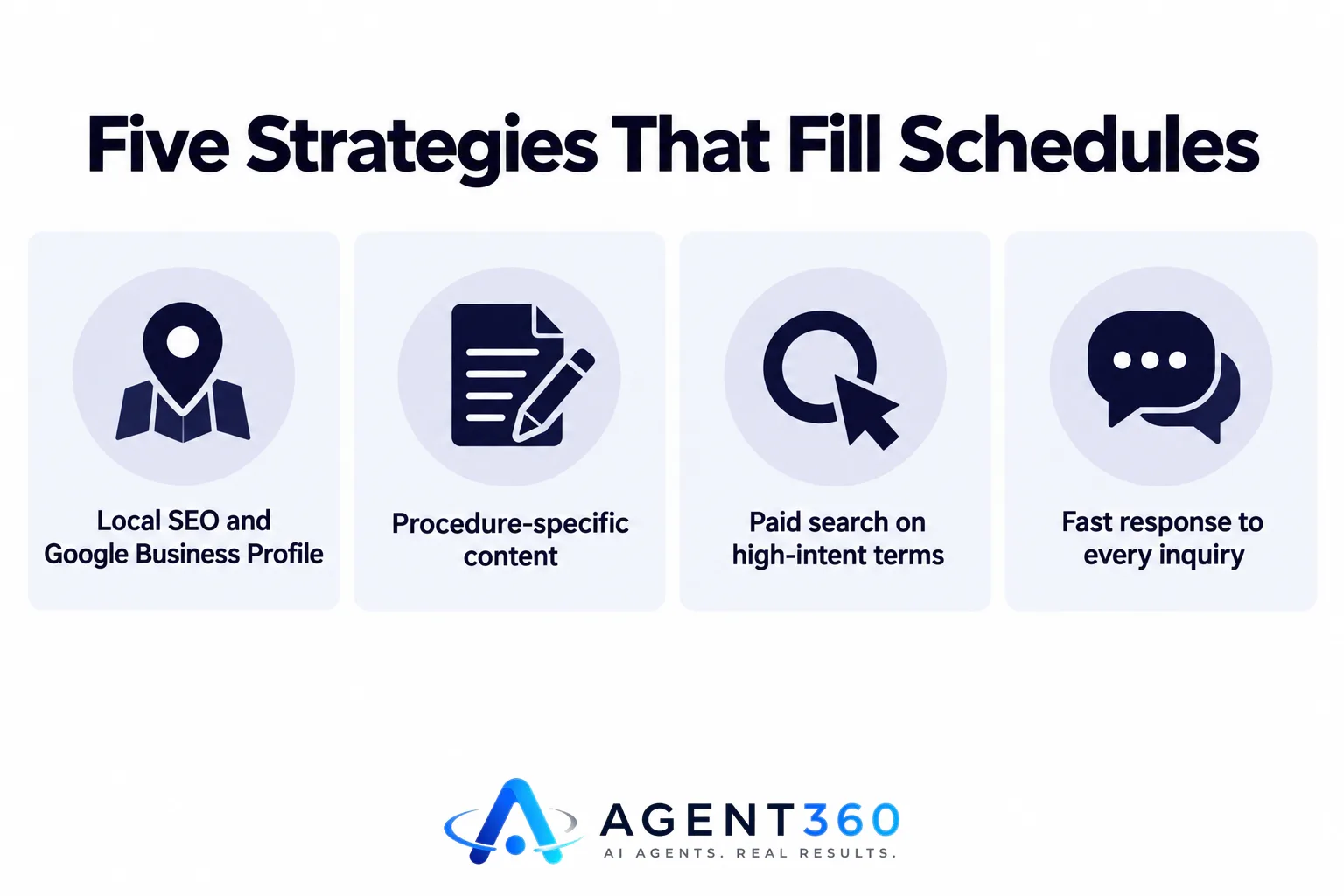
- Local SEO and Google Business Profile. Most new patient searches are “dentist near me” or “[procedure] + [city].” Winning the map pack for those searches, with current hours, photos and a steady stream of reviews, does more for new patient volume than almost anything else on this list.
- Procedure-specific content. Someone searching “same day crown” or “dental implants cost [city]” is further along than someone searching your practice name. Pages built around specific procedures, not a generic “services” page, catch that intent.
- Paid search on high-intent, often urgent, terms. “Emergency dentist open now” and “tooth pain same day appointment” are searches with a decision happening in minutes, not days. Paid ads targeting them get a patient who would have called your competitor if you had not shown up first.
- Fast response to every inquiry. A form fill or a missed call that sits for two hours is a patient calling the next practice on the list. Instant text or email reply, and ideally 24/7 phone coverage, keeps that lead instead of handing it away.
- Recall and win-back outreach. Patients who are six, nine or twelve months overdue for a cleaning are far cheaper to re-book than a new patient is to acquire. A recall list that nobody is texting is a pipeline sitting idle.
How to promote a dental clinic without wasting a quarter on tactics that do not convert
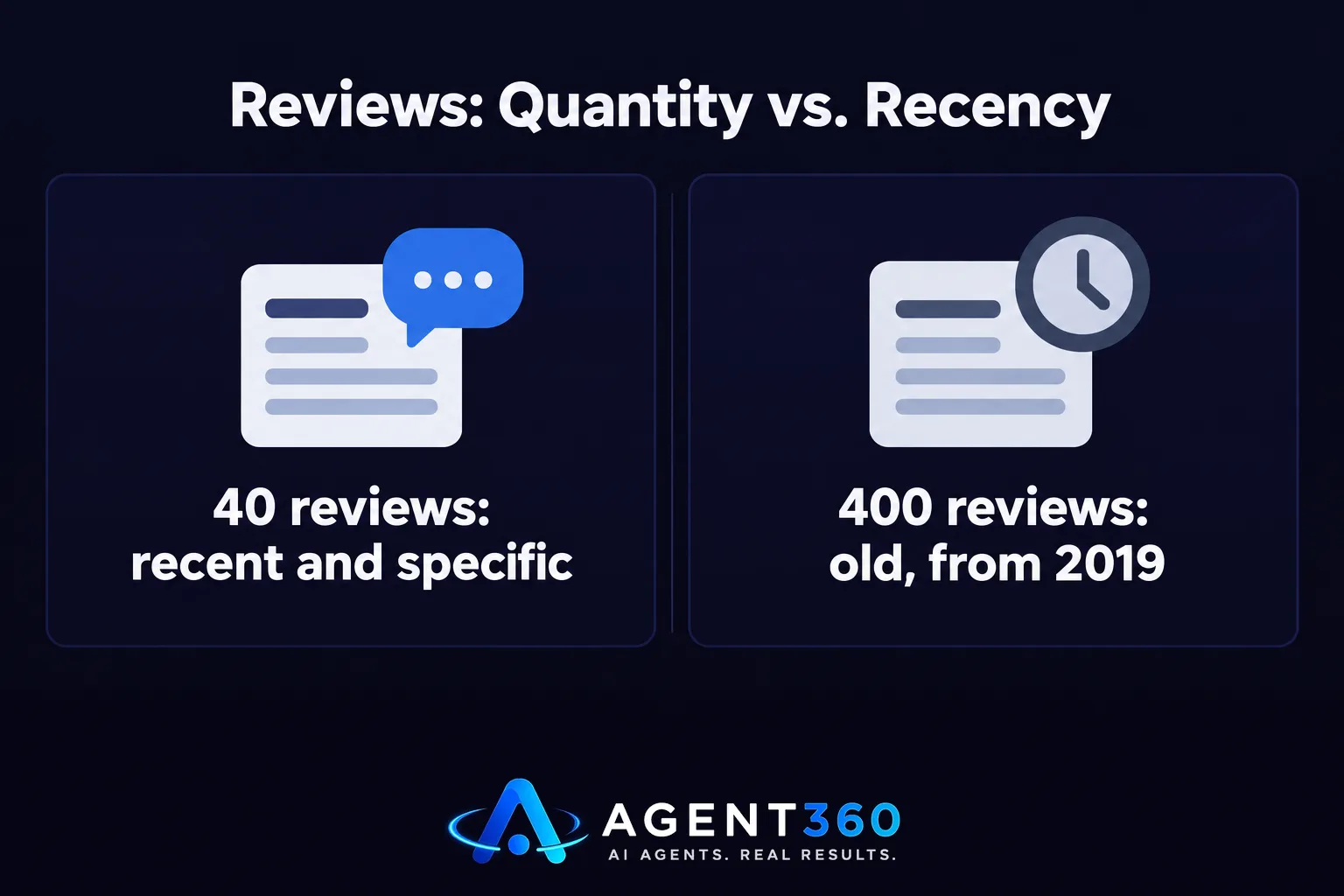
Start with the two things that compound: reviews and response speed. A practice with 40 recent, specific reviews (“Dr. Patel got me in same-day for a cracked molar”) outranks and out-converts one sitting on 400 reviews from 2019. Ask every patient at checkout, not just the happy ones who leave reviews unprompted. A steady trickle beats a one-time burst.
Then fix the front door. If your website makes someone call during business hours to book, you're losing the evening and weekend searches to whichever practice has online booking. If your reception team is chairside and the phone rings through to nothing, that call doesn't wait — it goes to the next listing. This is the gap that front-desk-only marketing never fixes, because it's a staffing and systems problem wearing a marketing costume. The fix is routing: missed calls get texted back immediately, after-hours calls get answered by something, and every lead lands in one place instead of three different inboxes.
Only after reviews and response are solid does paid search make sense. Spending on ads to drive calls that then go unanswered is the most common way dental marketing budgets get wasted — the ad worked, the conversion didn't.
Speed to lead decides which practice gets the new patient call
Dental offices lose new patients less often to bad marketing and more often to bad timing. A patient calls three practices in a row looking for a same-day slot; whichever one picks up first gets the booking, regardless of whose website looked nicer. If your team is mid-procedure and the call rolls to voicemail, that patient is gone in under a minute — not waiting around for a callback at lunch.

The same applies to web forms and chat messages. A “someone will contact you within 24 hours” auto-reply is a 24-hour head start handed to a competitor. Instant text or email acknowledgment, followed by a real booking link, keeps the lead warm long enough to actually convert. This is a solvable systems problem, not a bigger-budget problem — and it's usually the first fix that shows up in new patient numbers.
A done-for-you option, if you would rather not run this yourself
Booked runs this whole stack — local SEO, Google Business, paid search, instant lead response, recall texts and a booking page patients can use after hours — for a flat monthly fee starting at $297, with no setup fee and no contract. Pro and Scale plans add 24/7 AI phone answering that books appointments and hands off to your team when needed, which matters most for exactly the missed-call scenario above. Details on what's included at each tier are on the pricing page, and the dental and medical page covers how the scope adapts for a practice specifically.
What works for dental digital marketing right now
The channels haven't changed much; what's changed is how search itself works. Patients increasingly ask Google's AI Overviews or ChatGPT “who is the best dentist in [city] for implants” instead of typing a plain keyword search. Being named in those answers depends on the same signals as traditional local SEO — reviews, consistent business information, procedure-specific content — plus structuring that content so an AI system can quote it directly. Practices treating this as a future problem are already behind on it; it's live now. The get found service page covers how SEO, AEO and GEO work together for exactly this shift.
Frequently asked questions
How to promote a dental clinic?
Start with Google Business Profile and a steady flow of specific reviews, build pages for individual procedures rather than one generic services page, and make sure every call and form fill gets an instant response. Paid search on urgent, high-intent terms like “emergency dentist” adds volume once those fundamentals are in place. Promoting the clinic before fixing response speed usually means paying to generate calls that go unanswered.
Is being a dentist in high demand?
Yes, broadly — dental care is recurring and non-discretionary for most patients. But that demand is split across every practice in a given area, so high category demand doesn't automatically translate into a full schedule for any one clinic. The practices that win that competition are the ones patients find first and that respond fastest, not necessarily the ones with the most clinical experience.
What are the main dental marketing channels worth paying for?
Local SEO and Google Business Profile for map pack visibility, procedure-specific content for intent-driven searches, paid search for urgent and emergency terms, fast lead response so inquiries don't go cold, and recall or win-back texts to re-book existing patients. Reviews and recall texts tend to pay back fastest, simply because both are aimed at people who already know your name.
More articles
- Marketing for Auto Repair Shops That Keeps Bays Full
- Restaurant Marketing Ideas That Actually Fill Tables
- Law Firm Marketing: What Actually Brings In Cases
- Marketing for HVAC Companies: What Actually Books Jobs
- Google Business Profile Optimization: What Moves Rankings
- Local SEO Services: What They Should Actually Do
- Done-For-You Marketing for Small Business: What It Buys
- Marketing for Small Local Businesses: The Rules Worth Keeping
