The Best HeyReach Alternative for Full B2B Outbound
A HeyReach alternative worth switching to has to do more than automate LinkedIn connection requests. It needs to find the right prospects, reach them across LinkedIn, email, and phone, and book the meeting on your calendar without you chasing replies by hand. HeyReach handles LinkedIn sequencing well, but LinkedIn is one channel in a buyer's inbox, not the whole conversation.
If your team is hitting LinkedIn's weekly invitation ceiling, waiting days for a reply that never comes, or juggling a separate tool just to track who said what, the gap isn't HeyReach's fault. It's the gap between a LinkedIn tool and a full outbound system.
This post covers what to look for, how to think about the switch, and where a multi-channel approach changes the math on booked meetings.
Key Takeaways
- A HeyReach alternative should cover email and phone, not only LinkedIn, so one quiet channel doesn't stall your pipeline.
- Check whether the tool books meetings directly on your calendar or just logs a reply you still have to chase.
- Look for built-in CRM tracking so leads don't disappear between a sequencing tool and a spreadsheet, as explained in our CRM tools overview.
- Weigh sending limits against reply rates before committing — more volume on one channel rarely means more meetings.
- Compare named tools directly using a side-by-side breakdown before you migrate sequences.
Table of Contents
What should you look for in a HeyReach alternative?
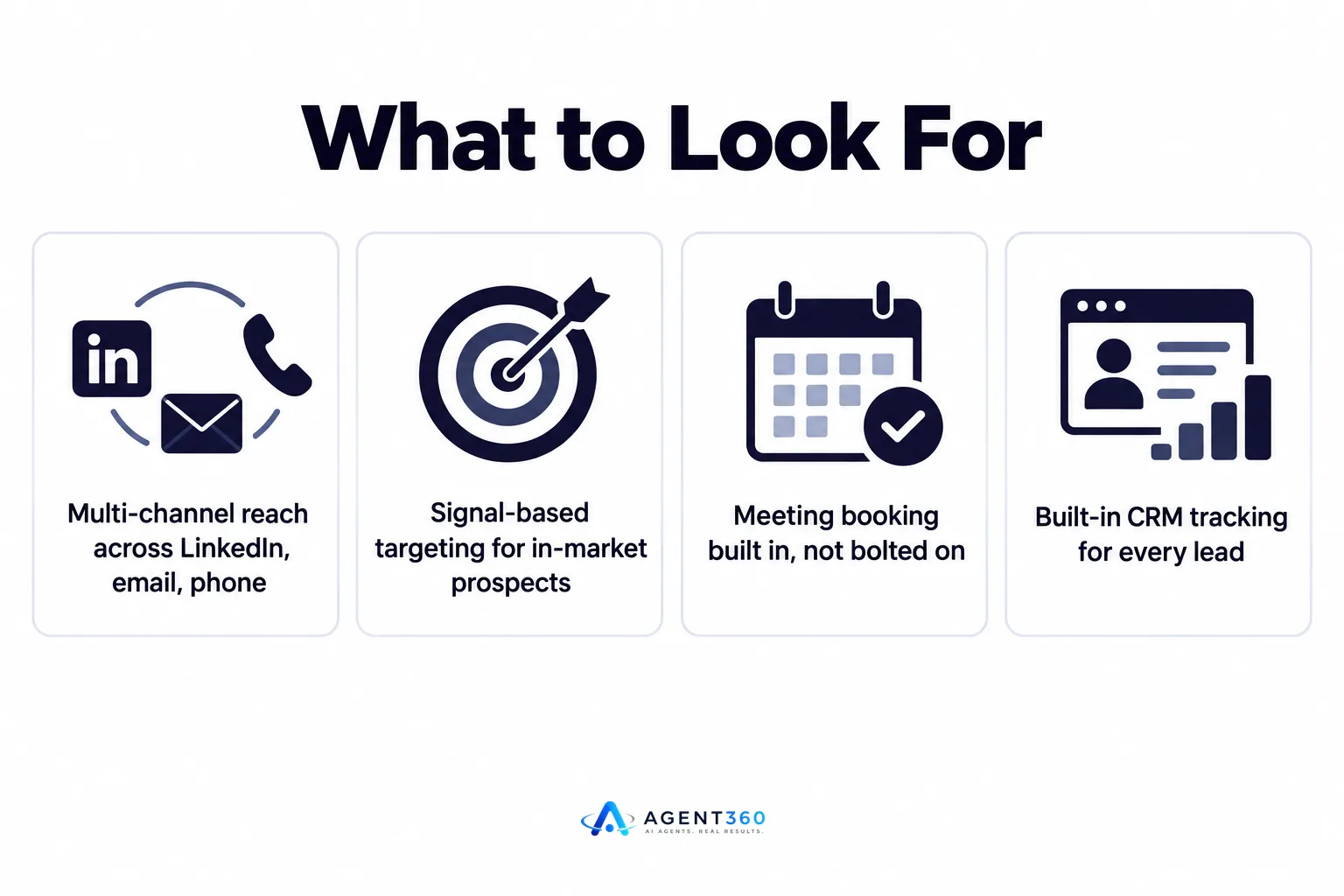
Look for multi-channel reach, signal-based targeting, and meeting booking built in, not bolted on. HeyReach automates LinkedIn outreach. If your buyers also check email and answer calls, a tool limited to one channel leaves meetings on the table whenever that channel underperforms.
Does channel count actually change results?
It changes how many chances a prospect has to respond. A buyer who ignores a LinkedIn invite might open a follow-up email or pick up a call. A single-channel tool only gets one attempt; a multi-channel one gets several, spread over time instead of stacked in one place.
What about prospect targeting?
Sequencing software sends to whatever list you load. AI prospecting that detects buying signals — a new hire, a funding round, a job posting tied to your product — narrows that list to people more likely to be in-market right now, which matters more than send volume.
Is HeyReach alone enough for B2B outbound?
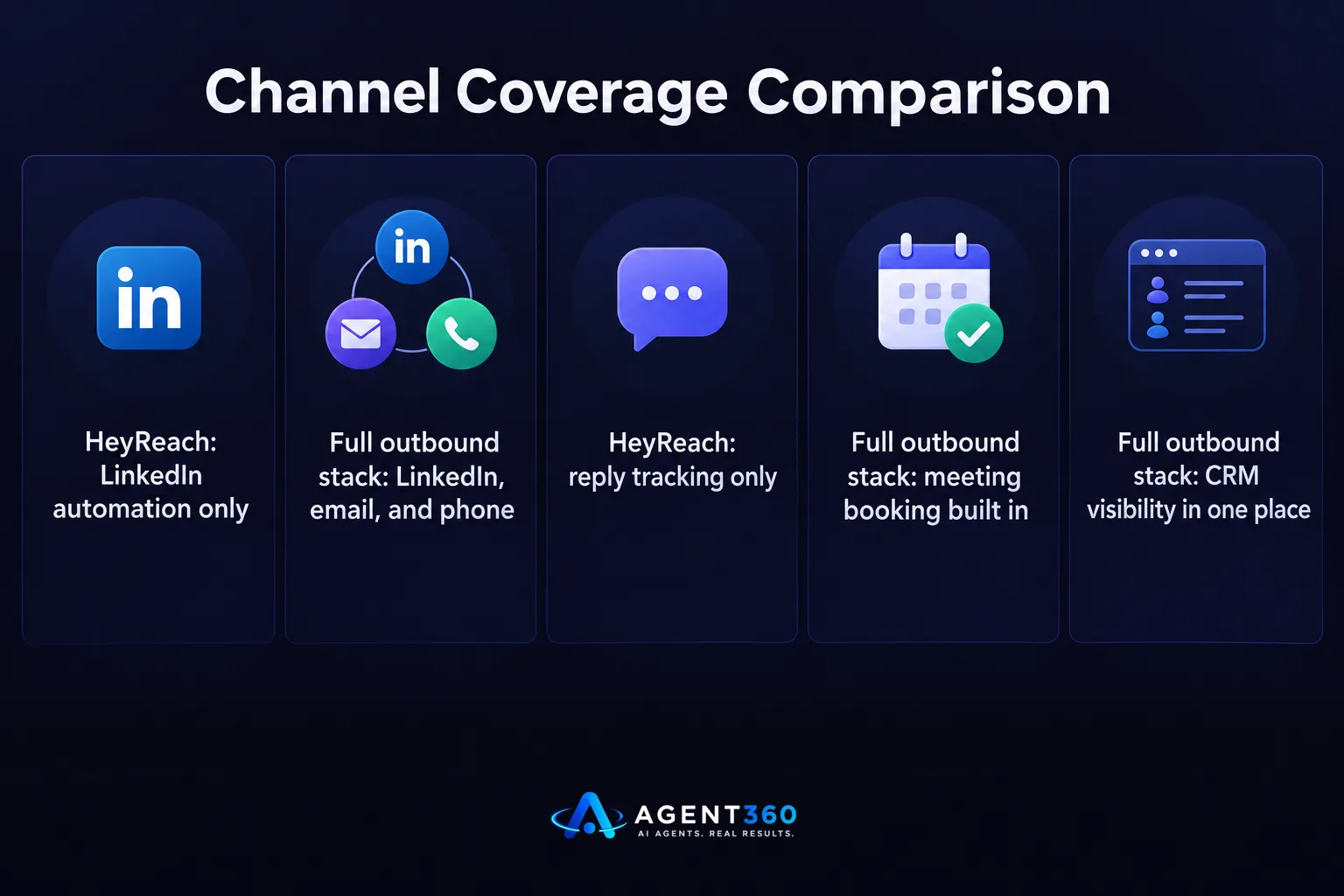
It covers LinkedIn automation but not the full outbound motion from prospecting to booked meeting. Teams running HeyReach often still need a separate list-building tool, a separate email sender, and a separate CRM to track where each deal stands.
What's the cost of stitching tools together?
Every handoff between tools is a place a lead can go cold. A prospect found in one platform, messaged in another, and tracked in a third spreadsheet is easy to lose track of once reply volume picks up.
Can a HeyReach alternative handle more than LinkedIn?
Yes, and it should, since relying on one channel means one point of failure. Email and phone outreach, run alongside LinkedIn, give prospects more than one way to engage and give your team more than one lever to pull when a sequence stalls.
- Map your current channel mix. List which channels your prospects actually respond on, not just which one your current tool supports.
- Check meeting booking, not just reply tracking. A tool that logs a positive reply still leaves someone to schedule the call; one that books directly on your calendar removes that step.
- Confirm CRM visibility. Pipeline stages, last-touch dates, and next steps should live in one place your whole team can see.
- Test sending limits against your list size. A channel's daily or weekly cap, set by that platform, should match how many prospects you're actually trying to reach each week.
How do you switch from HeyReach without losing pipeline?
Migrate active sequences gradually and keep LinkedIn running until the new channel is proven. A clean cutover risks dropping prospects mid-sequence; a phased one lets you confirm reply and meeting rates before retiring the old setup.

Should you run both tools at once?
For a short overlap, yes. Running HeyReach alongside a new multi-channel tool for a few weeks lets you compare meeting output directly before you commit, rather than switching on faith.
Book More Meetings With a Full Outbound Stack
Agent360 combines AI prospecting, multi-channel outreach across LinkedIn, email, and phone, meeting booking straight onto your calendar, and CRM tools to track every deal in one place. It's built for founders running their own outbound and for sales teams that need pipeline filled without adding SDR headcount.
Instead of patching a LinkedIn tool with a separate email sender and a spreadsheet, the prospecting, outreach, and tracking sit in one system.
See how the pieces fit together on our how it works page.
Frequently Asked Questions
What's the main difference between HeyReach and a multi-channel alternative?
HeyReach automates LinkedIn sequencing. A multi-channel alternative adds email and phone outreach plus meeting booking and CRM tracking, so the whole outbound process runs in one place instead of several.
Will switching tools disrupt active LinkedIn sequences?
It can, if you cut over all at once. Migrating sequences gradually and running both tools briefly side by side avoids dropping prospects mid-conversation.
Do I need a separate CRM if I switch?
Not if the alternative includes CRM tools built in. Check whether pipeline stages and lead history live inside the outreach tool or still require a separate system.
Is email outreach subject to limits like LinkedIn is?
Yes. Email sending has its own limits set by mailbox providers and your own sending infrastructure. See our outreach limits resource for how channel limits generally work.
Can a HeyReach alternative book meetings automatically?
Some can. Rather than just flagging a positive reply, a tool with meeting booking built in schedules the call directly on your calendar, removing a manual step from the process.
More articles
- A Dripify Alternative That Adds Email, Calls and CRM
- Aimfox vs HeyReach: Which LinkedIn Tool Fits Your Outbound?
- Waalaxy vs Dripify: Which LinkedIn Tool Books More Meetings?
- Dripify vs Expandi: Which LinkedIn Tool Fits B2B Outbound?
- Expandi vs Skylead: Which Fits Your B2B Outbound Team?
- How to Find LinkedIn Profiles Worth Outreach
- Skylead vs HeyReach: Which LinkedIn Tool Books More Meetings?
- A LinkedIn Outreach Tool That Books Meetings, Not Just Sends
