Social Media Posts That Get Leads (Not Just Likes)
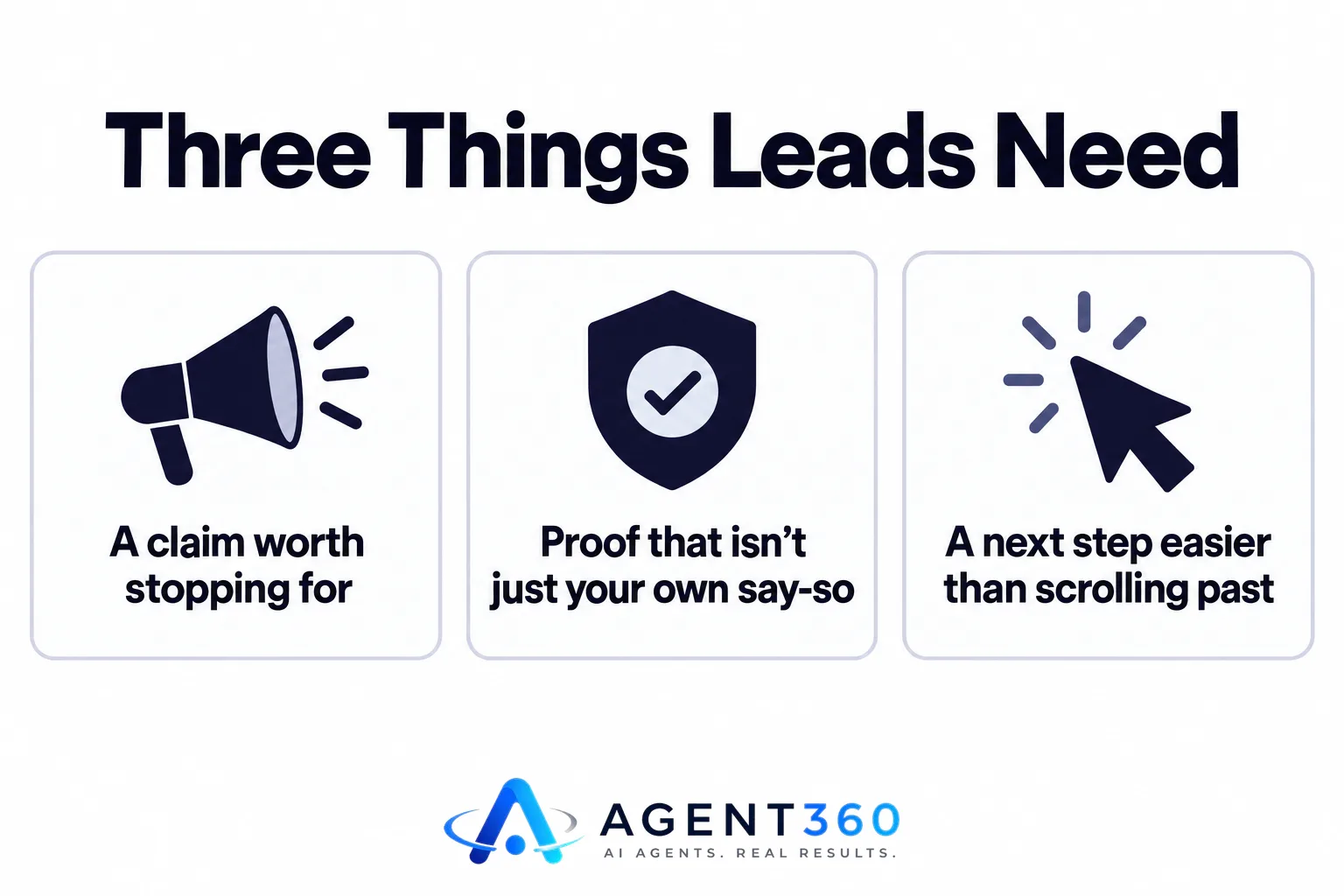
A social media post turns into a lead when three things line up at once: a claim worth stopping for, proof that isn't just your own say-so, and a next step that takes less effort than scrolling past. Skip any one of the three and you get likes instead. Most feeds are full of posts that nail the first part and never bother with the other two.
That's the gap behind a familiar complaint: teams post every week and still can't point to one deal that started on LinkedIn or Instagram. The fix isn't more posts. It's a different shape of post, placed where the buyer is already making up their mind.
The most engaging post and the lead-generating post are not the same post
Ask what makes social media posts engaging and you'll hear the same list everywhere: questions, polls, hot takes, before-and-afters, anything built to invite a reaction. Those formats earn comments. They don't reliably earn leads, because a reaction costs nothing and a lead costs the reader something — a click, a form, a reply with their name attached.
A post built to produce a lead has a narrower job. It names a problem specific enough that only the right reader nods, shows evidence that isn't just the brand talking about itself, and asks for exactly one thing. A case study with a number in it. A short breakdown of a mistake you see constantly. A before-and-after with the mechanism spelled out. A direct offer with a reason to act now. Each of these beats the viral-shaped post almost every time it matters, because they're talking to a buyer, not an audience.
What is the 3-3-3 rule for social media?
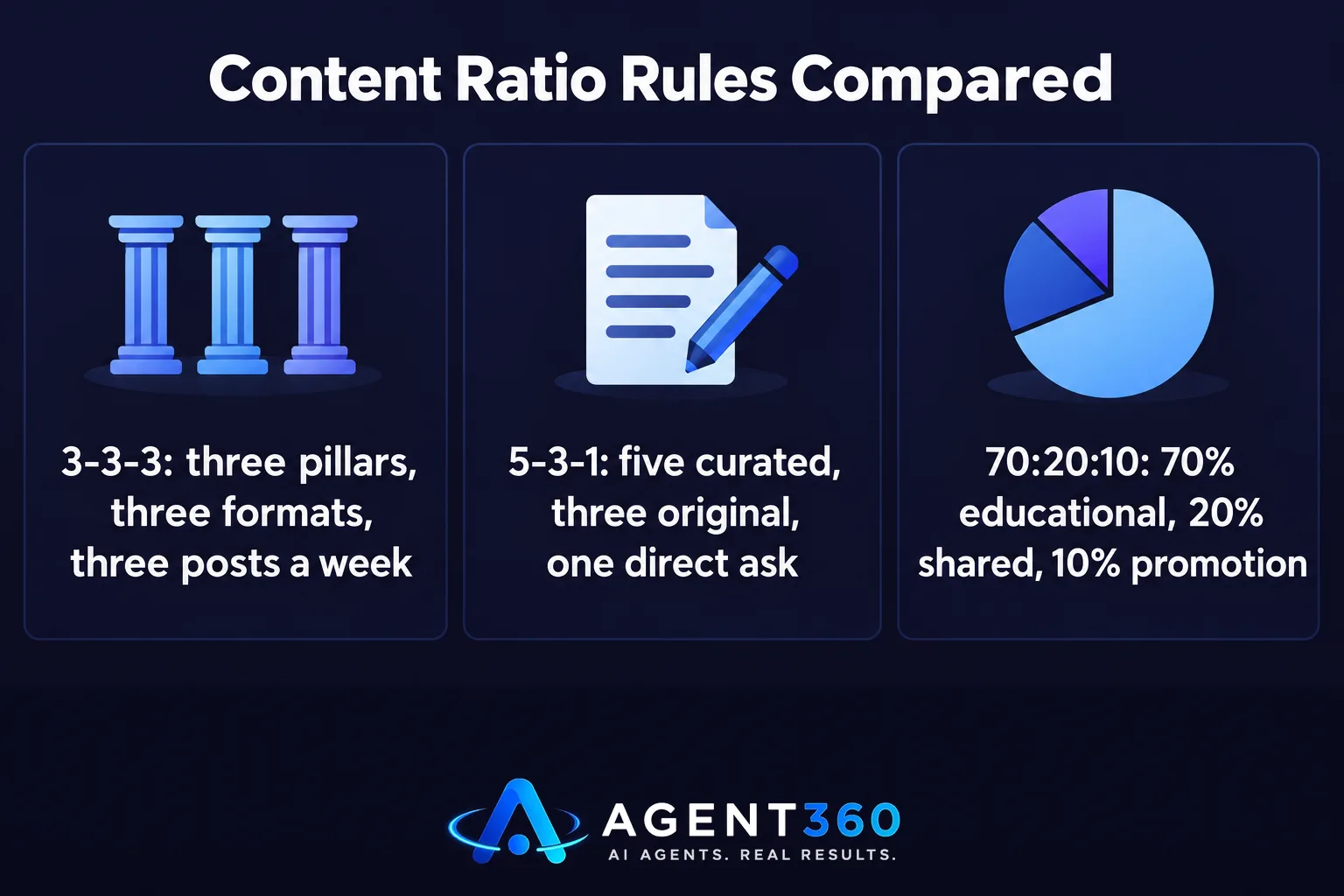
The 3-3-3 rule keeps output from collapsing into either all-pitch or all-noise: three content pillars (the three problems your buyer actually has), three formats for each one (a text post, an image post, a short video), published three times a week. It's a production rule, not a persuasion rule. It stops the calendar from going empty, but it won't make any single post convert on its own. You still need the claim-proof-ask structure inside each one.
What is the 5-3-1 rule on social media?
One common version: for every nine posts, five point to curated or third-party content relevant to your buyer, three are original posts in your own voice, and one makes a direct ask — a demo, a download, a call. The exact ratio matters less than the principle behind it: most of what you publish should earn attention before you spend any of it on a pitch. Post nothing but direct asks and reach drops fast; the feed starts reading you as an ad account.
What is the 70:20:10 rule for social media posts?
This one splits by purpose instead of count: 70% educational or useful content with no ask attached, 20% sharing or commenting on other relevant work, 10% direct promotion. Same logic as 5-3-1, different ratio. Worth checking seriously if your last ten posts lean toward that 10% column — that's the fastest way to train your own audience to scroll past you. The mechanics of getting that balance right, without it feeling like two separate content strategies, are covered in value vs pitch.
Pick the platform where the decision gets made, not the one you enjoy posting on
A common mistake: choosing a platform by preference instead of by where the buyer actually decides. If the buyer is a founder or operator weighing a B2B purchase, that decision happens on LinkedIn, in long-form text and comments — not on Instagram Reels. If the buyer is choosing based on how something looks or feels, Instagram and YouTube Shorts carry more weight than a text post ever will. Post everywhere equally and hope one sticks, and you end up with high output and no pipeline you can point to. The ten formulas that work specifically for decision-stage LinkedIn posts are broken down in 10 LinkedIn post formulas, and what each platform actually rewards is covered in LinkedIn.

Put the ask in the first two lines, not the last
Most platforms truncate a post after a line or two, before a reader clicks “more.” If the ask — the link, the offer, the next step — sits at the bottom of a six-paragraph post, most readers never get there. Lead-generating posts put the hook and the direction up top, then use the body to earn a click the reader already decided to make. That's the opposite of how most “storytelling” posts get built, and it's why a well-written post can still land zero leads.
Comments and saves are a better early signal than likes
A like costs a tap and means almost nothing. A save means the reader expects to need this again — that's closer to buying intent than any other free signal a platform hands you. A comment with a question in it is better still; the reader is doing half your qualifying work for free. Track those two numbers over 30 days instead of reach, and you'll get a far more honest read on which posts are pulling in buyers rather than bystanders.
Where BrandAgent fits
Holding that ratio across weeks, not just within one post, is the part that falls apart when it's one person writing everything by hand under deadline. BrandAgent writes posts per platform from ten proven formulas, scores each draft before it reaches you, and schedules the approved ones on the calendar you set — with analytics on reach, comments and saves sitting right next to the post you're about to write. Plans start at $97 a month, and every post still waits for your approval before anything publishes; see how that compares to hiring an agency to do the same work in vs a social media agency.
Frequently asked questions
How many posts does it take before leads show up?
There's no fixed number — it depends on how specific the claim and the ask are, not how many posts you've published. A vague post published fifty times is just fifty vague posts. A specific claim with real proof and a one-step ask can get a reply on the first try. Track comments and saves weekly instead of waiting on a lead count to tell you whether the format works.
Should the call to action be a link or a comment prompt?
Use a comment prompt (“comment ‘guide’ and I'll send it”) when the platform's algorithm suppresses outbound links, which is common on LinkedIn and Instagram feed posts. Use a direct link when the post lives somewhere links aren't penalized, like X, or in a profile bio. Matching the ask to what the platform actually rewards beats fussing over the wording of the ask itself.
More articles
- The B2B Social Media Strategy That Actually Moves Deals
- How to Build a Personal Brand on LinkedIn (That Sticks)
- The Real Alternatives to a Social Media Agency
- Done-For-You Social Media Management: What It Costs
- Social Media Marketing on Autopilot: The Ratios That Work
- Repurpose Content for Social Media: The Rules That Work
- YouTube Shorts for Business: The Rules That Get Views
- How Often to Post on LinkedIn: The Rules That Actually Matter
