Social Media Marketing on Autopilot: The Ratios That Work

Autopilot doesn't mean nobody looks at the posts before they go out. If it did, you'd deserve what happens next. It means the drafting, the picture, and the queue never sit empty waiting on you, so the only decision left on your plate is yes or no.
Full manual stalls for an obvious reason: someone has to sit down and write a caption every single day, and that someone always has a week where they don't. Full automatic with zero oversight fails a different way. Same sentence structure every day. Same three stock images. A pitch where a comment should be. The feed starts to read like a bot wrote it, because one did. The version that actually works sits between the two — drafts get written and scored against each platform's own rules, you approve or reject in a few minutes, and only approved posts go on the clock.
What is the 5:5:5 rule for social media?
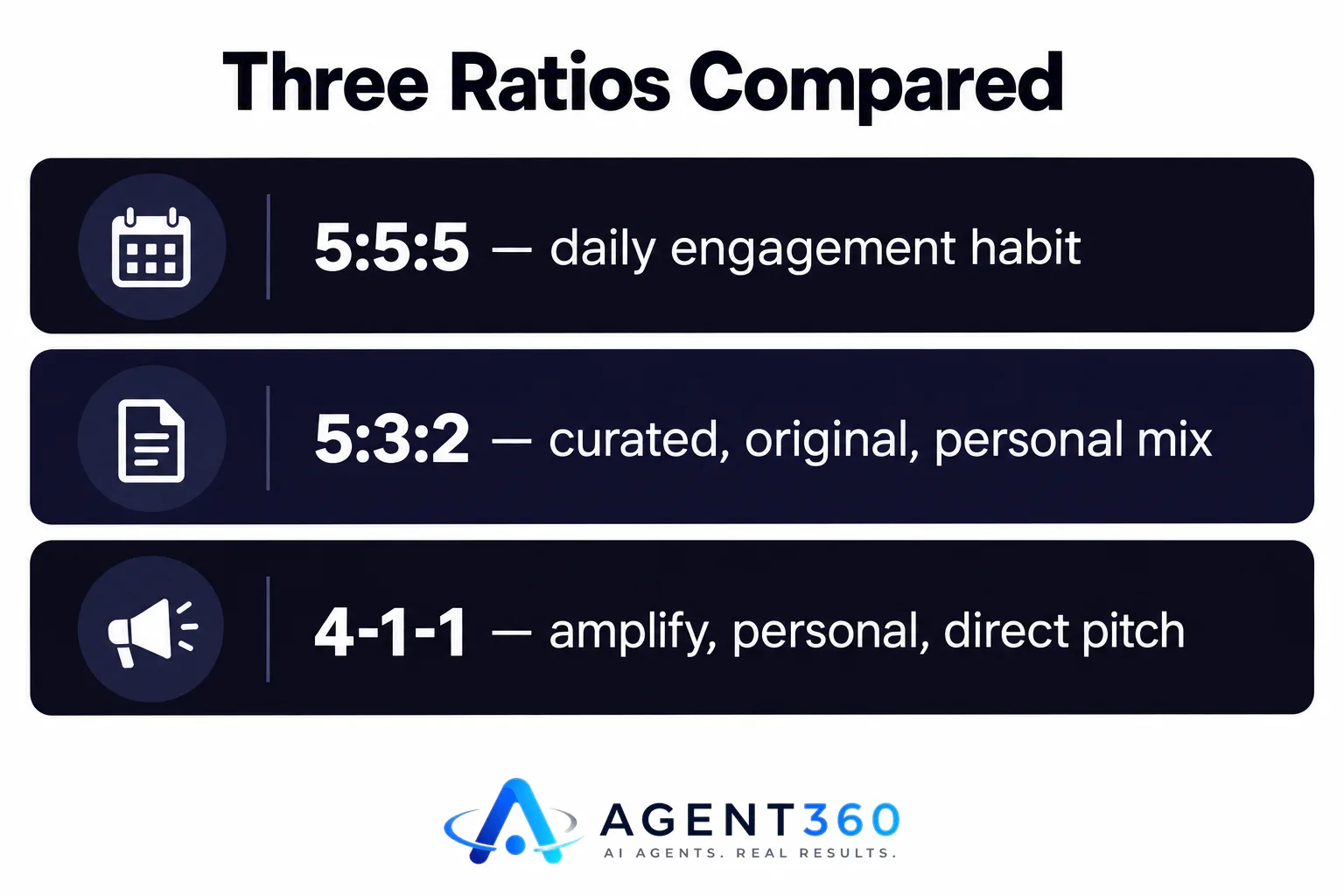
The 5:5:5 rule is a daily engagement habit, not a posting schedule. Spend five minutes genuinely interacting with other accounts, leave five comments that aren't just emojis, and follow or engage with five new accounts in your niche. The logic behind it is simple: a feed only grows your reach back after you've put real attention into other people's posts first.
No tool does this part for you, and that's the point of keeping it separate from everything else here. A content calendar can get your own posts drafted, pictured and scheduled without your daily input, publishing on the minute you set, but the five minutes of commenting on other people's posts has to stay a human habit. It's the one signal that can't be faked by a system that only publishes to your own accounts.
What is the 5:3:2 rule for social media posts?
Out of every ten posts, five are curated or value content pulled from elsewhere in your industry, three are original content from you, and two are personal or behind-the-scenes posts that show a person rather than a brand. It's a ratio built for the era when sharing other people's good articles was still a normal, welcomed thing to do on a feed.
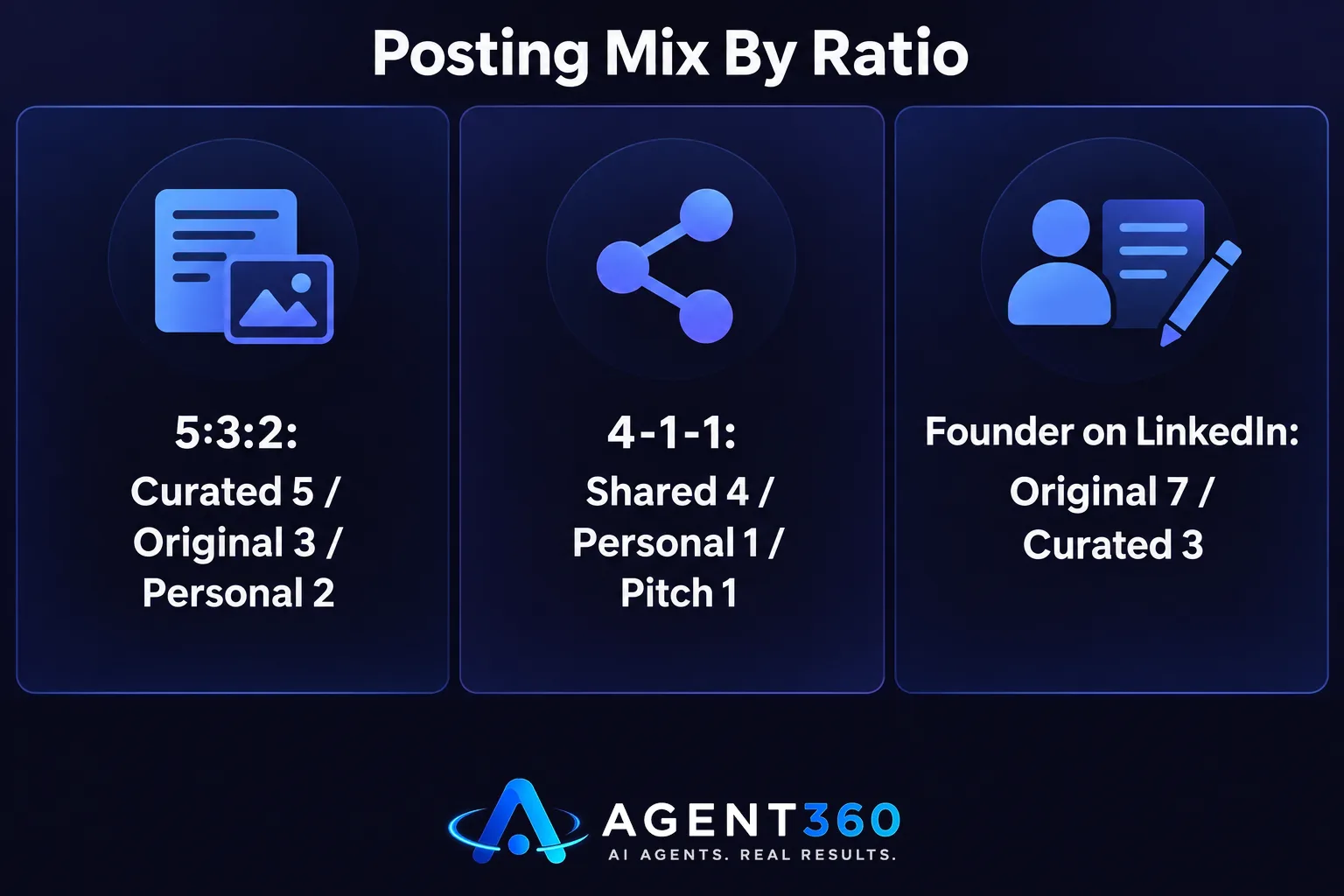
Treat the numbers as a starting ratio, not a rule to defend. A founder posting on LinkedIn usually flips it the other way — closer to seven original posts for every three curated, because an individual account with no original opinions reads as empty. A company account curating heavily can look thoughtful instead of lazy. What matters more than the exact split is alternating value and pitch on purpose, so the feed doesn't read as either a lecture or a sales page.
What is the 4-1-1 rule on Instagram?
The 4-1-1 rule started as Twitter advice and got carried over informally to Instagram and LinkedIn. For every six posts, four share or amplify other people's content, one is a soft personal post, and one is a direct pitch for what you sell. The ratio exists to stop a feed from becoming six consecutive asks, which is the fastest way to get a follower to mute an account without ever unfollowing it.
The failure mode isn't posting too often. It's posting the same type of thing too often in a row. A feed with three pitches back to back loses reach even if each post is well written on its own, because the platform and the follower both read repetition as low value faster than they read frequency as annoying.
A ratio only survives contact with a real week if something is tracking it for you
Every one of these rules breaks down the same way: someone sets the ratio on a Monday, gets busy, and by Thursday every post is a pitch because pitches are the easiest thing to write under deadline. Hand-tracking a content mix across a messy week is exactly the kind of bookkeeping that a calendar needs rules behind it to survive. A calendar with no enforced mix just defaults to whatever's fastest to write that day.

The fix isn't more willpower. It's tagging posts by type as they're drafted and checking the mix before the week publishes, not after. A scheduling tool alone won't do this — it publishes whatever you load into it, pitch-heavy or not. The difference between a scheduler and a system that writes to a ratio is whether anything upstream of the calendar is deciding what type of post gets written next.
Where this fits with BrandAgent
This is the gap BrandAgent is built to sit in. The Writer Agent drafts from ten proven formulas so the mix doesn't collapse into all-pitch under deadline, every draft is scored before it reaches you, and nothing publishes until you approve it. Plans start at $97 a month, month to month, no contract.
Questions worth answering directly
What is the 5-5-5 rule for social media?
Spend five minutes a day engaging with other accounts, leave five real comments, and follow or interact with five new accounts in your niche — a daily relationship habit, not a content schedule.
What is the 5:3:2 rule for social media posts?
Out of every ten posts: five curated from elsewhere, three original, two personal — a starting content mix to adjust by platform and account type, not a fixed formula.
What is the 4-1-1 rule on Instagram?
For every six posts, four share or amplify others' content, one is personal, and one is a direct pitch — a ratio meant to stop a feed from reading as a continuous sales pitch.
More articles
- Repurpose Content for Social Media: The Rules That Work
- YouTube Shorts for Business: The Rules That Get Views
- How Often to Post on LinkedIn: The Rules That Actually Matter
- Social Media Content for Small Business: The Rules That Work
- Brand Voice AI: What It Means and What It Can’t Fake
- What an AI Short Video Maker Needs to Actually Work
- The Honest Guide to AI Video Generators for Social Media
- LinkedIn Ghostwriting: What It Really Costs and How It Works
