The B2B Social Media Strategy That Actually Moves Deals

Nobody buys from one post. That single fact is the whole case for a B2B social media strategy being a written ratio of what you post and how often, not a content calendar and not a list of platforms. Most B2B accounts that stall out already have both of those things. They still produce nothing that moves a deal, because a calendar tells you when to post and a ratio tells you why.
The ratio matters more than the schedule, because B2B buying is slow and shared. One person sees your post, forwards it to a colleague, and three weeks later someone on that thread books a call. A strategy that only measures this week's likes will cancel itself before that cycle ever finishes.
A strategy is three ratios, not a content calendar
Three ratios decide whether a B2B account compounds or flatlines: the split between value and pitch, the split between formats, and the split between people and company voice.
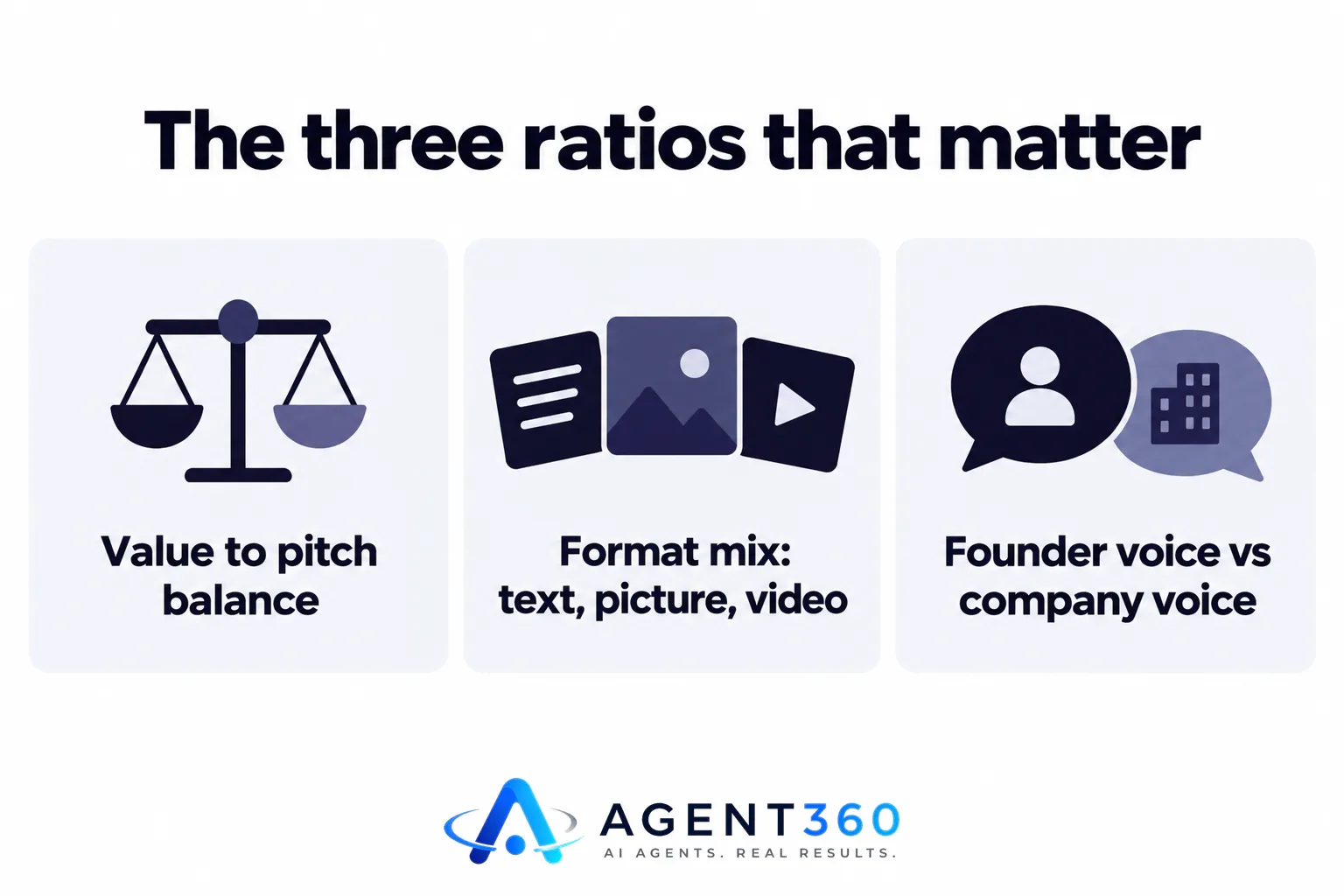
- Value to pitch. A feed of pure education gets read and forgotten. A feed of pure offers gets buried by the algorithm and the reader both. The value vs pitch balance is the first ratio to fix, before you touch a calendar.
- Format mix. Text posts, a picture, and short video each reach a different pocket of the same audience. A team posting text-only on LinkedIn is leaving reach on the table that a 4:5 video would pick up for free.
- Founder voice to company voice. Posts from a named person routinely outperform posts from a logo, for the obvious reason that a logo cannot have an opinion. A strategy that never puts a person's name on a post is optimizing for the wrong account.
What is the 3-3-3 rule for social media?
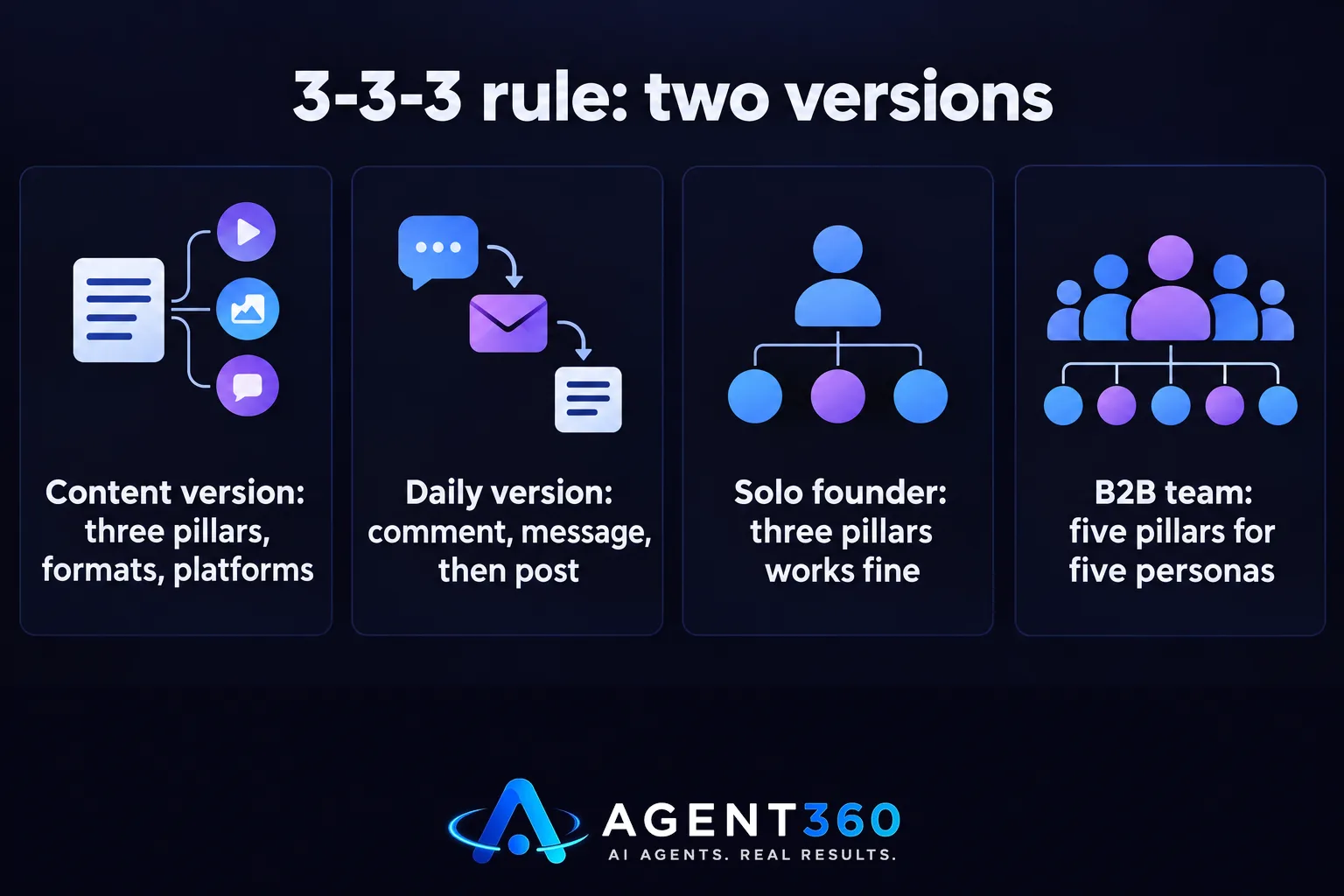
The common version: three content pillars, three formats, three platforms. Pick a small, fixed set of each and rotate through them instead of inventing a new topic every week. A tighter daily version also circulates: comment on three posts, message three connections, publish before doing either.
Both versions earn their keep as a starting discipline, and both break down at B2B scale. Three pillars is fine for a solo founder. A B2B team selling to five personas usually needs five pillars, one per buyer concern, or the feed reads like it's talking to nobody in particular. Use the rule to kill the blank-page problem in week one, then replace it with pillars mapped to your actual buyers by week four.
What is the rule of 7 in B2B?
The rule of 7 says a buyer needs roughly seven exposures to a message before it registers enough to act on. In B2B social, that means one post announcing a feature won't move someone who's never heard of you. It needs six more touches first, across posts, formats, and weeks, before any of it does work.
In practice, that means repeating the same three or four core claims across months instead of dropping them because they feel redundant to the person who wrote them. The reader has seen it once, not seven times. Space the repeats: the same claim as a text post in week one, a short video version in week three, a picture-led version in week six. That does the counting for you, and nobody notices it's the same idea.
Your buying committee reads six or more people deep before sales hears about it
B2B deals rarely move on one person's decision. By the time someone emails sales, several colleagues have usually already seen your posts, forwarded one, or searched your name. The post that actually starts a deal is almost never the one with the most likes. It's the one a skeptical colleague found credible enough to share internally.

Write for that shared moment. A post with a specific number, a named failure mode, or a clear instruction survives being forwarded with no context attached. A post that only makes sense next to three others in the feed does not. Ten structural approaches to this are laid out in the LinkedIn post formulas guide, and most of them exist specifically to survive being read cold by someone three steps removed from your brand.
Where BrandAgent fits
Most of this breaks down in execution, not strategy. Someone writes the pillars down in a doc, posts three times, gets busy, and the calendar goes quiet for six weeks — which resets the rule-of-7 count to zero. BrandAgent keeps the ratio and the cadence running without needing a person to remember it every Monday: the Writer Agent drafts each post from your pillars, scores it against the platform's rules, and the Scheduler Agent publishes approved posts to LinkedIn, Instagram, YouTube and X on the schedule you set. It's built for exactly this use case — see how it fits a B2B marketing team, with plans from $97 a month on the pricing page.
Questions and answers
What is B2B in social media?
B2B in social media means posting to influence a slower, shared purchase decision rather than a single consumer impulse buy — the audience includes several people inside one company, the sales cycle runs weeks or months, and a single post rarely closes anything on its own.
What are the key social media trends for B2B marketing in 2026?
The trends that change strategy rather than just aesthetics: shorter vertical video pulled from existing webinars and talks rather than filmed fresh, founder and executive accounts outperforming company pages, and buying committees researching vendors on social before a sales call rather than after one. Chasing format trends without fixing the value-to-pitch ratio first changes almost nothing.
How many platforms does a B2B team actually need?
Two, usually: LinkedIn for the committee doing the research, and one visual platform — Instagram or YouTube Shorts — for the same ideas in a format that travels further. A third platform added before the first two are consistent for three months rarely adds reach. It just adds a channel nobody checks.
More articles
- How to Build a Personal Brand on LinkedIn (That Sticks)
- The Real Alternatives to a Social Media Agency
- Done-For-You Social Media Management: What It Costs
- Social Media Marketing on Autopilot: The Ratios That Work
- Repurpose Content for Social Media: The Rules That Work
- YouTube Shorts for Business: The Rules That Get Views
- How Often to Post on LinkedIn: The Rules That Actually Matter
- Social Media Content for Small Business: The Rules That Work
