Content Repurposing: How One Recording Becomes a Month of Posts
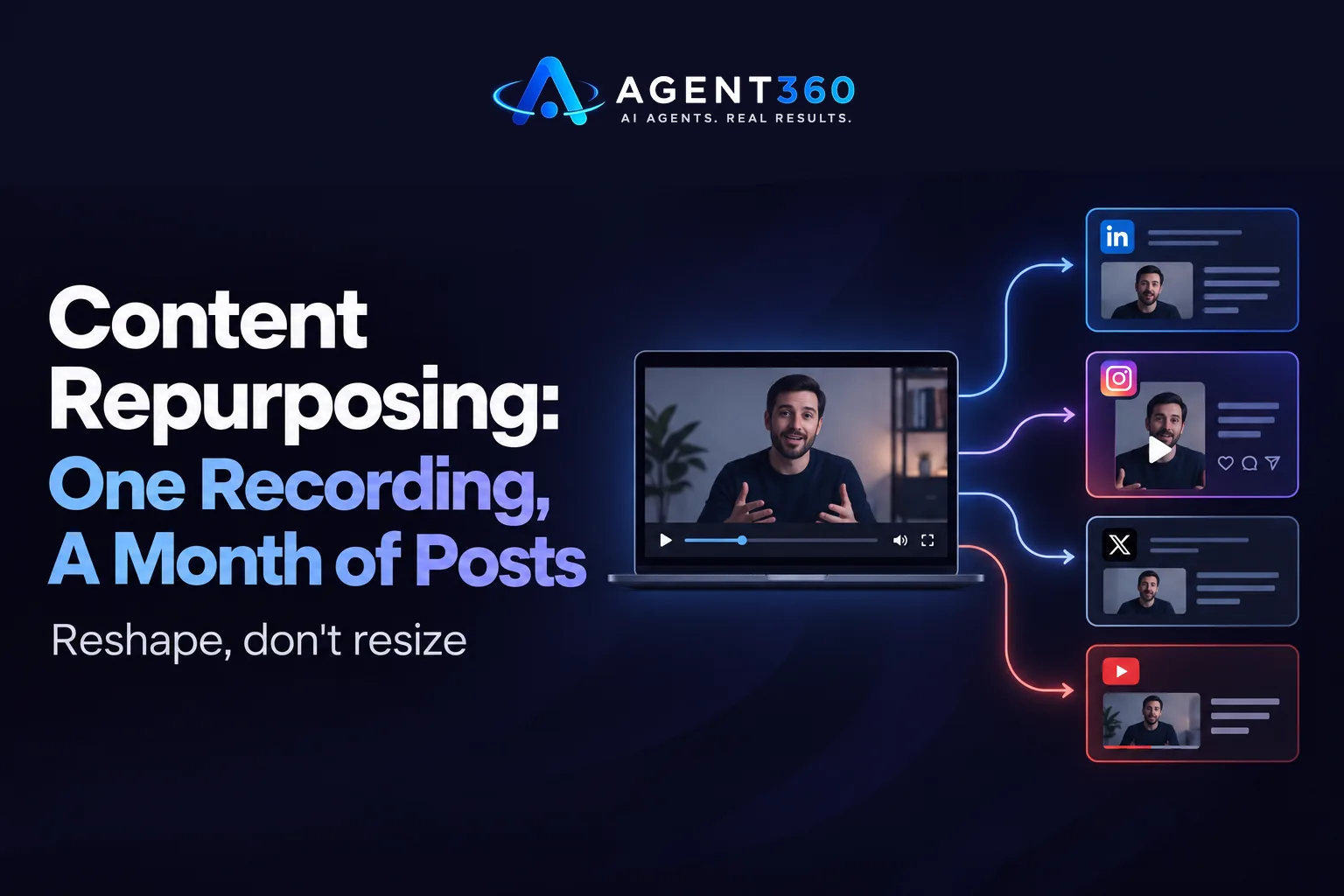
Content repurposing means taking one piece of source material — a webinar, a podcast, a talk, a blog post — and rebuilding it into separate assets, each built for the platform it lands on. Not posting the same text everywhere with a different hashtag bolted on. Done right, a single 45-minute recording holds more usable posts than most teams publish in a month. Done wrong, it looks like the same announcement pasted five times — and every platform's algorithm treats it exactly that way.
The gap between those two outcomes isn't effort. It's whether you reshape the material or just resize it.
What is social media repurposing?
Repurposing means changing the format and the framing, not just the file size. A LinkedIn post built from a webinar quote reads as a short argument with a hook and a line break. The same quote on Instagram needs a picture carrying the words, because the caption gets skimmed, not read. On X it needs to fit in under 280 characters with none of the setup. On YouTube it needs captions burned in because most viewers watch with the sound off.
Cross-posting is the opposite habit: one block of text, pasted into every platform's compose box, maybe with a hashtag swapped in. It's faster to produce. It performs worse on every platform at once, because none of them are getting a post built for how people actually use them.
How can I upload content to multiple platforms at once?
No platform will reshape your content for you — a scheduler publishes exactly what you hand it, which is why a scheduling tool and a repurposing workflow solve different problems. Uploading to five feeds at once only works once the five versions already exist. The sequence that holds up:
- Pick the source: the recording, the talk, the long post that has the most quotable moments.
- Write one native version per platform — not a translation of the same sentence, a different sentence built for that platform's reading pattern.
- Match the shape: vertical for Reels and Shorts, 4:5 for LinkedIn and the Instagram feed, square or landscape rarely wins on either anymore.
- Schedule them on a shared calendar so the LinkedIn post, the Instagram Reel and the YouTube Short don't all land the same hour and compete with each other — a calendar that sits next to your actual meetings makes this easier to see at a glance, which is what a calendar built for publishing across platforms is for.
What are the 7 main types of content?
One recording or one idea can become seven distinct shapes. Most teams only ever produce the first two.
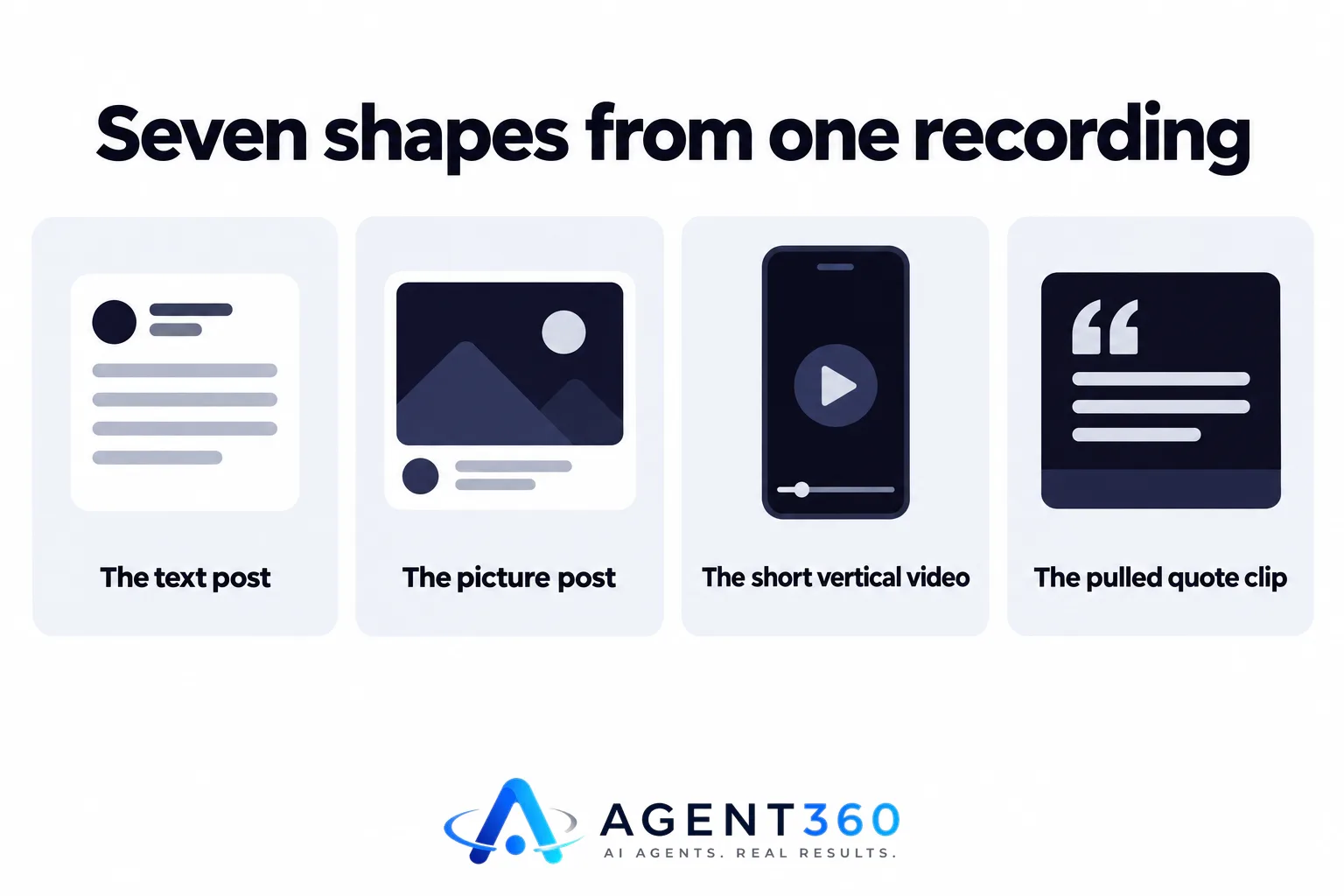
- The text post — the argument itself, stated in a few lines, no image needed.
- The picture post — a quote, a stat or a one-line claim carried on an image, built for feeds where people scroll past plain text.
- The short vertical video — six to fifteen seconds, built to stop a scroll before it explains anything.
- The talking-head clip — a person explaining one idea directly to camera, which performs differently than a cutaway because it reads as a real opinion, not an edit.
- The pulled quote clip — a 20 to 60 second cut from a longer recording, captioned, with the context trimmed down to one sentence before it plays.
- The data or framework post — a number, a comparison or a short list, which holds up on LinkedIn and X better than a story does.
- The long-form piece — the original webinar, article or episode itself, which the other six exist to point people back toward.
The real tension here isn't creativity — it's volume. One recording producing seven assets is easy enough for a single brand. Multiply that across ten client accounts and it turns into a production line problem, not an ideas problem — a different thing to solve for.
What are the top 5 tools for content creation?
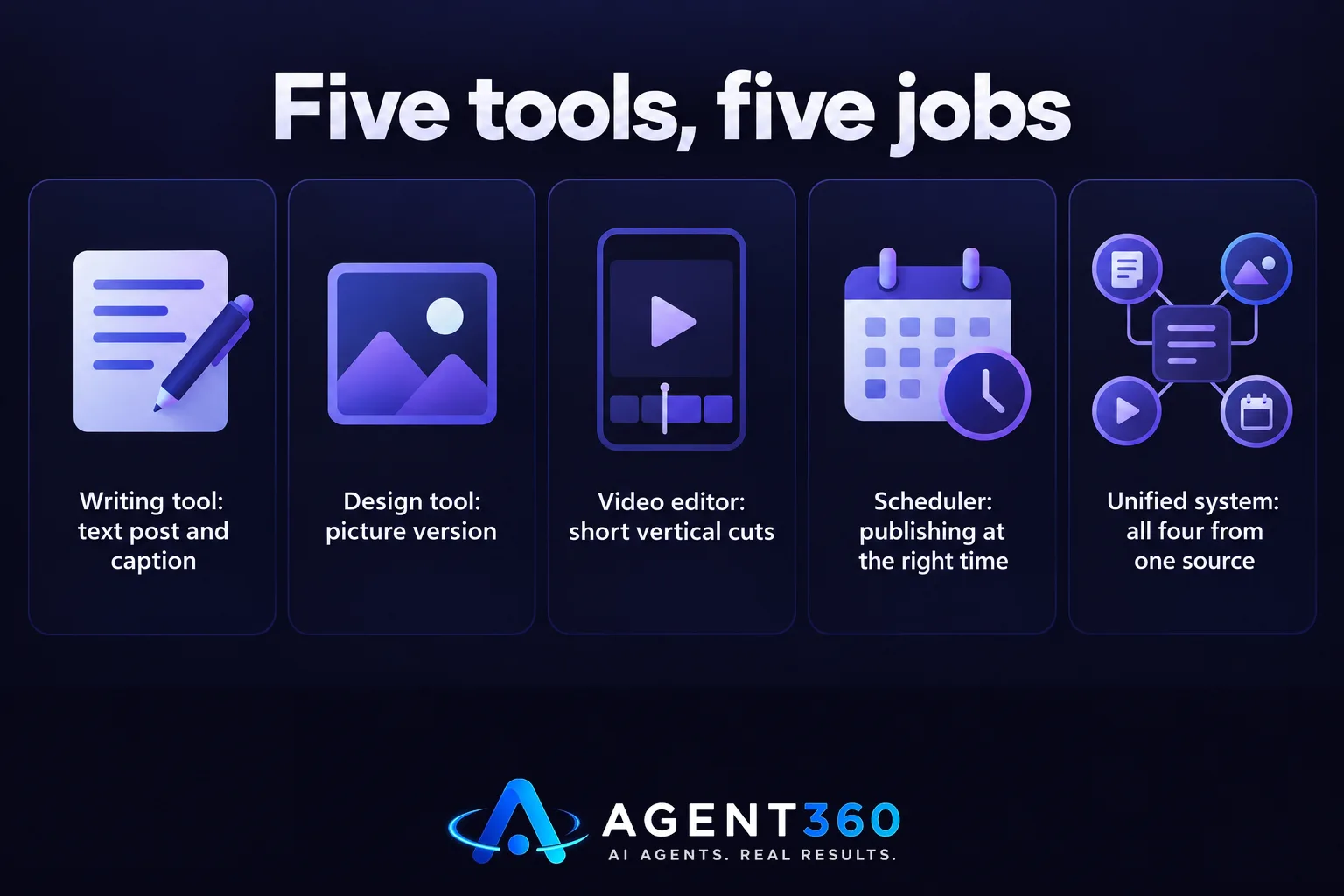
No single tool does all seven shapes well, and anyone claiming otherwise is overselling. In practice, the work splits five ways: a writing tool for the text post and the caption, a design tool for the picture version, a video editor for the short vertical cuts, a scheduler for publishing at the right time on each platform, and — increasingly — a system that does the first four together from one source so nothing drifts off-brand between them. A generic chat tool will draft the text. It won't draw the picture, cut the clip, or know your brand's colours — that's the actual gap between a chat assistant and a system built for repurposing.
BrandAgent turns one recording into the full set
BrandAgent's Clip Agent takes an uploaded webinar, podcast or talk and cuts it into captioned vertical clips, each with its own post already drafted — or it interviews you directly, asking the questions out loud and turning every answer into a clip, covered in more detail in how one video becomes a month of clips. The Writer and Designer agents then build the LinkedIn, Instagram, X and YouTube versions from your Brand Kit, so the picture, the colours and the voice stay consistent across all seven shapes instead of drifting apart. For agencies running this across multiple client accounts, each client keeps its own workspace and Brand Kit, switchable from one login. Plans start at $97 a month, no contract — details are on the pricing page.
Repurposing fails when every version says the same thing the same way
The most common mistake isn't under-repurposing — it's over-repurposing one version: taking the LinkedIn post and dropping it as-is into X, Instagram and a video caption. Plenty of people follow you on more than one platform, and they notice. The appearance of effort — a line actually written for how that feed reads — is what makes someone stop instead of scrolling past something they already saw an hour ago.

Questions people ask
Do I need new source material every time? No — one 45-minute recording, a long post, or a single interview is usually enough for two to three weeks of platform-specific posts, as long as it gets cut and rewritten rather than copy-pasted.
How much should repurposed content differ from the original? Enough that someone who saw the LinkedIn version wouldn't recognise the X post as the same sentence. The claim can repeat. The wording and framing shouldn't.
Is repurposing the same as cross-posting? No. Cross-posting publishes identical text everywhere. Repurposing rebuilds the same idea into a format native to each platform — the version platforms don't quietly bury.
More articles
- How to Write a LinkedIn Post That Actually Gets Engagement
- How AI Talking Head Videos Actually Get Made
- Social Media Posts That Get Leads (Not Just Likes)
- The B2B Social Media Strategy That Actually Moves Deals
- How to Build a Personal Brand on LinkedIn (That Sticks)
- The Real Alternatives to a Social Media Agency
- Done-For-You Social Media Management: What It Costs
- Social Media Marketing on Autopilot: The Ratios That Work
