Lead Follow-Up for Small Business: The System That Works

The job usually goes to whoever calls back first. Not the cheaper quote, not the nicer truck — the fastest response. Lead follow-up for a small business isn't a courtesy step tacked on after marketing does its job. It's the step where the money gets made or quietly thrown away. A lead that sits for an hour is already colder than one that sits for five minutes, and most small businesses have no system that tells the difference.
Fixing this costs nothing extra. It doesn't need more ad spend. It needs a cadence, someone or something to run it, and a record that it actually happened.
Call within five minutes, not within the day
Response speed decays fast. Someone who filled out a form or called and got voicemail is, right now, comparing you to whoever answers next. Five minutes is roughly the line where a callback still feels like a reply to their action. Wait until the next morning and it feels like you forgot about them. This is the single highest-leverage fix most small businesses can make, and it's a process problem, not a marketing one — the lead already exists. It just hasn't been worked.
If no one on your team can realistically pick up within five minutes after hours, cover that gap some other way: an automatic text, or a phone system that answers and books when your team can't. The point isn't technology for its own sake. It's that the clock doesn't pause at 6pm.
What is the 3 3 3 rule in sales?
The numbers shift depending on who's telling it, but the shape holds: three contact attempts, across three channels, inside the first three days. Call. If no pickup, text an hour later. Email by the next morning. Repeat with small variations for two more days, then ease off. None of this is magic — people miss calls, ignore unknown numbers, and skim email without opening it. Hit the same person through three channels and you catch them wherever they actually pay attention.
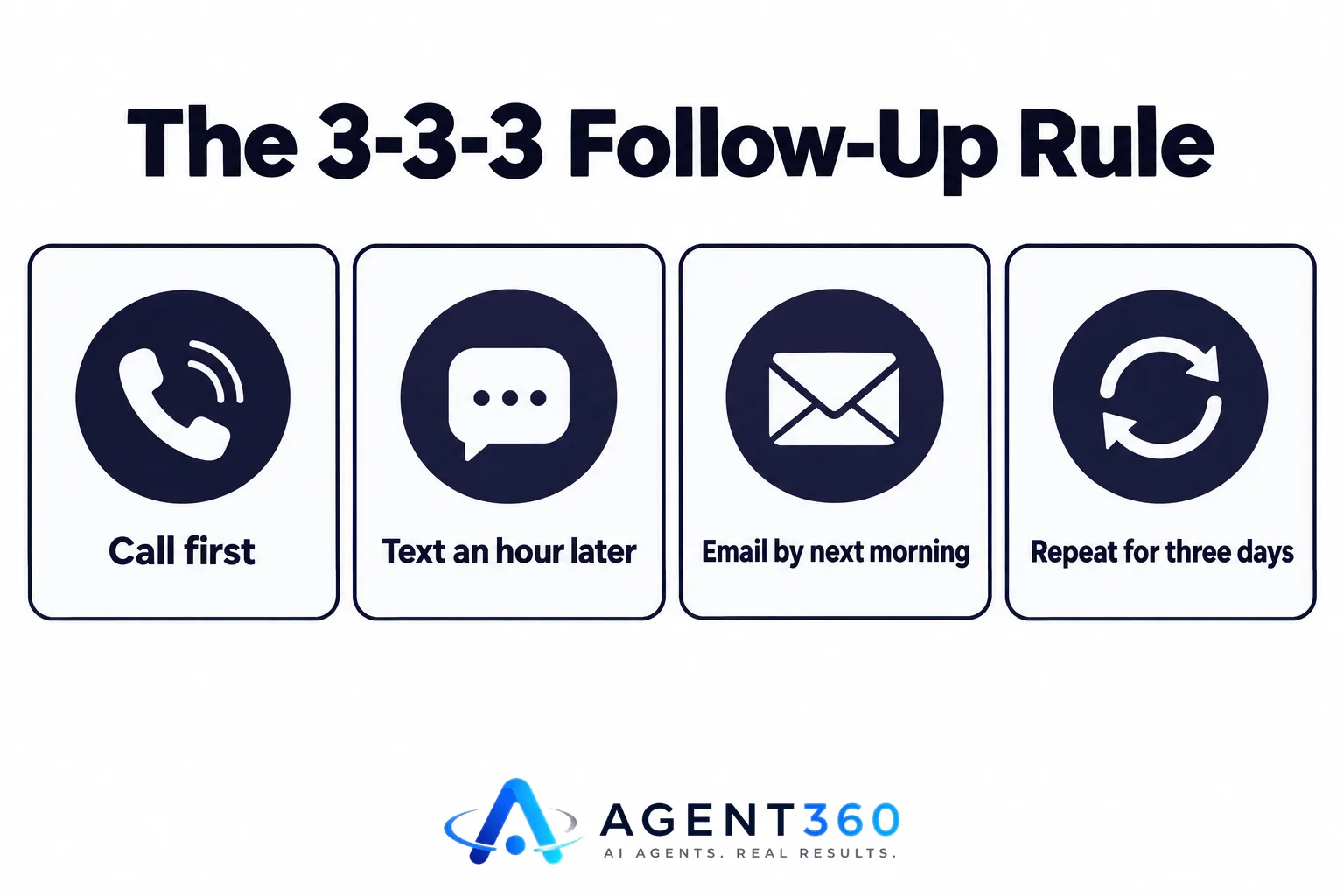
Where small businesses go wrong is stopping after attempt one. A missed call with no follow-up text isn't a follow-up system. It's a coin flip, and the lead usually lands with whoever called back.
Stretch the cadence instead of abandoning the lead
After the first three days, most leads aren't dead. They're just not ready yet. Treating silence as a no is the mistake. A workable cadence for the next month looks like one touch every four or five days — a text with something useful in it, not a check-in that just says “still interested?” A reminder that spots are filling. A seasonal nudge. A short answer to the question they originally asked. This is what people mean by nurturing a lead instead of chasing it: fewer touches, spaced further apart, each one giving them a reason to respond instead of just asking them to.
Leads that go a full month without action can drop to a slower monthly cadence rather than get deleted outright. Plenty of small businesses quietly throw away 20 to 40 percent of their pipeline by giving up after week one, then wonder why cost per booked job keeps climbing.
How much does it cost to get leads?
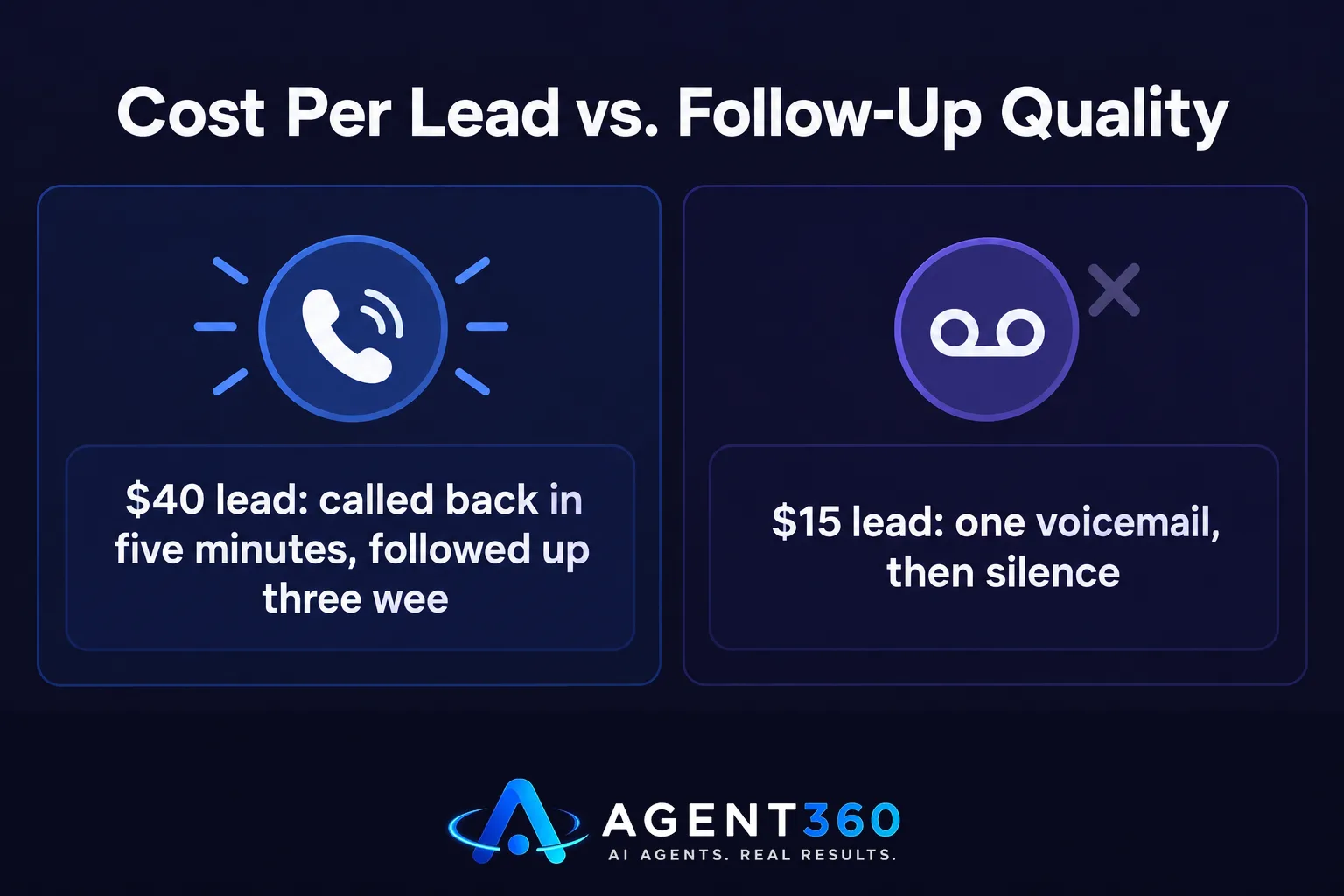
It depends heavily on industry, city, and channel — anyone quoting one number for every business is guessing. A local service search ad can run from the low tens of dollars per lead up into the hundreds for competitive, high-ticket categories like legal or medical. What matters more than the number itself is what happens after the lead shows up: a $40 lead called back in five minutes and followed up for three weeks often beats a $15 lead that gets one voicemail and silence. Fixing follow-up before raising ad spend is almost always the smarter order of operations — it raises the return on every dollar already going out the door. For a sense of realistic local budgets by channel, this breakdown of local Google Ads spending is a useful starting point.
How do I get more leads for my small business?
More leads usually isn't the actual bottleneck. Most small businesses are sitting on leads they already paid for and never fully worked. Before adding budget, check three things: how fast the first contact happens, how many attempts each lead gets before it's marked dead, and whether missed calls trigger an automatic text back. A missed call that just rings out with no follow-up is business you already paid to generate and let walk; a simple text-back after a missed call recovers a meaningful share of that on its own. Only once the follow-up system is tight does spending more at the top of the funnel start to make sense.
A CRM is only as good as the cadence running inside it
A lot of the “which CRM should I use” debate misses the point. The tool matters less than whether it fires the right message at the right time without a person having to remember to do it. A spreadsheet with a disciplined human beats an expensive CRM nobody logs into. What you actually need: unlimited seats so the whole team can see lead status, automatic text and email on arrival, and a record of every touch so nothing gets followed up twice — or missed entirely.
Where a done-for-you system fits
Booked runs this follow-up cadence as part of every plan: instant text and email reply to every lead, a CRM with unlimited users, and online booking with reminders, starting at $297 a month with no setup fee and no contract. The Pro and Scale plans add 24/7 AI phone answering so after-hours calls get answered and booked instead of going to voicemail. Full detail on what's included at each tier is on the pricing page, and the mechanics of how follow-up and booking work together are on the Respond service page.
Questions worth answering before you build a system
How much does it cost to get leads? It varies by industry and channel, from tens of dollars for common local services to several hundred for competitive, high-value categories like law or medical care. The more useful question is what you spend to convert a lead you already have — fixing slow or abandoned follow-up usually lowers your effective cost per booked job faster than increasing ad budget does.
How do I get more leads for my small business? Start by checking how many of your current leads get a real follow-up attempt beyond the first call or form fill. Businesses that tighten response speed and stretch their follow-up cadence to three weeks or more usually recover leads they already paid for before they need to spend on new ones.
What is the 3-3-3 rule in sales? A common framework for the first few days of follow-up: three contact attempts, through three different channels — call, text, email — within the first three days of a lead coming in, instead of one attempt and then silence.
More articles
- How to Get Recommended by ChatGPT for Your Business
- How to Get Found on Google Maps, Not Just Listed
- Website For Small Business: Builder, Cost, Or Done-For-You
- Google Ads for Local Business: What a Real Budget Looks Like
- How to Get More Google Reviews: Timing Beats Begging
- Missed Call Text Back: What To Send And Why It Works
- AI Receptionist for Small Business: What It Costs and Does
- Fitness Studio Marketing: Why the 3-3-3 Rule Falls Short
