Is There a Cheaper Alternative to Thryv or LOCALiQ?
Yes, cheaper alternatives to Thryv and LOCALiQ exist. But price is the wrong first question. Neither platform publishes a flat monthly number you can hold up against anything else — Thryv quotes shift by sales rep and by which modules you bolt on, and LOCALiQ, which runs on ad placements through the USA Today Network, usually builds its price around your ad spend commitment. So the “management fee” you're quoted is really a markup on a budget you don't fully control. Before you shop for cheaper, figure out what you're actually being charged for.
That distinction matters more than the invoice total. A platform that charges less but leaves your website, your SEO and your lead follow-up as separate line items can end up costing more once you add it all up. And it'll cost you leads in the meantime, because nothing in the stack is talking to anything else.
Who are Thryv's main competitors?
Thryv competes against a handful of different categories, not one rival company. There are all-in-one marketing platforms built for local business, which bundle website, CRM, booking and ads under one price. There are standalone CRM tools like Keap or HubSpot's small business tier, which handle follow-up and automation but don't touch your website or ads. And there are traditional local marketing agencies that build a custom scope around SEO and paid media. Which one counts as the real “competitor” depends on what you actually need replaced. If your complaint is the CRM, you're shopping against automation tools. If your complaint is that nothing is generating new leads, you're shopping against agencies and all-in-one platforms that include advertising, not just contact management.
What is the best marketing platform for small business?
There isn't one best platform for every business, but there's a useful test: does it do all four jobs — get you found, bring in leads, convert the traffic you already have, and follow up fast enough to close it — or does it do one of those well and assume you'll hire someone else for the rest? Most of the frustration with Thryv and LOCALiQ comes from buyers expecting a full marketing department and getting a tool instead. Thryv is strong on CRM and reputation management, but it doesn't build or run a conversion-focused website and ad program the way a dedicated SEO and AEO service would. LOCALiQ runs ads well, but it isn't built to also answer your leads, book the appointment and text the reminder. If you want one system that covers the whole funnel, that should be the filter — not the price tag.
What is the best marketing automation software for small businesses?
The honest criteria for “best” here are narrower than most comparison posts admit. You want something that replies to a new lead within minutes, not hours. Something that texts and emails on its own schedule, without you building the sequence by hand every time. Something that holds a card on file and takes a deposit without you chasing payment afterward. And something that puts every lead and every booking in one place, so you're not checking four inboxes to find out what happened. Judge any platform, Thryv included, against that list rather than a feature count. A long feature list sitting on top of slow lead response isn't better automation — it's just more software to manage.
Which automation software is best for small business?
This is really the same question asked a different way, and it's worth answering with a warning: the tool itself matters less than who's running it. Automation set up once and never touched again degrades fast — a missed-call text that goes stale, a rebooking cadence nobody updated after you changed the service menu. If you're comparing software, ask the vendor who adjusts the sequences after launch. If the answer is “you will,” price in the hours that takes.
What actually drives the cost difference
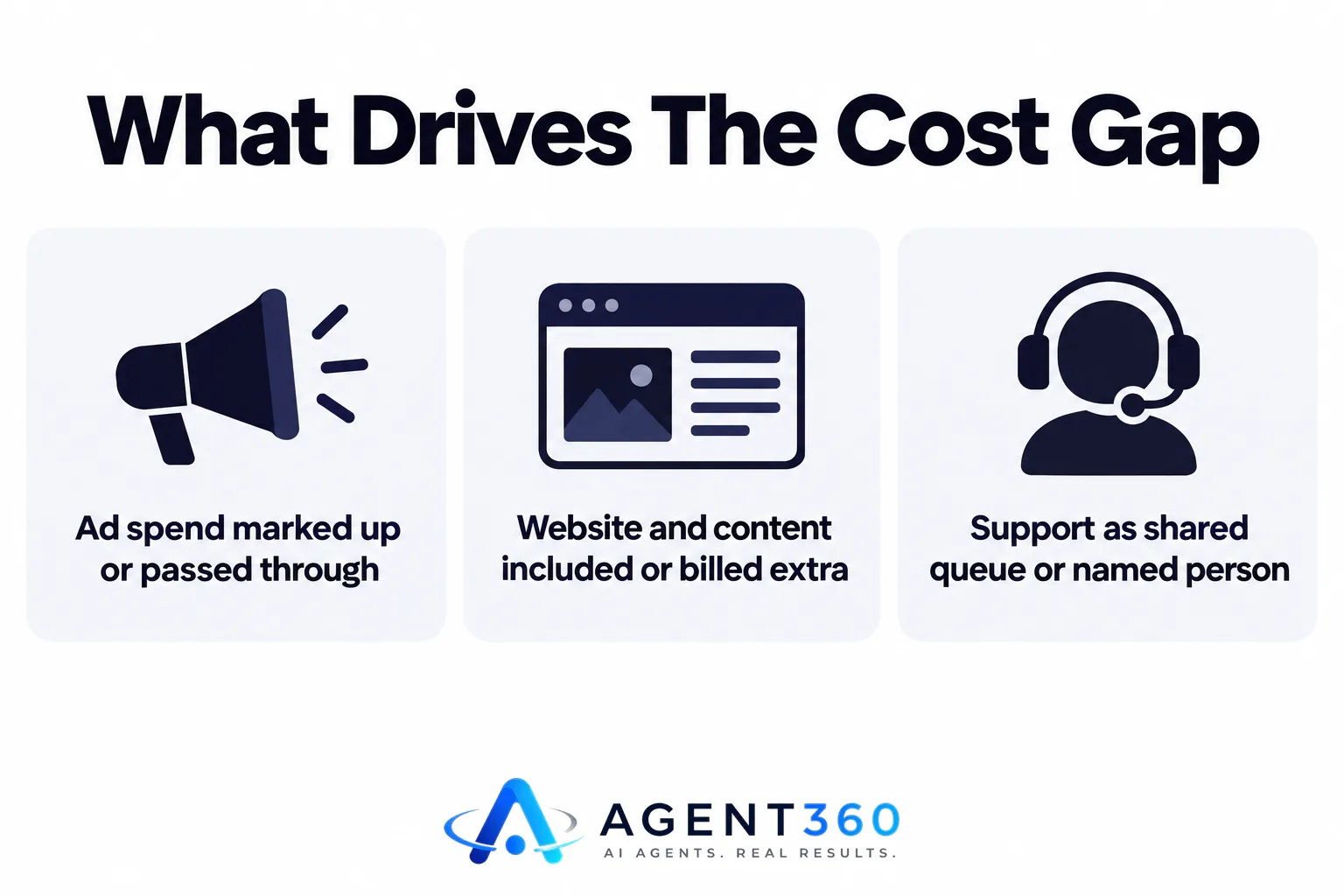
Most of the price gap between platforms comes down to three things: whether ad spend is marked up or passed through at cost, whether the website and content are included or billed as extras, and whether support is a shared queue or a named person. A lower base price with a markup on every ad dollar can cost more at scale than a higher base price with ad spend paid straight to Google and Meta. Read the contract for that line before you compare the monthly fee.
Where Booked fits if you're comparing on price
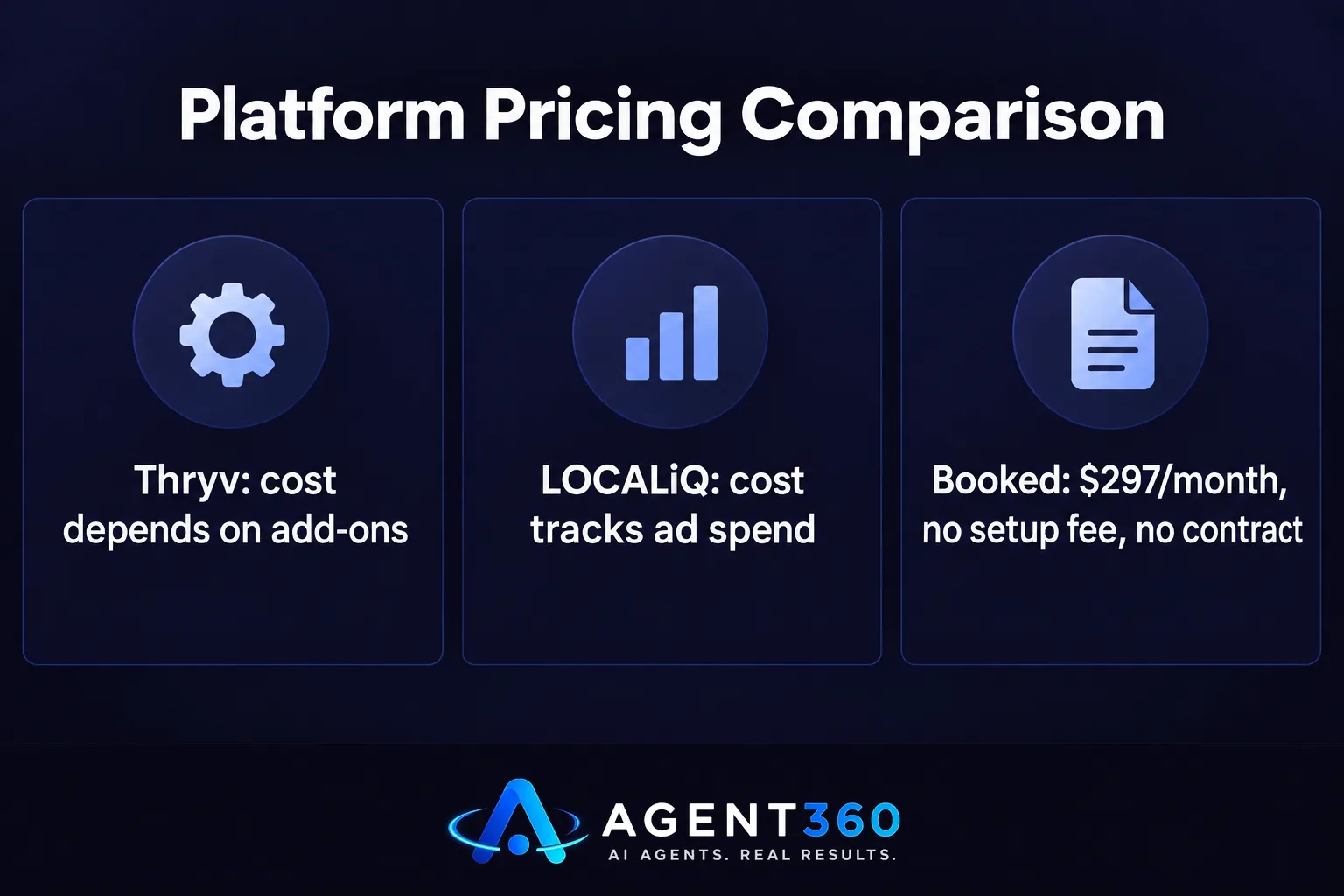
Booked runs on the same logic as the test above — website, SEO, AEO and GEO, ads, instant lead follow-up, online booking and reporting under one plan, starting at $297 a month with no setup fee and no contract, and ad spend paid directly to Google and Meta instead of marked up through us. If an unclear bill is part of what's pushing you off Thryv or LOCALiQ, the pricing page lays out exactly what each tier includes, and a fuller side-by-side is on the Booked vs Thryv comparison.
What to check before you sign anywhere
Ask for the all-in monthly number, including ad management fees. Ask whether the contract locks you in for a year. Ask who answers a lead that comes in at 9pm. And ask what happens to your website and customer list if you cancel. A platform that can't answer those four cleanly will cost you more than the invoice shows, whatever the first quote says. For a wider view of what a fair local marketing spend looks like across agencies and platforms, see what hiring a local marketing agency actually costs.

Common questions
Is Thryv or LOCALiQ cheaper?
It depends on your ad budget and how many modules you add. LOCALiQ's cost tracks closely to ad spend, so a bigger budget raises the bill even if the management fee looks fixed. Thryv's cost depends on which add-ons you select, since the base CRM doesn't include a full website, SEO or ad management. Compare the all-in monthly total, not the starting quote.
Do I need a separate CRM if I switch platforms?
Not if the new platform includes one. Check specifically whether lead follow-up, booking and your customer list live in the same system as your website and ads — if they don't, you're paying for two tools that don't talk to each other, which defeats the point of switching.
What should I ask on a sales call with any alternative?
Ask for the total monthly cost with a realistic ad budget included, whether there's a contract term, who writes and approves content, and how fast a new lead gets a reply. Those four answers tell you more than any feature list, and you can measure them against what's listed on the lead response and booking side of any platform you're considering.
More articles
- Booked vs Businessallinone: a fair, side-by-side comparison
- Booked vs Scorpion: a fair, side-by-side comparison
- Booked vs Instantly: a fair, side-by-side comparison
- Booked vs BrightLocal: a fair, side-by-side comparison
- Booked vs Vendasta: a fair, side-by-side comparison
- Who Can Get You Recommended by ChatGPT and Google AI
- Best Marketing Agency for Dental, HVAC or Auto Repair
- Best Alternatives to Scorpion for Local Business Marketing
